In the high-stakes world of international agricultural exports, the integrity of the cold chain is the difference between a premium shipment and a total loss. For exporters of organic produce, the challenge is amplified by a dual requirement: the need for rigorous temperature control and the demand for chemical-free, environmentally responsible handling. As global regulations tighten around synthetic refrigerants, the industry is reaching a consensus. 100% sustainable inputs CO2 refrigeration has emerged as the gold standard, offering a unique synergy of safety, efficiency, and compliance that traditional systems cannot match.
For the modern agricultural consultant or infrastructure lead, choosing a refrigeration medium is no longer just a utility decision—it is a strategic brand decision. As consumers in the EU, North America, and Asia increasingly scrutinize the carbon footprint of their food, the “organic” label must extend beyond the field and into the cold storage facility. This is where CO2 (R744) shines, providing a future-proof solution for those who prioritize the longevity of their exports and the health of the planet.
The Problem with Traditional Refrigerants
For decades, the cold storage industry relied heavily on Hydrofluorocarbons (HFCs) like R404A. While effective at cooling, these synthetic chemicals possess a Global Warming Potential (GWP) thousands of times higher than carbon dioxide. As the Kigali Amendment to the Montreal Protocol gains momentum, HFCs are being phased out globally. For international exporters, relying on HFC-based facilities introduces a significant “regulatory risk.” If a facility’s refrigerant becomes obsolete or prohibitively expensive due to quotas, the stability of the entire supply chain is compromised.
The alternative for many large-scale operations has historically been Ammonia (R717). While ammonia is a natural refrigerant with zero GWP, it carries significant operational hazards. It is toxic and highly pungent. In the event of a leak—even a minor one—organic produce can be tainted. For sensitive commodities like leafy greens, berries, or stone fruits, ammonia exposure can lead to immediate product rejection. Furthermore, the stringent safety regulations required for ammonia systems increase insurance premiums and operational complexity.
The following table illustrates why the industry is pivoting toward CO2 as the most balanced and sustainable choice:
| Refrigerant Type | Global Warming Potential (GWP) | Sustainability Rating |
|---|---|---|
| HFCs (R404A) | 3922 | Low |
| Ammonia (R717) | 0 | Moderate (Toxicity Risks) |
| CO2 (R744) | 1 | High (Sustainable/Safe) |
By moving toward 100% sustainable inputs CO2 refrigeration, exporters eliminate the toxicity risks of ammonia and the environmental liabilities of HFCs. This ensures that the organic produce remains as pure as the day it was harvested.
Benefits of CO2 (R744)
Carbon dioxide, or R744 when used as a refrigerant, is a naturally occurring gas. Unlike synthetic blends, it does not require complex chemical manufacturing processes, making it a cornerstone of 100% sustainable inputs. From a thermodynamic perspective, CO2 is exceptionally efficient, particularly in the multi-temperature environments required by cold storage facilities handling diverse organic inventories.
Unrivaled Energy Efficiency
Data indicates that CO2 refrigeration systems can be up to 20% more energy-efficient than traditional HFC systems, especially in cooler and temperate climates. This efficiency stems from CO2’s high volumetric cooling capacity. Smaller pipes and compressors can move more heat, reducing the electrical load required to maintain sub-zero or near-freezing temperatures. For exporters, this translates directly into lower storage surcharges and a reduced Scope 3 carbon footprint.
Non-Toxic and Product-Safe
CO2 is a “Class A1” refrigerant, meaning it has low toxicity and is non-flammable. In the context of organic produce, this is a non-negotiable benefit. Should a leak occur, CO2 simply dissipates into the atmosphere (where it was originally captured from). There is no chemical residue left on the fruit, no odor absorbed by the vegetables, and no risk of chemical burns to facility staff. It is the safest medium for maintaining the “clean” profile required by organic consumers.
Future-Proof Compliance
Because CO2 has a GWP of exactly 1, it is the baseline against which all other refrigerants are measured. It is immune to the legislative phase-outs targeting high-GWP gases. When an exporter partners with a facility utilizing CO2, they are securing their supply chain for the next 30 years, avoiding the inevitable cost hikes associated with dwindling HFC supplies.
Meeting CCOF Organic Standards
The California Certified Organic Farmers (CCOF) and other international certifying bodies have strict protocols regarding the handling and storage of organic goods. To maintain organic integrity, facilities must demonstrate that there is no risk of cross-contamination with non-organic products or prohibited substances.
Central Valley Cold Storage (CVCS) has integrated CO2 refrigeration as a central pillar of its CCOF-certified organic handling processes. Using 100% sustainable inputs CO2 refrigeration aligns perfectly with the ethos of organic farming. Since CO2 is a natural component of the air we breathe, it is not classified as a “synthetic additive” or a “contaminant” in the same way that a leaking fluorocarbon might be. This makes the documentation and audit trail for organic certifications significantly more straightforward.
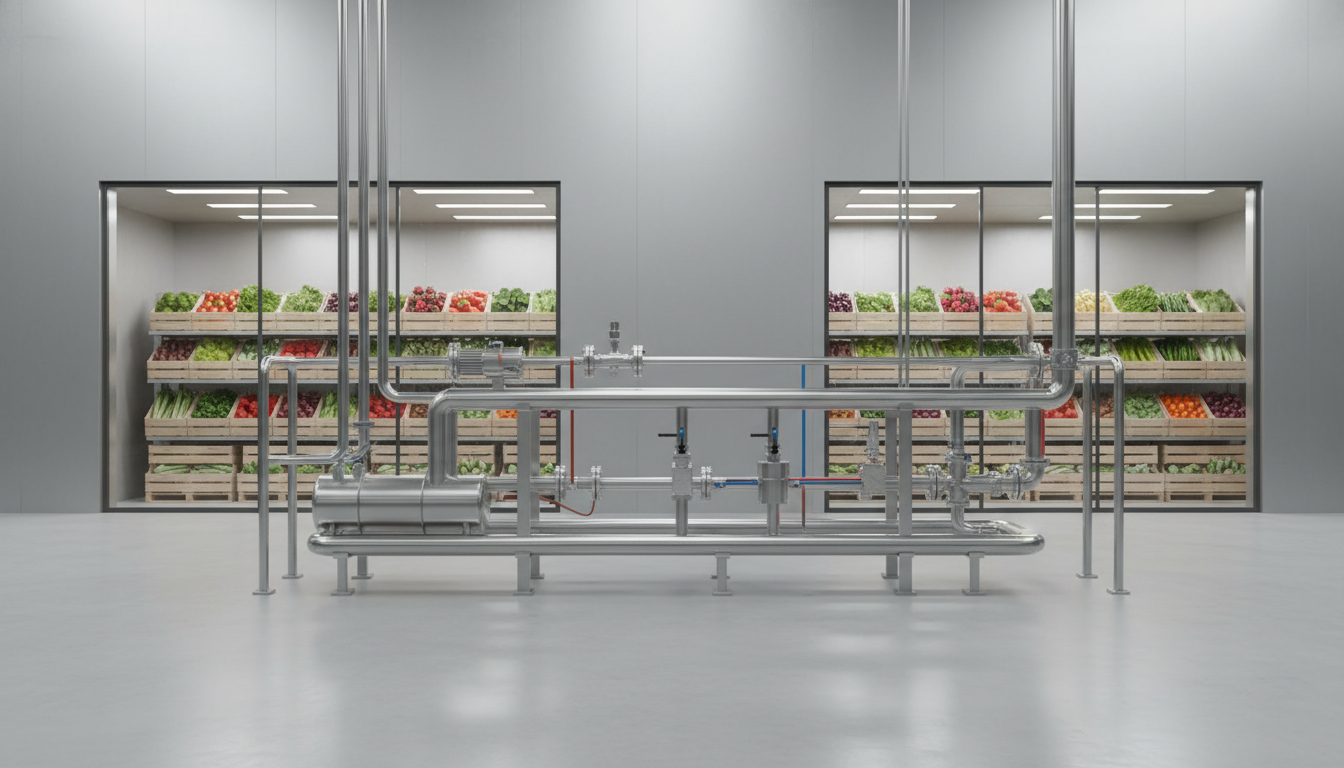
Furthermore, the physical infrastructure of a CO2 system—often utilizing stainless steel and advanced leak-detection technology—reflects the high-care environment necessary for organic commodities. At CVCS, the use of CO2 is not just about temperature; it’s about maintaining a pristine environment that respects the organic lifecycle from farm to fork.
Precision Temperature Zoning
Organic produce is notoriously sensitive. Without the aid of synthetic preservatives or waxes, these items rely entirely on “the cold” to arrest senescence and prevent decay. However, different commodities have different requirements. While stone fruits might thrive at 32°F, certain organic cultivars require “hard-chill” zones as low as 28°F to maximize shelf life for international transit.
CO2 systems excel at precision temperature zoning. Because R744 operates at higher pressures, it allows for more responsive and granular control over the cooling coils. This enables facilities like Central Valley Cold Storage to maintain ultra-precise temperature zones with minimal fluctuation. In a traditional system, a variance of 2-3 degrees is common; in a modern CO2-transcritical system, that variance is significantly narrowed.
For an exporter sending organic blueberries from California to Southeast Asia, a 2-degree deviation over 48 hours in storage can result in a 15% reduction in retail shelf life upon arrival. By utilizing CO2 refrigeration, CVCS provides the thermal stability required to ensure that high-value organic exports arrive in peak condition, regardless of the complexity of the logistics chain.
Conclusion
The transition to 100% sustainable inputs CO2 refrigeration is no longer a trend—it is a requirement for industry leaders who wish to remain competitive in the global organic market. By eliminating the risks associated with toxic ammonia and high-GWP synthetics, CO2 provides a transparent, efficient, and safe environment for the world’s most sensitive produce.
For international agricultural exporters, the choice of a cold storage partner is a reflection of their own commitment to quality. Facilities like Central Valley Cold Storage, which combine CCOF-certified handling with the technical superiority of R744 refrigeration, offer more than just a warehouse; they offer a guarantee of integrity. In an era where sustainability is the primary currency of trust, CO2 refrigeration is indeed the gold standard.
Frequently Asked Questions
Q: Is CO2 refrigeration safe for all produce?
A: Yes, it is a non-toxic natural gas and is particularly favored for organic and high-value commodities because it leaves no residue and carries no risk of chemical contamination.
Q: How does CO2 compare to HFCs in terms of cost?
A: While initial equipment costs can be higher, the 20% increase in energy efficiency and the lack of regulatory taxes or phase-out costs make CO2 significantly more cost-effective over the system’s lifespan.
Q: Why is CCOF certification important for cold storage?
A: CCOF certification ensures that the facility follows strict protocols to prevent cross-contamination, ensuring that your produce maintains its organic status from the moment it enters the facility until it leaves.