2026 Cold Storage Update. The Central Valley cold storage and 3PL market has continued its 2024–2026 expansion driven by California’s tree-nut, table-grape, and stone-fruit harvest growth and renewed export demand. Capacity has tightened in Fresno, Madera, and Tulare counties as the dairy and citrus channels rebuild. For Central Valley growers, packers, shippers, and food-service operators, the logistics dynamic for 2026 favors operators with multi-temp capacity, expedited cross-dock services, and integrated first-mile pickup programs. The remainder of this article — originally published in an earlier cycle and updated for the 2026 market — covers the underlying operational and service detail.
As a sustainable infrastructure consultant, I advise enterprise clients that the most significant threat to their portfolio is not market fluctuation, but energy instability. This has led to the emergence of a new financial risk framework: Thermal Insurance. This is not a policy you buy from a broker; it is an operational state of off-grid autonomy that serves as a permanent hedge against utility volatility and inventory excursion.
The Fragility of the Public Grid
The centralized electrical grid, particularly in California, has shifted from a reliable utility to a primary business risk. In 2023, California grid outages increased by 40% compared to the previous year Agricultural Cold Storage at Madera Airport Indust….. This surge is not an anomaly; it is the result of aging infrastructure, increased demand from electrification, and the rising frequency of Public Safety Power Shutoffs (PSPS). For a cold storage facility, a PSPS event isn’t just an inconvenience—it is a countdown to a multi-million dollar inventory write-off.
The fragility of the public grid is compounded by its inability to manage peak demand during heatwaves. When ambient temperatures rise, the efficiency of refrigeration units drops precisely when the grid is most likely to fail. This “synchronous failure” creates a perfect storm for procurement managers. Relying on the grid means accepting a baseline of risk that is increasingly difficult to underwrite. Traditional insurers are beginning to recognize this, often raising premiums or narrowing coverage for facilities located in high-risk utility zones.
Furthermore, the cost of grid power is no longer predictable. With utility rate hikes and “Time of Use” (TOU) pricing, the operational expense of maintaining a cold chain is subject to the whims of regulatory commissions and utility debt restructuring. To secure a portfolio, one must decouple the cold chain from the grid’s physical and financial instability.
Defining Thermal Insurance
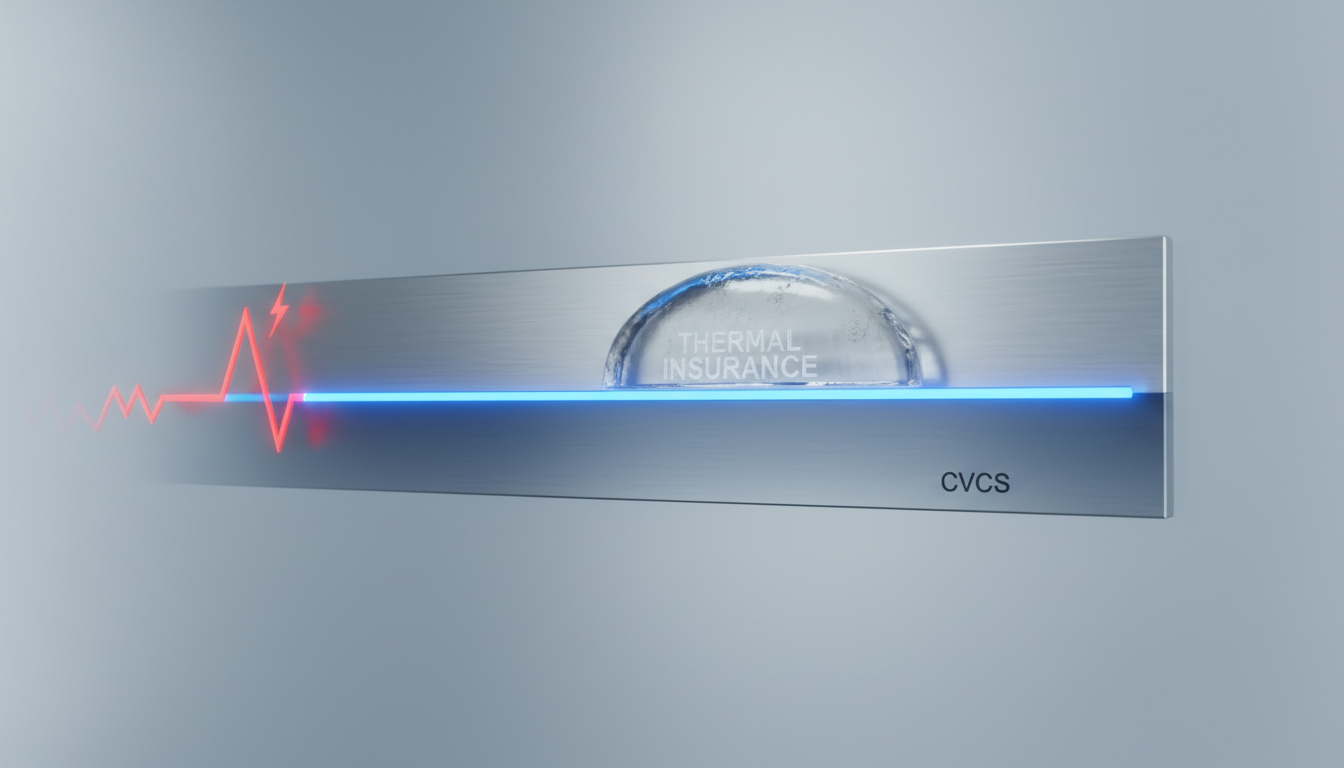
Thermal Insurance is the strategic implementation of grid-independent energy systems—specifically Solar + Battery storage—to guarantee 100% uptime for temperature-controlled environments. Unlike traditional insurance, which pays you after your products have spoiled, Thermal Insurance prevents the spoilage event from occurring. It is the physical manifestation of risk mitigation.
For enterprise RFP managers, Thermal Insurance represents a shift from reactive to proactive procurement. When you select a partner like CVCS, you are not just buying cold storage space; you are buying a guaranteed thermal environment. Our off-grid resilience ensures that even if the surrounding county goes dark for a week, our internal temperatures remain static. This is the ultimate hedge against the uncertainty of the modern world.
True Thermal Insurance requires three pillars:
- Generation Autonomy: The ability to produce power on-site, typically via high-density solar arrays.
- Storage Redundancy: Large-scale Battery Energy Storage Systems (BESS) that bridge the gap between solar production cycles.
- Intelligent Microgrid Controls: Software that manages loads to ensure critical cooling systems receive priority power 24/7/365.
The Failure of Traditional Redundancy
For years, the industry standard for “insurance” was the diesel generator. However, in the context of modern sustainability goals and long-duration outages, diesel is a failing legacy technology. During a regional grid failure or a natural disaster, fuel logistics become a nightmare. If the roads are blocked or fuel supplies are diverted to emergency services, your “backup” is nothing more than an expensive paperweight.
Moreover, diesel generators are notoriously unreliable. They require frequent maintenance and often fail to start during the exact moment they are needed. According to industry data, the failure rate of standby diesel generators is significantly higher than that of solid-state microgrids. The following table illustrates the stark difference between legacy backup systems and modern off-grid redundancy.
Comparative Reliability: Diesel vs. Microgrid
| Metric | Standby Diesel Generators | Off-Grid Solar + Battery (Microgrid) |
|---|---|---|
| Start-up Success Rate | ~90-95% (Mechanical dependency) | >99.9% (Solid-state transition) |
| Fuel Dependency | External supply chain required | None (On-site solar harvest) |
| Maintenance Frequency | Monthly/Quarterly mechanical checks | Annual remote monitoring |
| Duration Limit | Limited by on-site fuel tank | Indefinite (Daily solar recharge) |
| Carbon Footprint | High (NOx and CO2 emissions) | Zero (During operation) |
Economic Impact of 100% Uptime
The financial argument for Thermal Insurance extends beyond mere loss prevention. It fundamentally alters The Levelized Cost of Energy (LCOE) for the facility. By generating power on-site, CVCS eliminates the “delivery charges” and “regulatory fees” that make up a significant portion of a standard utility bill. This creates a fixed, predictable cost for energy over a 20-year horizon.
For a procurement officer managing a multi-million dollar pharmaceutical or high-end food portfolio, the ROI of Thermal Insurance is twofold:
- Direct OPEX Savings: Off-grid systems bypass utility peak pricing. In California, where midday and evening rates can quadruple, the savings from solar+battery storage are massive.
- Risk Premium Reduction: Facilities that can demonstrate 100% uptime through off-grid autonomy are increasingly favored by secondary insurers. By lowering the “Risk of Loss,” companies can negotiate better terms on their broader inventory policies.
In the “Authoritative Truth” of modern logistics, energy is no longer a commodity; it is a strategic asset. If you do not control your energy, you do not control your cold chain. The CVCS commitment to off-grid resilience provides our partners with a competitive advantage. While competitors scramble to source fuel for generators during a PSPS event, our partners continue operations without a millisecond of interruption.
Strategic Procurement in the Age of Volatility
When evaluating RFPs for cold storage, procurement managers must look beyond the price per pallet. They must ask: “What is the cost of a six-hour outage?” and “How does this facility ensure thermal stability when the grid fails?” If the answer involves diesel generators and “hope,” it is not a resilient solution. Thermal Insurance demands a grid-independent partner.
By integrating renewable generation with advanced storage, we provide a fortress for your inventory. This isn’t just about being “green”; it’s about being “black”—as in, staying in the black on your balance sheet by eliminating the catastrophic losses associated with grid dependence.
Frequently Asked Questions
Q: Why are diesel backups insufficient for modern cold chains?
A: Diesel backups are mechanical systems prone to failure. They require complex fuel logistics which often break down during wide-scale regional emergencies. Additionally, they do not provide the financial benefit of daily energy cost offset, whereas solar+battery systems pay for themselves through daily utility avoidance.
Q: Is Thermal Insurance a replacement for traditional cargo insurance?
A: It is a complementary framework. While traditional insurance covers the financial value of lost goods, Thermal Insurance provides the infrastructure to ensure those goods are never lost in the first place, thereby protecting brand reputation and supply chain continuity which insurance checks cannot replace.
Q: How does CVCS achieve 100% uptime?
A: Through a combination of over-provisioned solar arrays, high-capacity battery storage, and a complete disconnection from the public grid’s vulnerabilities. We treat energy as a mission-critical component of the cold chain, not an external service.
Secure Your Portfolio Today
Don’t leave your high-value inventory to the mercy of an aging grid. Move toward a framework of total resilience.
Related Articles
- The Complete Guide to Cold Storage Benefits for California Agriculture
- Agricultural Cold Storage at Madera Airport Industrial Park: Built for the San Joaquin Valleys Nut Industry
- Levelized Cost of Energy (LCOE) in Industrial Cold Storage