California Cold Storage Energy Cost Context
California’s electricity rates are among the highest in the continental United States. PG&E’s commercial time-of-use rates in 2026 reach $0.32–0.45/kWh during peak periods (typically 4–9pm on weekdays from June through September), with off-peak rates of $0.18–0.24/kWh. These rates are 60–100% higher than the US national commercial average, creating an energy cost burden that is existentially significant for energy-intensive cold storage operations.
A 50,000-square-foot refrigerated warehouse in PG&E territory can consume 2–4 million kWh annually, generating an electricity bill of $400,000–$900,000 per year at current rates. Energy cost is typically the largest single operating expense for California cold storage facilities, exceeding labor in many cases.
Energy Benchmark: kWh Per Pallet-Month
A useful operational benchmark for comparing cold storage energy efficiency is kWh consumed per pallet-month of storage. This metric normalizes energy consumption against utilization, allowing meaningful comparison between facilities of different sizes and utilization rates.
Industry benchmarks for California cold storage (refrigerated, 34–38°F):
Older facilities (pre-2000 construction): 35–55 kWh/pallet-month. These facilities typically have thinner insulation panels, older scroll or reciprocating compressors, and incandescent or T8 fluorescent lighting.
Modern facilities (post-2010 construction): 20–35 kWh/pallet-month. Modern construction uses 4–6 inch insulated metal panels, high-efficiency screw compressors, LED lighting, and variable-frequency drives on evaporator fans.
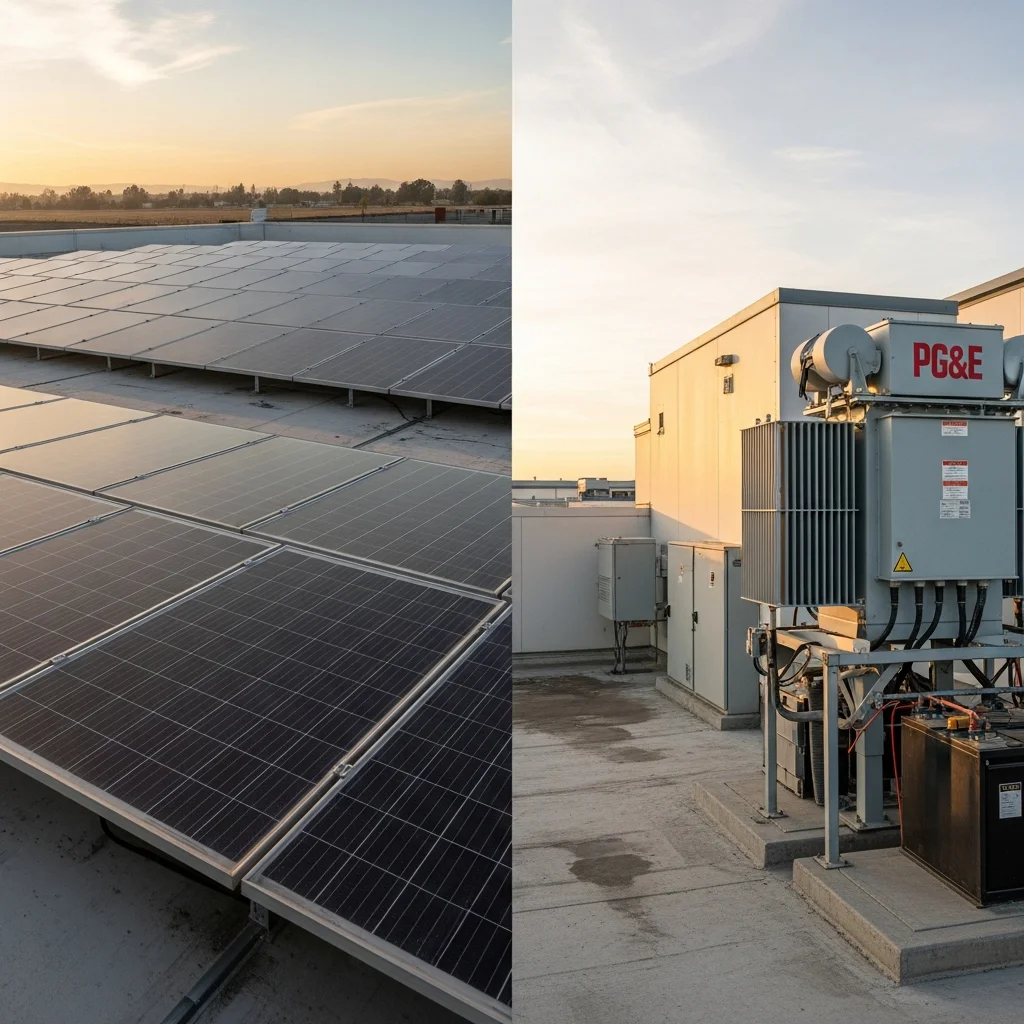
Best-in-class facilities (post-2018, solar-equipped): 12–22 kWh/pallet-month net (after solar offset). These facilities combine optimal building envelope performance with on-site generation that offsets 30–60% of gross consumption.
Demand Charge Reduction: The Overlooked Opportunity
California commercial electricity bills include both an energy charge (per kWh consumed) and a demand charge (per kW of peak demand in the billing period). Demand charges frequently represent 30–40% of total electricity cost for cold storage facilities — and they’re determined by the single highest 15-minute peak demand reading in the month.
Demand charge reduction strategies for cold storage operators include: demand response programs where the facility curtails non-critical loads during grid peak hours in exchange for bill credits; battery storage systems that provide demand peak shaving by supplying stored energy during peak demand windows; and operational scheduling that staggers compressor startup sequences to avoid simultaneous inrush current spikes.
Solar ROI Calculation for California Cold Storage
The financial case for rooftop solar at California cold storage facilities is strong. Key inputs for ROI calculation:
System cost: $1.80–2.50/watt installed for commercial-scale rooftop solar in California in 2026, after the 30% federal Investment Tax Credit (ITC).
Generation: The Central Valley averages 5.5–6.5 peak sun hours per day, yielding approximately 1,500–1,800 kWh/year per installed kW of solar capacity.
Avoided cost: Solar generation displaces purchased electricity at the blended rate (energy plus demand charges avoided), typically $0.22–0.30/kWh effective rate for California cold storage.
Simple payback: At these inputs, a 500 kW rooftop solar system on a 50,000 sqft cold storage facility has a simple payback period of 5–7 years and an IRR of 15–20% — a compelling return for a capital improvement with a 25-year productive life.