
Mastering the Produce Cold Chain: From Harvest to Global Export
In the high-stakes arena of international agricultural trade, the “produce cold chain” is not merely a logistics category; it is a biological race against time. For international agricultural exporters operating out of California’s Central Valley—a region responsible for 99% of U.S. table grapes and 70% of global almond exports—the integrity of the cold chain dictates the difference between premium market pricing in Shanghai or Rotterdam and a total loss due to enzymatic degradation. As a post-harvest physiologist, I view the cold chain through the lens of cellular kinetics. To master this process, one must understand that every degree of temperature fluctuation and every minute of delay in field heat removal represents a quantifiable reduction in shelf life and nutritional density.
Central Valley Cold Storage (CVCS), strategically located in Madera, serves as the “First-Mile” critical node for exporters. By integrating advanced thermodynamic principles with real-time digital oversight, the transition from California soil to global sea-freight is managed with surgical precision. This article explores the technical imperatives of the modern produce cold chain, focusing on the physiological demands of the product and the technological infrastructure required to meet the world’s most stringent phytosanitary standards.
The Physiology of Post-Harvest Decay: Arresting the Biological Clock
The moment a fruit or nut is detached from its parent plant, it transitions from a state of growth to a state of senescence. However, the product remains a living organism, continuing to respire and consume its internal energy reserves (sugars, starches, and organic acids). The primary objective of the produce cold chain is to minimize this metabolic rate without causing chilling injury.
The Role of Respiration and Field Heat
Respiration is an exothermic process; it generates heat. Left unchecked, this “vital heat” creates a feedback loop that accelerates cellular breakdown. The rate of this breakdown follows the Q10 temperature coefficient principle, which suggests that for every 10°C (18°F) increase in temperature, the rate of metabolic activity—and thus the rate of decay—doubles or even triples. This is why the removal of “field heat” is the most critical intervention in the entire export cycle.
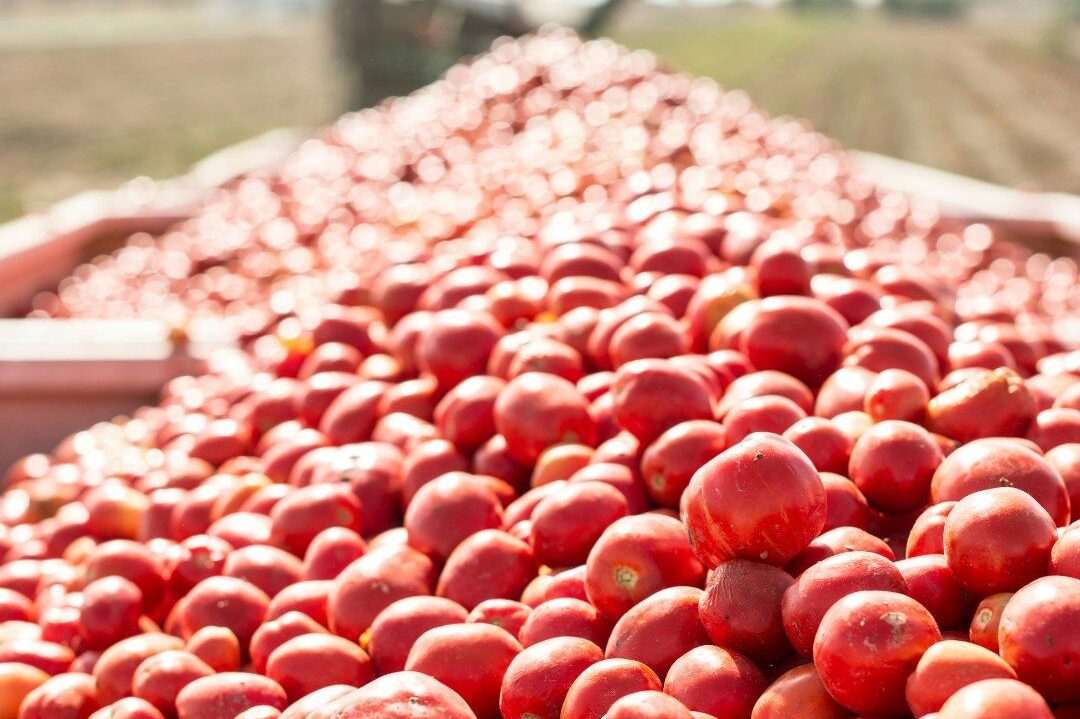
In Madera, where summer temperatures often exceed 100°F, produce arriving from the field carries a massive thermal load. If this load is not dissipated within a four-hour window, the physiological “death clock” accelerates. Effective produce cold chain management requires high-velocity forced-air cooling or hydro-cooling to reach the “7/8ths cooling time”—the point at which 87.5% of the temperature difference between the initial product temperature and the cooling medium has been removed.
Managing Turgidity and Vapor Pressure Deficit (VPD)
Beyond simple temperature control, exporters must manage the Vapor Pressure Deficit (VPD). This is the difference between the amount of moisture the air can hold and the amount of moisture present in the produce. A high VPD causes moisture to migrate out of the product and into the air, leading to shriveling, loss of turgidity, and weight loss—all of which are disqualifying factors for premium export grades. Maintaining a relative humidity (RH) of 90-95% for most produce types is essential to ensure that when a grape arrives in an Asian market, it retains the “snap” and hydration it had at the moment of harvest.
| Stage | Action | Critical Metric |
|---|---|---|
| Harvest | Field Heat Removal | < 4 Hours |
| Storage | Precise Equilibrium | +/- 0.5 Degree |
| Export | Digital Traceability | KDE/CTE Accuracy |
CO2 Refrigeration: The Export Gold Standard
As international regulations move toward more sustainable and “clean” logistical practices, the choice of refrigerant has become a strategic asset for exporters. While ammonia (R717) and various HFCs have traditionally dominated the landscape, Carbon Dioxide (CO2 or R744) refrigeration has emerged as the gold standard for high-value produce exports. This shift is driven by both performance and regulatory compliance.
Thermodynamic Efficiency and Product Safety
CO2 is a natural refrigerant with a Global Warming Potential (GWP) of 1, making it exempt from the tightening restrictions of the Kigali Amendment and the EPA’s SNAP program. However, for the agricultural exporter, the benefits are more immediate. CO2 systems, like those employed at Central Valley Cold Storage, offer superior heat transfer coefficients. This allows for more rapid pull-down times during the critical first-mile cooling phase.
Furthermore, CO2 is non-toxic and non-flammable. In the event of a system leak, there is zero risk of chemical contamination of the produce. For exporters targeting the European Union or Japan, where residue standards and food safety certifications are incredibly rigorous, the “chemical-free” nature of CO2 cooling provides a layer of brand protection that synthetic refrigerants cannot match. It ensures that the organic or premium status of the cargo is never compromised by the cooling medium itself.
Precision Temperature Equilibrium
Exporting specialty crops like almonds and walnuts requires more than just “cold” air; it requires precision equilibrium. While nuts are more shelf-stable than stone fruits, they are highly susceptible to lipid oxidation and rancidity if stored in fluctuating temperatures. The CO2 systems at our Madera facility allow for a steady-state equilibrium with a tolerance of +/- 0.5 degrees Celsius. This level of precision prevents the formation of condensation (sweating) on the product when moving between stages of the cold chain, which is the primary cause of mold growth during long-haul sea transit.
Digital Traceability for Global Markets
In the modern produce cold chain, a physical product is only as valuable as the data that accompanies it. International trade partners now demand a “digital twin” of the cargo—a comprehensive record of the environmental conditions the product experienced from the moment it entered the terminal. This is particularly true for meeting EU and Asian standards for nut quality and phytosanitary compliance.
The Goose System: Real-Time Transparency
Central Valley Cold Storage utilizes the Goose system, a proprietary digital monitoring platform that provides exporters with real-time visibility into their inventory’s thermal history. This system tracks Key Data Elements (KDEs) and Critical Tracking Events (CTEs) required by the FDA’s Food Safety Modernization Act (FSMA) Section 204. For an exporter, this data is the primary evidence needed to clear customs in foreign ports.
The Goose system monitors:
- Instantaneous Ambient Temperature: Ensuring the storage environment never drifts from the set point.
- Ethylene Levels: Monitoring the presence of this ripening hormone to prevent premature senescence in mixed-load environments.
- Energy Consumption: Providing data for ESG (Environmental, Social, and Governance) reporting, which is increasingly required by global retailers like Ahold Delhaize or Tesco.
Meeting Phytosanitary and Cold Treatment Requirements
Many export destinations, particularly in the Asia-Pacific region, require “Cold Treatment” as a phytosanitary measure to eliminate pests like the Mediterranean Fruit Fly without the use of methyl bromide fumigation. This process requires the produce to be held at a specific, near-freezing temperature for a duration of 14 to 22 days. The precision of the Goose system ensures that this treatment is documented with 100% accuracy. If the temperature rises even half a degree above the protocol for a single hour, the treatment clock resets. Our infrastructure in Madera is designed specifically to mitigate this risk, ensuring that shipments are never rejected at the destination port due to data gaps.
The Madera Advantage: First-Mile Logistics
Location is a biological imperative in the produce cold chain. The “First-Mile” refers to the distance between the harvest site and the first refrigerated terminal. In the Central Valley, where 70% of California almonds are processed and nearly all table grapes are grown, Madera serves as the strategic epicenter. By reducing the transit time from the field to the CVCS facility, exporters can capture the highest possible “Quality Potential” of the crop.
Every hour the produce sits on a truck in the valley sun represents a loss of several days of retail shelf life. Our facility’s proximity to major North-South and East-West corridors allows for rapid intake and immediate thermal intervention. This “First-Mile” efficiency is the foundation upon which successful global export programs are built.
Key Takeaways for Exporters
- Cellular kinetics dictate shelf life: You cannot improve the quality of produce after harvest; you can only manage the rate of its decline through immediate cooling.
- CO2 cooling is the future: It provides a chemical-free, environmentally compliant, and high-performance solution for sensitive export commodities.
- Real-time data is a trade requirement: Digital traceability via systems like Goose is essential for navigating the complex phytosanitary landscape of international trade.
Frequently Asked Questions
How do you maintain shelf life for exports?
Maintaining shelf life for long-haul exports is achieved by managing consistent turgidity through precise humidity control and arresting metabolic activity via immediate field heat removal. By keeping the produce in a state of “suspended animation” with +/- 0.5°C temperature stability, we ensure the product remains physiologically young during transit.
What is the Goose system’s role?
The Goose system acts as the digital backbone of the produce cold chain. It provides the digital twin data—including thermal logs and movement history—required for FSMA compliance and international export documentation. It allows exporters to prove to overseas buyers that the cold chain was never broken.
Conclusion: Securing the Future of California Exports
The complexities of the produce cold chain require more than just a warehouse with a cooling unit; they require a deep integration of post-harvest physiology, sustainable thermodynamic engineering, and robust digital transparency. For California’s exporters, the ability to deliver “field-fresh” quality to the other side of the planet is a competitive necessity. By leveraging the CO2 infrastructure and digital oversight provided by Central Valley Cold Storage in Madera, exporters can confidently scale their global footprint, knowing their integrity is preserved from the first mile to the final consumer.
Are your export protocols ready for the next harvest?
Request an Export Readiness Audit