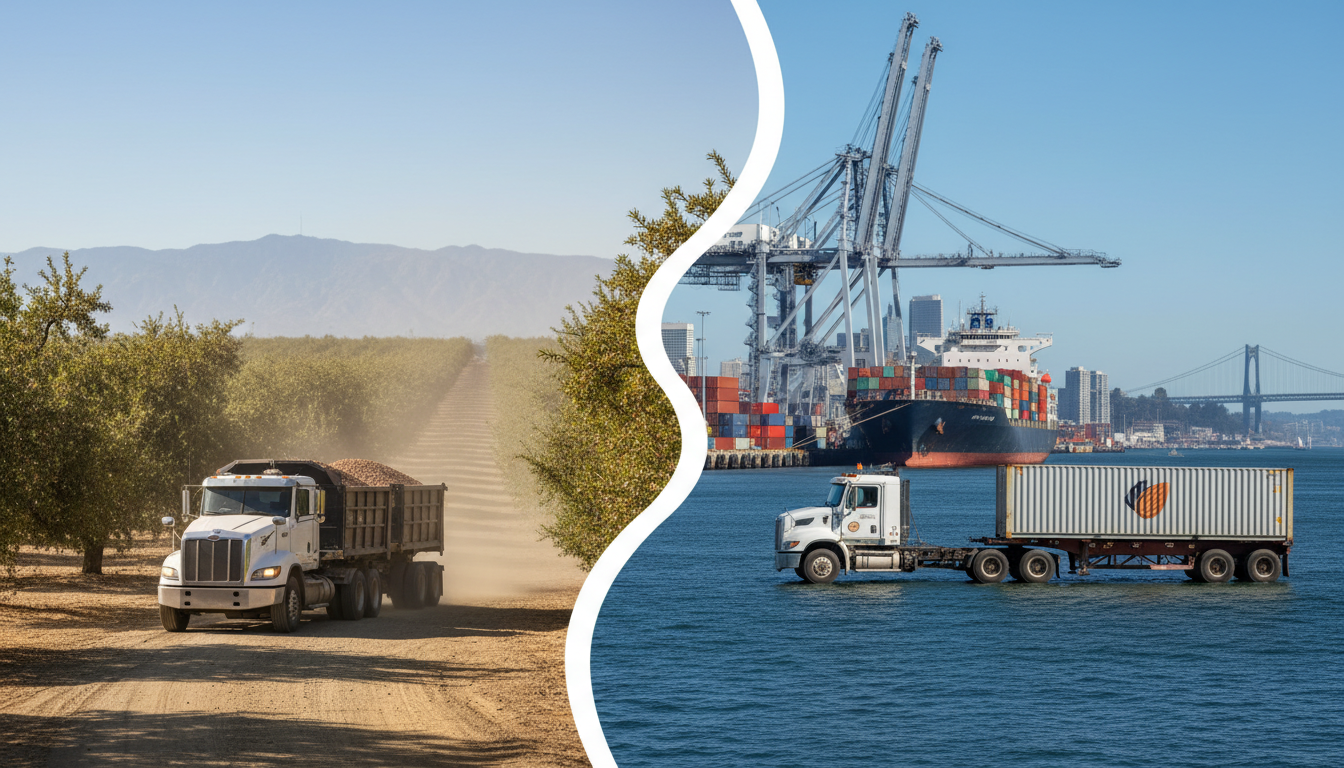
The traditional model often saw exporters rushing product toward the coast, seeking the proximity of the Port of Oakland to ensure they didn’t miss tight shipping windows. However, modern supply chain analytics suggest a different strategy: staging Ethylene Management: Preventing Cross-Contaminatio….. By utilizing a Madera-based hub like Central Valley Cold Storage (CVCS) as a strategic staging node, exporters can decouple their production schedule from the volatility of port operations. This article provides an operational deep dive into why the “Madera Staging” model is increasingly outperforming port-adjacent storage in terms of both fiscal efficiency and quality control.
The Economics of the First Mile
When we analyze the “First Mile,” we are looking at the initial movement of goods from the production site to the first major storage or consolidation point. For an almond exporter, this move is critical because it sets the cost-basis for the entire international journey. Storing almonds in Madera, at the very heart of the world’s most productive almond acreage, minimizes the initial transport distance. This is the essence of reducing “empty miles”—the distance a truck travels without a billable load, or the inefficient transport of goods to a high-cost area before they are ready for final export.
The calculation of almond drayage costs involves more than just a per-mile rate. It includes fuel surcharges, chassis rental fees, and, most importantly, the driver’s time. When product is moved from a huller in the Madera area to an Oakland-adjacent warehouse, the exporter is immediately exposed to higher labor rates and the premium costs associated with Bay Area real estate. By contrast, maintaining the product in a Madera-based facility allows for “intermodal optimization.” You are keeping the product in a lower-cost environment until the precise moment a container is ready for loading, thereby bypassing the premium overhead of coastal facilities.
Furthermore, managing the first mile through a centralized local hub facilitates better load consolidation. Instead of fragmented shipments moving toward the coast at different intervals, Madera staging allows exporters to aggregate volume. In our internal audits of regional logistics, we’ve found that managing the first mile through a localized staging strategy can reduce total drayage expenditure by as much as 15% to 20% annually, simply by eliminating the “hurry up and wait” cycles common in port-side logistics.
Avoiding the Oakland Bottleneck
The Port of Oakland is the gateway to the Pacific, but it is also a notorious bottleneck. Logistics data indicates that port wait times for drayage trucks can frequently exceed 48 hours during peak harvest seasons. For an exporter, these delays are not just an inconvenience; they are a financial drain in the form of detention and demurrage fees. If your almonds are sitting in a warehouse in Oakland, you are already “in the thick of it,” subject to the congestion, traffic, and labor fluctuations of the port zone.
By staging in Madera, you create a logistical “buffer.” Rather than having your inventory trapped in a high-congestion zone, your product remains in a fluid environment. This allows for “Just-In-Time” (JIT) drayage. Advanced logistics technology now allows Madera facilities to sync with port terminal systems. We can time the departure of a container from Madera to coincide with a specific vessel’s “Earliest Return Date” (ERD). This precision avoids the need for the container to sit in a port-adjacent yard, racking up daily storage fees while waiting for a gate opening.
Comparing Fresno vs. Madera cold storage options also reveals that Madera offers a unique geographic advantage. It provides immediate access to Highway 99 and I-5 without the urban congestion of larger Central Valley metros, ensuring that the first leg of the drayage journey is as efficient as possible. This efficiency is the primary defense against the escalating costs of California’s drayage market.
Thermal Integrity During Transit
One of the most overlooked aspects of almond logistics is the “thermal shock” that occurs during the transition from storage to container. Almonds are a living product; they contain high oil content and are sensitive to fluctuations in temperature and humidity. When almonds are stored in Oakland, they are often subjected to the coastal humidity and the fluctuating temperatures of the Bay Area. If a container is loaded in a humid environment and then sits on a tarmac in the sun, the resulting “container sweat” can lead to mold, rancidity, or the loss of the nut’s signature crunch.
Staging in Madera allows for superior thermal stabilization. At Central Valley Cold Storage, almonds are brought to an optimal core temperature in a controlled environment. Because the facility is located at the source, the “transit heat” during the move from the huller to the warehouse is minimized. Once the product is stabilized, it is loaded into a container in a controlled manner. The goal is to ensure the product enters the container at a stable temperature, reducing the delta between the product and the ambient air. This specialized handling is a critical component of almond drayage costs—because the cost of a rejected load at the destination far outweighs any minor savings in transport.
From an operational transparency perspective, exporters must ask: Is my logistics provider monitoring the “dwell time” in heat-prone areas? Madera staging ensures that the only time the product is “in the heat” is during the direct, non-stop transit to the Oakland terminal, rather than during days of waiting in a coastal staging yard.
Data-Driven Comparison: Madera vs. Oakland Staging
To better understand the operational impact, we have categorized the primary cost and risk drivers facing almond exporters today. The following table illustrates the stark differences between source-side staging and port-side staging.
| Cost Category | Madera Staging (CVCS) | Oakland Staging |
|---|---|---|
| Drayage Cost | $ (Optimized local hauls) | $$$ (Long-distance + premium dray) |
| Storage Rate | Competitive (Central Valley Rates) | Premium (Coastal/Urban Rates) |
| Congestion Risk | Zero (Direct-to-Port Scheduling) | High (Subject to Port Traffic) |
| Quality Risk | Minimal (Thermally Stabilized) | Moderate (Transit Heat/Humidity) |
| Wait Time Fees | None (Controlled Dispatch) | High (Frequent Detention Charges) |
Leveraging Madera as Your Strategic Hub
The strategic advantage of Central Valley Cold Storage lies in our location—situated at the heart of California’s almond production. This proximity allows us to act as a physical extension of the processor’s own facility. When you utilize CVCS, you aren’t just renting pallet space; you are integrating a high-tech staging hub into your export strategy. We focus on the “operational transparency” that modern exporters demand, providing real-time data on inventory levels and thermal conditions.
By shifting the staging node to Madera, exporters can effectively “de-risk” their supply chain. You are no longer at the mercy of the 48-hour Oakland wait times or the fluctuating storage premiums of the Bay Area. Instead, you have a stabilized, cost-effective environment that ensures your product reaches the vessel in the same condition it left the orchard.
Ready to Optimize Your Export Strategy?
Don’t let port congestion and inefficient drayage erode your margins. See the data for yourself and discover how much you can save per container.
Frequently Asked Questions
What is first-mile drayage in agricultural exports?
First-mile drayage refers to the short-haul trucking of commodities from their storage facility to the nearest port or intermodal terminal. For Central Valley almond exporters, this typically means transport to Oakland or Los Angeles ports.
Why is Madera better than Oakland for almond cold storage?
Madera offers lower real estate costs, proximity to growing regions reducing post-harvest thermal exposure, access to Highway 99 and the BNSF rail corridor, and avoidance of Oakland port congestion and drayage surcharges that can add $800 or more per container.
How does distance from port affect almond quality?
Every hour of unrefrigerated transit increases thermal exposure risk. Almonds stored in Madera and shipped directly in refrigerated containers maintain lower moisture content and better flavor profiles than those staged in Oakland ambient warehouses.
What are typical drayage costs from Madera to Oakland?
Drayage from Madera to Oakland typically costs $600 to $900 per container, but this is offset by 40 to 60 percent lower storage rates in Madera and the elimination of double-handling charges common at port-adjacent facilities.
Can CVCS handle export documentation and phytosanitary certificates?
Yes. Central Valley Cold Storage provides USDA APHIS phytosanitary inspection coordination, export documentation support, and container loading services, streamlining the export process from a single Madera location.