By: Logistics Technology Specialist
In the modern logistical landscape, the distance between a physical pallet movement and its digital record is often where profitability dies. For Operations Managers overseeing complex cold chain environments, manual data entry is no longer just an inefficiency—it is a liability. With the introduction of the FSMA 204 Rule by the FDA, the requirement for precise, real-time traceability has transformed 3PL inventory integration from a “nice-to-have” feature into a core operational mandate.
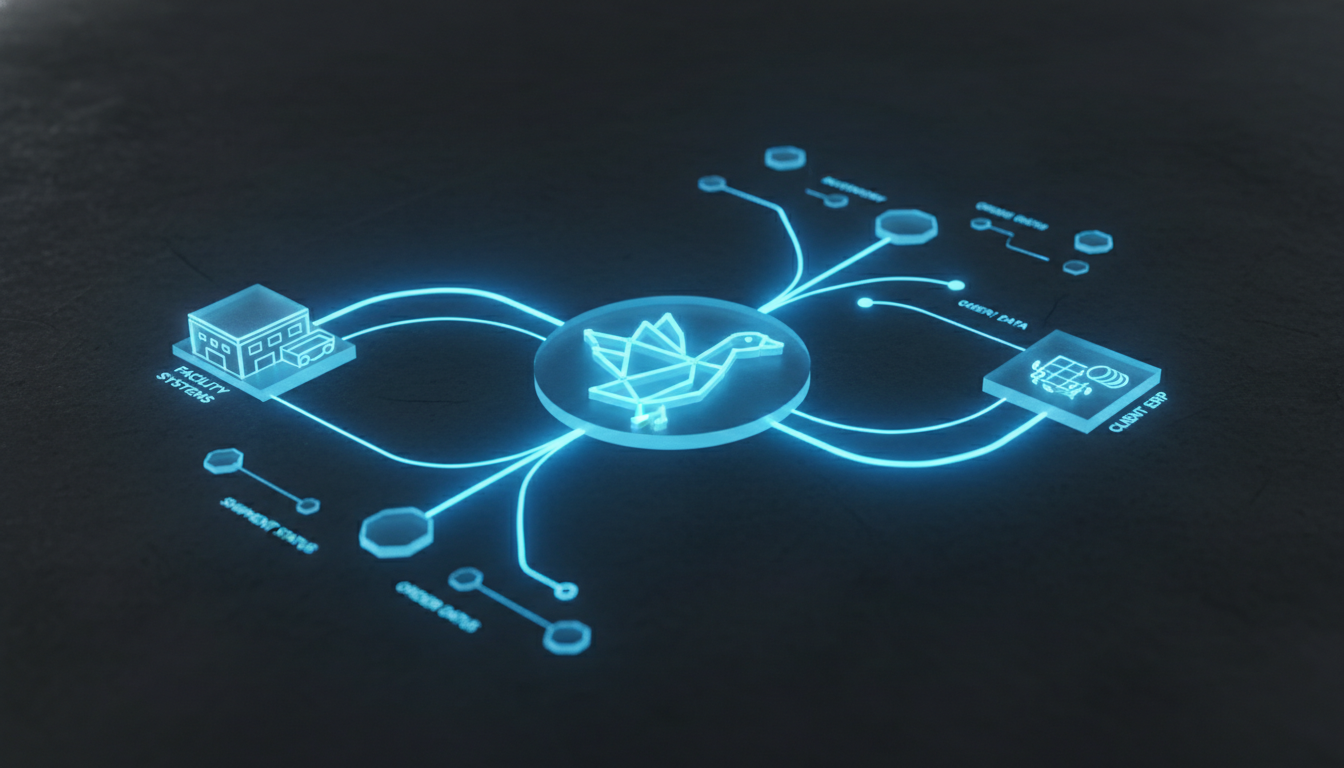
The Goose system represents a shift in how Third-Party Logistics (3PL) providers and brand owners interact. It is not merely a warehouse management tool; it is a high-concurrency data bridge designed to eliminate the 24-48 hour latency common in legacy reporting. By integrating the Goose system directly with enterprise resource planning (ERP) platforms like SAP, Oracle, or Microsoft Dynamics 365, organizations can achieve a level of transparency that was previously cost-prohibitive. This guide examines the technical architecture, API capabilities, and compliance frameworks required to successfully deploy a Goose-driven integration strategy.
The Architecture of Goose
The Goose system is built upon a cloud-native, multi-tenant architecture designed specifically for the rigors of cold chain logistics. Unlike traditional on-premise solutions that require complex VPN tunneling and localized server maintenance, Goose operates as a web-based inventory platform. This allows for a decentralized data capture model where warehouse personnel, carriers, and operations managers access a unified “single source of truth” via encrypted HTTPS protocols.
At its core, the architecture focuses on three primary pillars: telemetry ingestion, inventory state management, and outbound data syndication. For the Operations Manager, this means that every time a sensor records a temperature fluctuation or a forklift operator scans a QR code, that data point is instantly processed and staged for ERP synchronization. The system utilizes a proprietary Goose System Monitoring engine that constantly polls environmental sensors (temperature and humidity) and correlates them with specific lot numbers. This coupling of environmental data with inventory movement is critical for preventing shrink, which studies show costs food logistics companies between 1% and 3% of their annual revenue due to manual discrepancies and unrecognized spoilage.
Furthermore, the architecture is designed to handle “Transfer of Ownership” events with high fidelity. In a 3PL environment, the legal transfer of goods often happens faster than the paperwork can follow. Goose solves this by automating the timestamping of change-of-custody events, ensuring that financial records in the ERP reflect the physical reality of the warehouse floor.
API Connectivity Hub
The true power of 3PL inventory integration lies in the API Connectivity Hub. The Goose system utilizes a RESTful API framework, allowing for seamless JSON-based communication between the warehouse environment and external ERP systems. This eliminates the need for manual CSV uploads or “swivel-chair” data entry, where an employee must copy data from one screen to another.
When an Operations Manager initiates an integration, the API Hub acts as the traffic controller. It supports several critical integration patterns:
- Webhooks for Real-Time Alerts: Instead of the ERP constantly “polling” the Goose system for updates, Goose pushes data to the ERP the moment a specific event occurs, such as a “Receipt of Goods” or a “Quality Hold” status change.
- Bidirectional Synchronization: While Goose pushes inventory levels and tracking data to the ERP, the ERP can push Sales Orders and Purchase Orders back to Goose. This ensures the warehouse team is always working against the most current demand signals.
- Payload Validation: To maintain data integrity, the API Hub validates all incoming and outgoing data against predefined schemas. If a lot number is missing a required manufacture date, the system flags the error before it can pollute the ERP database.
For organizations still relying on legacy systems, the Goose system also supports standard EDI (Electronic Data Interchange) protocols. This ensures that even if an ERP is not yet ready for a full RESTful integration, shipping and receiving data can still be exchanged via 850 (Purchase Order), 856 (Advance Ship Notice), and 940 (Warehouse Shipping Order) documents.
Automating Critical Tracking Events (CTEs)
With the implementation of FSMA 204, the FDA has identified specific food items that require enhanced traceability records. This is where the Goose system’s ability to automate Critical Tracking Events (CTEs) and Key Data Elements (KDEs) becomes invaluable. In a manual system, capturing the “Who, What, Where, and When” of every product touchpoint is labor-intensive and prone to human error.
Through 3PL inventory integration, the Goose system automatically generates CTEs for receiving, transforming, and shipping. For example, when a shipment of perishable goods arrives at the dock, the system captures the KDEs—such as the Traceability Lot Code, the location identifier, and the specific temperature profile during transit—and links them to the internal record. This record is then instantly available for audit. By automating this process, companies can reduce the time required to produce a full traceability report from days to minutes.
This automation significantly boosts accuracy. While manual tracking typically hovers around 92% accuracy due to fatigue and handwriting errors, the Goose integration maintains a 99.9% accuracy rate. This precision is vital for minimizing the scope of a recall; if you can prove exactly which pallets stayed within the required temperature range, you can avoid discarding perfectly good product that would otherwise be lost in a “blanket” recall.
For more insights on the operational benefits of these features, refer to our guide on Real-Time Inventory Visibility: How the Goose System Optimizes Logistics.
Data Performance Comparison
To understand the technical advantages of this integration, it is helpful to look at the performance metrics comparing manual tracking to an automated Goose System environment. Digital integration reduces data latency by approximately 95%, moving the needle from reactive management to proactive intervention.
| Feature | Manual Tracking | Goose System Integration |
|---|---|---|
| Data Latency | 24-48 Hours | < 1 Minute |
| FSMA 204 Compliance | Manual Audit | Automated CTE/KDE Generation |
| Accuracy | 92% | 99.9% |
Technical Implementation Strategy
For an Operations Manager, the deployment of 3PL inventory integration must be treated as a strategic project rather than a simple software installation. The process generally follows a four-phase approach:
- Discovery and Mapping: Identifying the data fields in the ERP that correspond with the Goose system’s KDEs. This includes mapping Unit of Measure (UOM) conversions and lot-coding conventions.
- Environment Configuration: Setting up the Goose System Monitoring parameters for the specific warehouse zones. This includes defining “Critical Limits” for temperature and humidity that will trigger API alerts.
- Sandbox Testing: Utilizing a non-production environment to simulate high-volume transactions. This ensures that the API handshake between Goose and the ERP can handle peak seasonal loads without timeout errors.
- Go-Live and Optimization: Moving to the production environment with a “hyper-care” support period to monitor data flow and refine webhook triggers.
One of the most significant hurdles in this process is often the “dirty data” present in legacy ERPs. The Goose system’s robust validation layer helps clean this data at the point of entry, ensuring that only high-quality, compliant information is stored in the long-term records. This proactive data cleansing is a major factor in the 99.9% accuracy rate achieved by integrated users.
The Impact on the Cold Chain
In cold chain logistics, the “inventory” is a living, breathing entity that degrades over time. Traditional 3PL inventory integration often ignores the environmental context of the goods. The Goose system changes this by treating temperature and humidity as primary data points, just as important as the SKU count. If a refrigeration unit fails in Zone B, the Goose system doesn’t just send an alarm to a technician; it can programmatically update the status of all inventory in that zone to “Quality Hold” within the ERP.
This level of integration prevents the accidental shipping of compromised products. It creates a digital “safety net” that protects the brand’s reputation and ensures consumer safety. From a financial perspective, the elimination of manual entry errors directly addresses the 1-3% revenue loss mentioned earlier, essentially allowing the system to pay for itself within the first year of full implementation.
Frequently Asked Questions
Q: Does the Goose system support EDI?
A: Yes, it supports standard EDI protocols for seamless transfer of shipping and receiving data, ensuring compatibility with partners who have not yet transitioned to API-based workflows.
Q: How does the system handle internet outages at the warehouse level?
A: The Goose system architecture includes local caching capabilities. If the connection to the cloud is interrupted, data is stored locally on the capture devices and automatically synced once the connection is restored, ensuring no CTEs are lost.
Q: Can Goose integrate with custom-built ERP systems?
A: Yes. Because Goose utilizes a standard RESTful API, any system capable of making and receiving HTTP requests can be integrated, though custom mapping may be required during the discovery phase.
Conclusion: The Future of Integrated Logistics
As the logistics industry moves toward a more regulated and data-driven future, the ability to connect disparate systems is the hallmark of a successful operation. The Goose system provides the technical infrastructure necessary to bridge the gap between 3PL providers and the enterprise. By leveraging real-time visibility, automated FSMA 204 compliance, and robust API connectivity, Operations Managers can transition from fighting fires to optimizing flow.
The reduction in data latency from days to minutes isn’t just a technical achievement—it’s a competitive advantage. In a world where every minute counts, ensuring your data moves as fast as your freight is the only way to remain relevant.
Ready to modernize your inventory connectivity?
Contact our engineering team to discuss your specific ERP requirements and compliance needs.