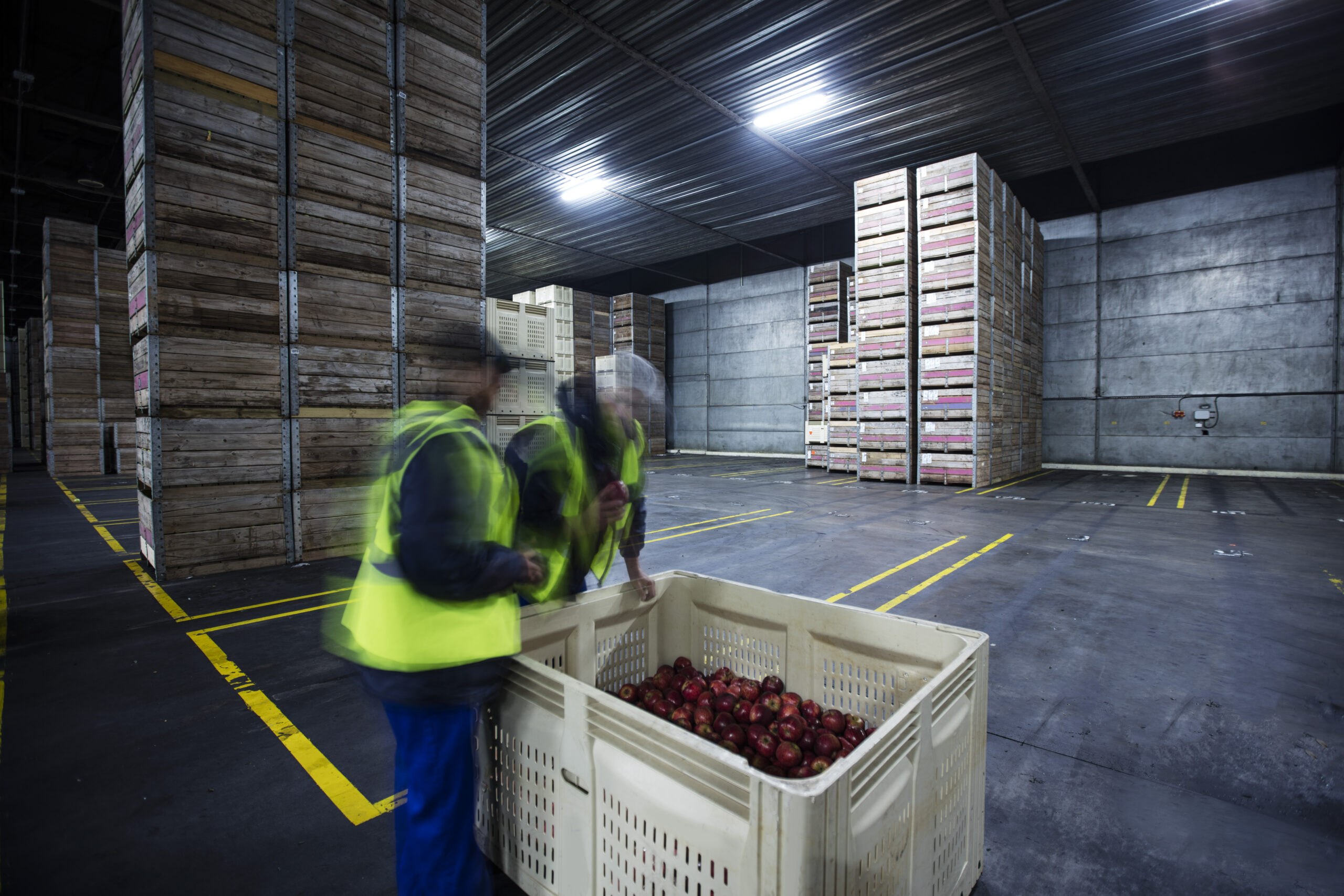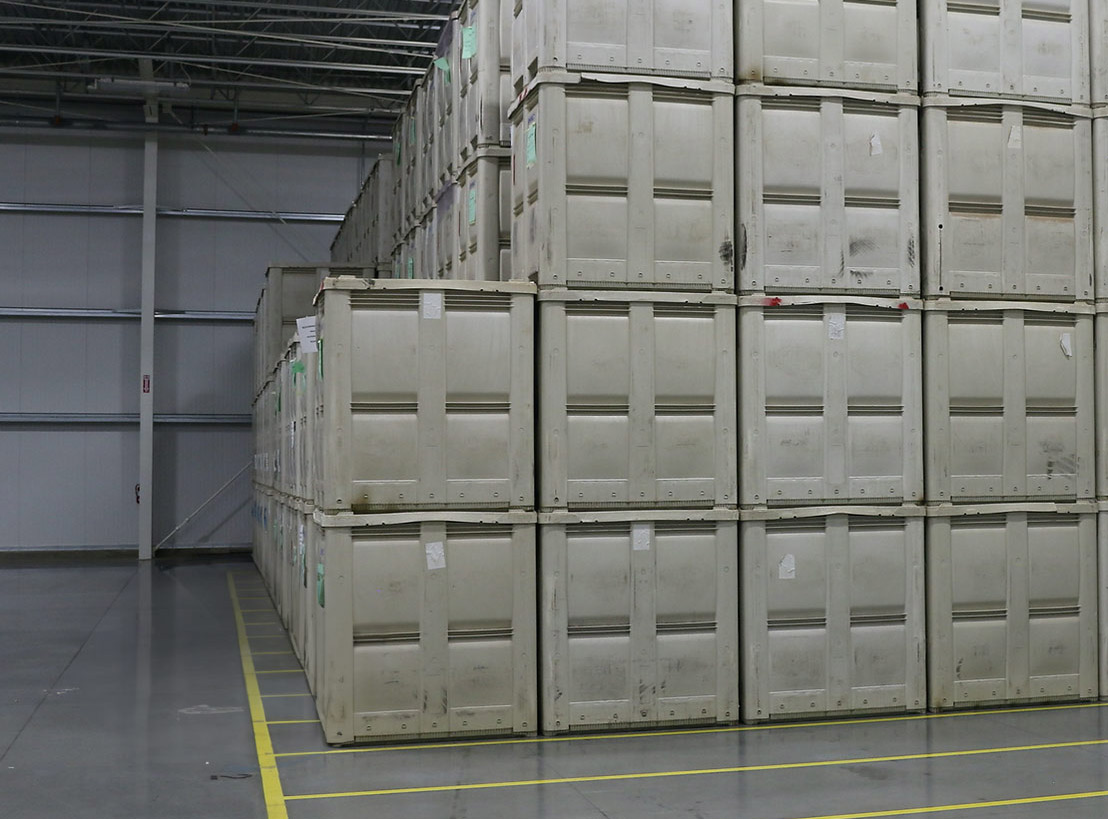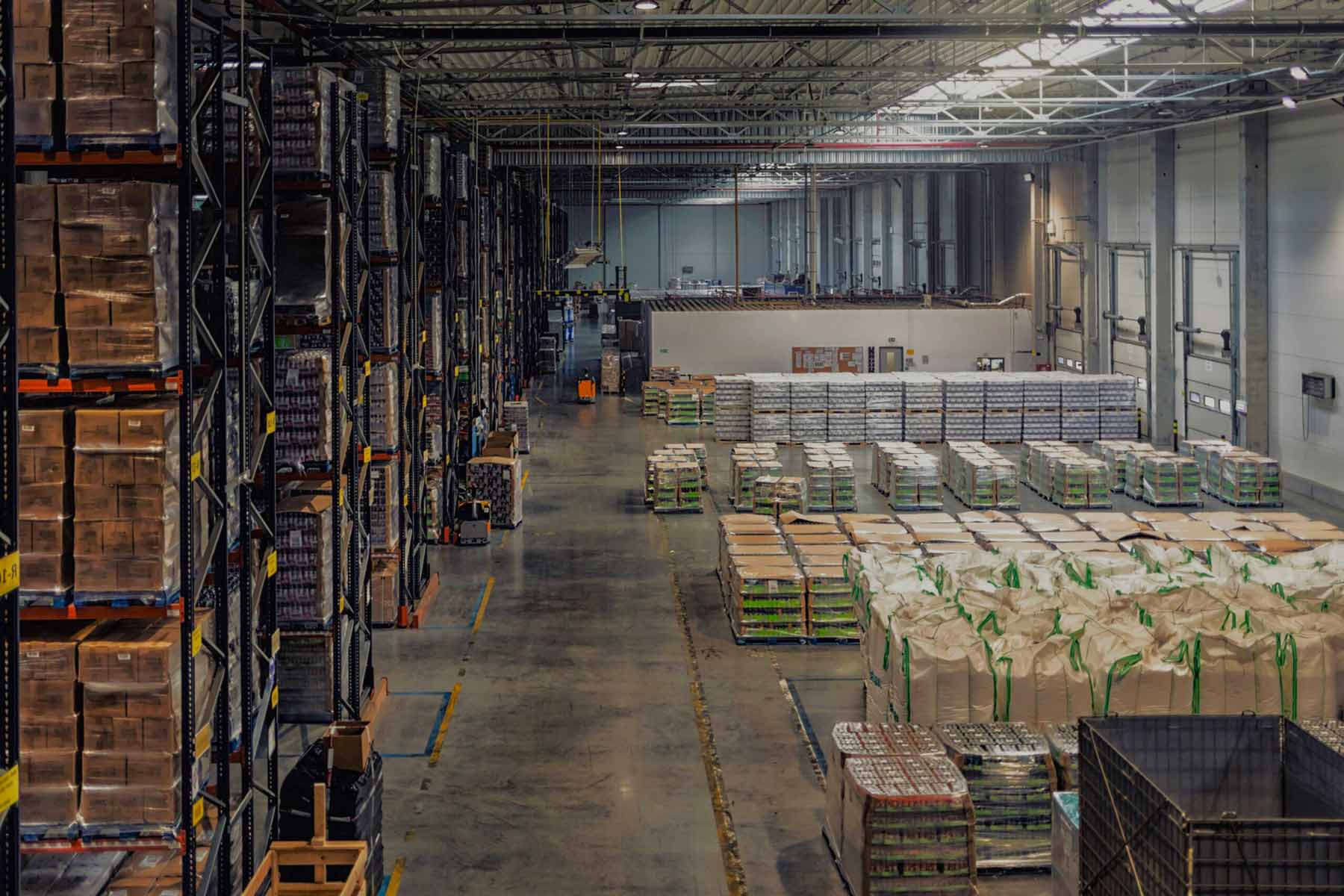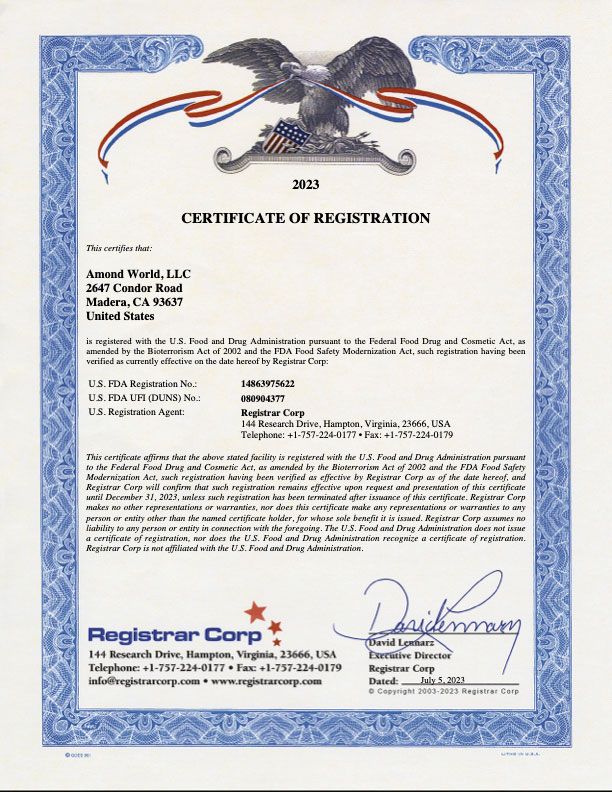
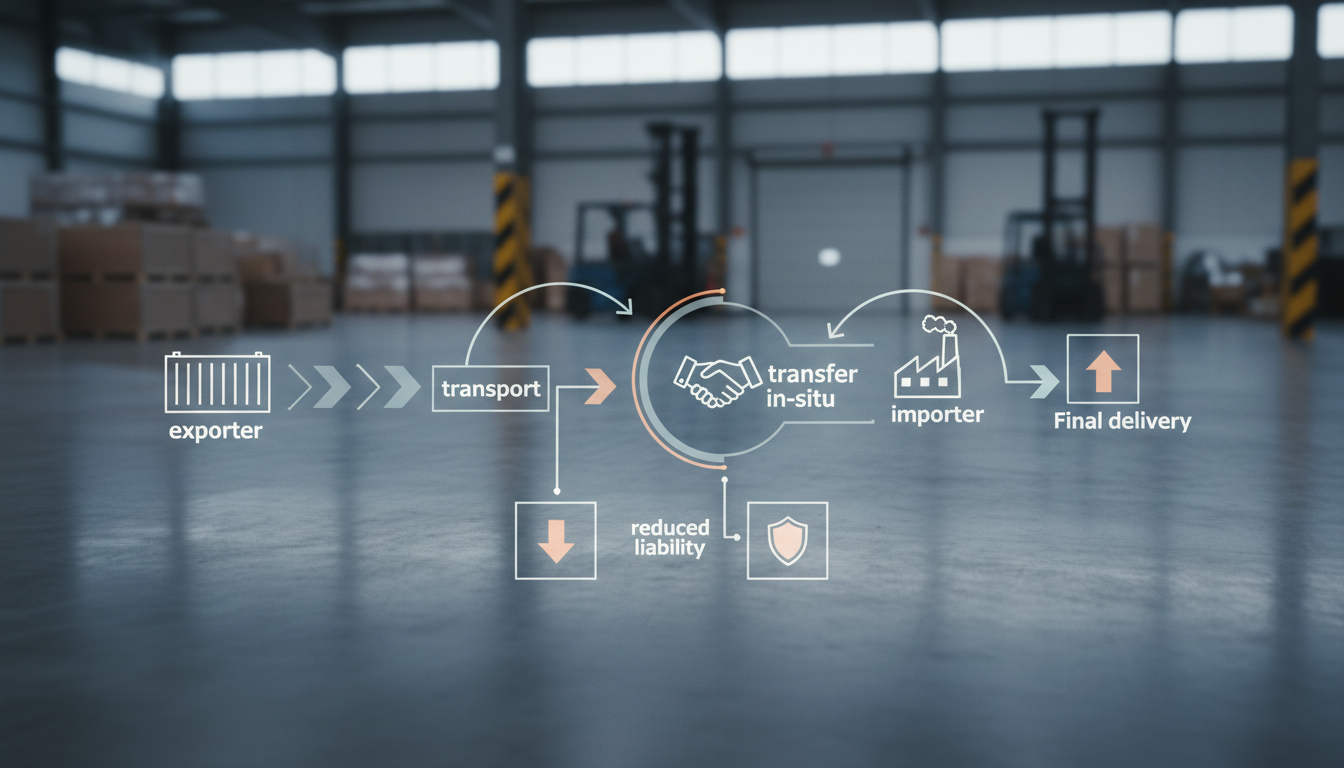
As a Logistics Technology Specialist, I have observed that the most significant innovations in the industry today aren’t necessarily faster trucks or larger ships, but rather the decoupling of financial transactions from physical movement. This is where Title Transfer In-Situ comes into play. By allowing ownership to change hands while the product remains stationary in a controlled environment, exporters can effectively bypass the “friction of the move,” reducing liability and preserving the integrity of their bottom line.
The stakes are high. Current data suggests that logistics represents approximately 30% of total agricultural overhead. When a significant portion of that cost is tied to redundant handling and “empty miles”—trips where trucks move goods simply to position them for a sale that hasn’t technically closed—the need for a more sophisticated approach becomes undeniable.
The Friction of Physical Movement
Every time a pallet of temperature-sensitive agricultural goods is moved, the risk profile of that shipment increases. This is the fundamental “friction” of logistics. In a traditional export model, goods are often moved multiple times before the final sale is settled. Each touchpoint represents a potential point of failure: a forklift puncture, a loading dock delay, or the most dreaded scenario in the cold chain—a temperature excursion.
When title transfer is dependent on physical delivery to a buyer’s hub, the seller carries the full burden of liability throughout the transit phase. If a reefer unit fails on a highway three hundred miles from the destination, the exporter bears the loss. Furthermore, the “empty miles” generated by moving goods to a speculative location add unnecessary fuel costs and carbon emissions, all while the capital remains tied up in “floating” inventory.
The traditional model also forces exporters into a defensive posture regarding drayage. Port congestion and driver shortages can trap goods in transit, delaying the transfer of title and, consequently, the realization of revenue. By utilizing Title Transfer In-Situ, the goods remain in a high-tech, source-adjacent facility—such as our Madera location—where they are protected from the volatility of the road until the exact moment the buyer assumes legal responsibility.
Reducing Temperature Excursions and Redundant Handling
In the agricultural sector, the cold chain is the lifeblood of product value. Every minute a product spends on a loading dock or in a truck with a fluctuating micro-climate, its shelf life diminishes. Title Transfer In-Situ minimizes this by keeping the product in a “deep freeze” or controlled atmosphere state for longer durations. Instead of moving the product to the buyer, we move the legal rights to the product. The goods stay put; the data moves. This eliminates the need for redundant staging and ensures that the cold chain remains unbroken during the most critical financial phase of the transaction.
Decoupling Capital from Logistics
One of the most profound shifts in modern logistics technology is the ability to treat inventory as a liquid asset before it even leaves the warehouse. Title Transfer In-Situ is the mechanism that makes this possible. When we decouple capital from the physical logistics of trucking and shipping, we allow exporters to operate with much greater agility.
From a technological standpoint, this is managed through integrated Warehouse Management Systems (WMS) that provide real-time visibility and “single source of truth” documentation. When a sale is executed in-situ, the WMS updates the ownership records instantly. The product doesn’t move an inch, but on the balance sheet, the exporter has realized revenue, and the buyer has secured their asset.
This decoupling is a prerequisite for advanced financial strategies, such as Inventory-Backed Financing. When goods are stored in a trusted, third-party facility like California Central Valley Cold Storage (CVCS), they can serve as collateral. Because the title can be transferred in-situ, lenders have a clear path to asset seizure or resale without the logistical nightmare of tracking down a truck in transit. This transparency lowers the risk for lenders and improves interest rates for exporters, creating a virtuous cycle of liquidity.
The Role of Smart Contracts and Digital Receipts
The transition to in-situ transfers is powered by the digitization of the Bill of Lading and the Warehouse Receipt. In an industry-authority framework, we rely on immutable digital records to prove that the goods exist, are in the condition specified, and are stored in a facility that meets all regulatory standards. This digital layer removes the “trust gap” between international buyers and domestic sellers. The buyer knows that the goods are in a secure Madera facility, and the seller knows that the moment the digital signature is applied, the liability shifts.
Financial Benefits for the Seller
The financial arguments for Title Transfer In-Situ are compelling, particularly for high-volume exporters dealing with thin margins. The most immediate benefit is the speed to revenue. In a standard “delivered-at-place” (DAP) agreement, the seller might wait weeks for the product to arrive and pass inspection before getting paid. With an in-situ transfer, the payment trigger is the transfer of title within the warehouse. This can accelerate cash flow by 15 to 30 days.
Secondly, there is the massive reduction in “dead logistics” costs. By storing goods at a source-adjacent location in Madera, exporters are positioned perfectly at the heart of California’s Central Valley. This reduces the initial drayage cost from the field to the freezer. Once the title is transferred in-situ, the buyer becomes responsible for the subsequent logistics costs from the warehouse to the final destination. This shifts the burden of freight volatility—fuel surcharges, detention fees, and peak-season premiums—away from the exporter.
Consider the following comparison of a traditional export move versus an in-situ transfer model:
| Cost Component | Traditional Shipping (to Buyer Hub) | In-Situ Transfer (at CVCS Madera) | Savings/Benefit |
|---|---|---|---|
| Drayage & Initial Transit | $1,200 – $1,800 | $300 – $500 | Up to 70% reduction in initial transport |
| Liability/Insurance Premium | High (Transit Risk) | Low (Static Storage) | Lowered insurance payouts & premiums |
| Days to Payment | 20 – 45 Days | 1 – 3 Days | Drastic improvement in DSO (Days Sales Outstanding) |
| Handling Touches | 4 – 6 times | 1 – 2 times | Reduced risk of physical damage |
| Carbon Footprint | High (Multiple Legs) | Optimized (Single Leg) | Supports corporate ESG goals |
Strategic Advantage of Madera Source-Adjacent Location
Location is a critical variable in the success of Title Transfer In-Situ. Our facility in Madera acts as a strategic “collection point” for the Central Valley’s agricultural output. By moving goods a short distance from the processing plant to a high-spec cold storage facility, exporters lock in the quality of the product immediately. Being source-adjacent means the exporter isn’t paying to move “water and shells” over long distances; they are moving finished, high-value goods into a neutral zone where they can be sold to any global buyer. This creates a “logistics buffer” that protects the exporter from market fluctuations and port bottlenecks.
Key Takeaways for Modern Exporters
- Eliminate Redundant Handling: Stop moving product just to satisfy legacy delivery requirements. Transfer ownership where the goods are already safely stored.
- Realize Revenue Faster: Decouple the payment trigger from the physical delivery date, significantly improving cash flow and reducing DSO.
- Maintain Cold Chain Integrity: Minimize the time product spends in transit under your liability, ensuring the buyer receives the highest quality goods possible.
- Leverage Technology: Use modern WMS and digital title management to provide transparency and security to international buyers.
Frequently Asked Questions
Q: What is title transfer in-situ?
A: It is the legal transfer of ownership of goods while they remain in their current storage location, rather than requiring the goods to be physically moved to the buyer’s premises before the sale is finalized.
Q: Does this require the buyer to have an account at the same warehouse?
A: Not necessarily, but it is streamlined if the warehouse facility (like CVCS) is equipped to handle multi-client title management. The buyer simply assumes the storage contract or arranges for immediate transport after the title transfer.
Q: How does this impact insurance?
A: It simplifies it. Since the transfer happens in a controlled environment, the “hand-off” of risk is clearly defined by a timestamped warehouse receipt, eliminating the gray areas often found in maritime or over-the-road transit disputes.
For exporters looking to sharpen their competitive edge, the message is clear: stop thinking of logistics as just trucks and ships, and start thinking of it as the management of title and risk. By embracing Title Transfer In-Situ, you are not just moving food; you are optimizing capital.
CTA: Explore Title Transfer Services to see how we can streamline your export operations.