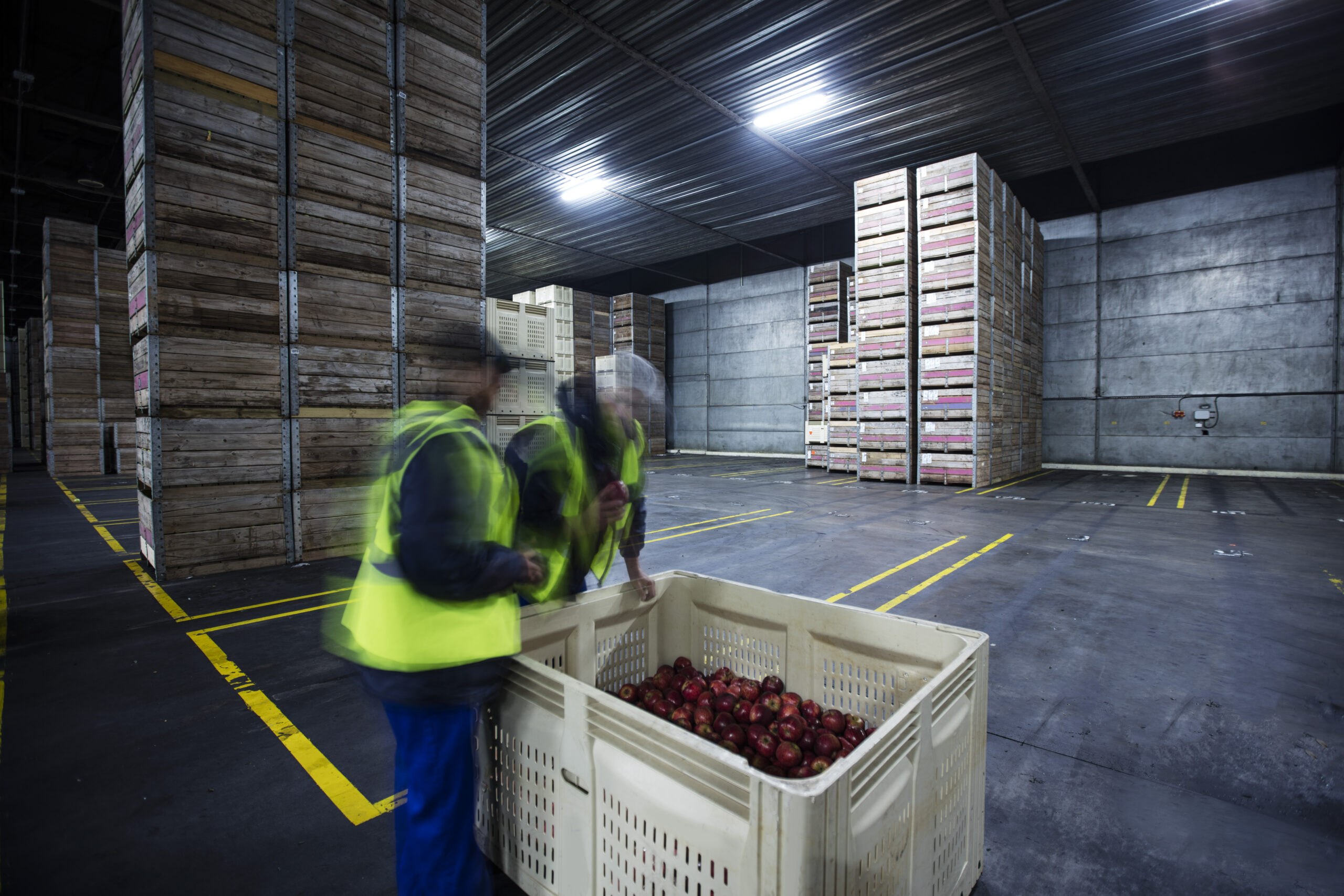
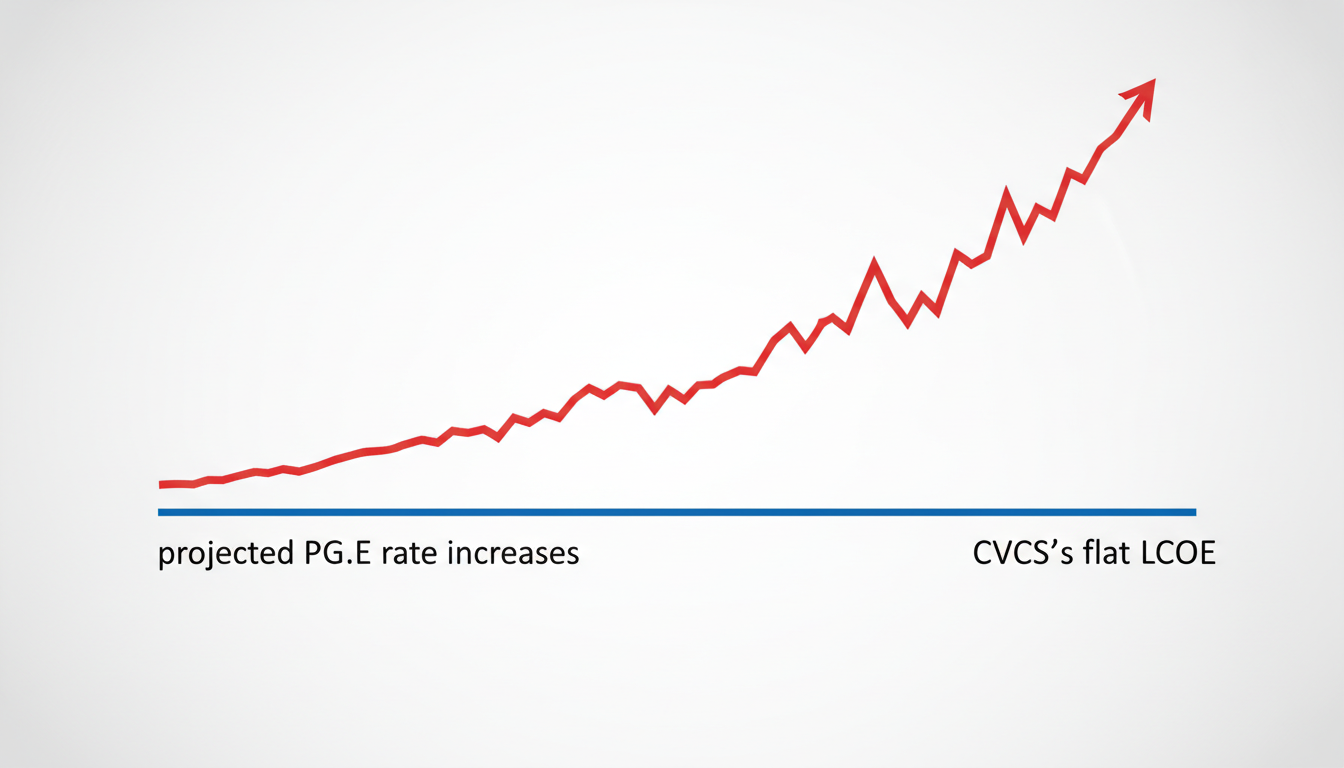
LCOE is the primary tool for comparing the lifetime costs of different energy generation technologies. In the context of industrial cold storage—an asset class characterized by high energy intensity and low thermal tolerance—calculating LCOE is the difference between a predictable, high-margin operation and one at the mercy of escalating utility rates Agricultural Cold Storage at Madera Airport Indust….. At CVCS, we have demonstrated that by decoupling from the public grid in favor of off-grid solar and battery storage, industrial facilities can operate at approximately 50% of the energy cost of comparable grid-connected buildings.
Zero-Click Summary: The Financial Edge
Levelized Cost of Energy (LCOE) measures the lifetime costs of an energy source divided by its total energy production. For our off-grid systems, the LCOE is significantly lower and more predictable than the public grid. By removing utility inflation and demand charges, we provide enterprise partners with 20-year price certainty and fixed margins.
- Off-grid kills utility inflation: Eliminates exposure to annual rate hikes.
- Fixed energy costs improve margins: Transforms a variable expense into a predictable capital asset.
- Solar + Battery is a 20-year hedge: Protects against grid instability and “time-of-use” price gouging.
Understanding LCOE in Industrial Settings
For the industrial CFO, LCOE is essentially the “break-even” price at which energy must be sold (or valued) to cover the costs of the energy system over its entire lifecycle. The formula incorporates initial capital expenditures (CAPEX), ongoing operations and maintenance (O&M), and total energy output over a 20- to 25-year horizon, discounted back to the present value.
In a traditional grid-dependent facility, the LCOE is effectively the utility rate, which is inherently variable and outside of the firm’s control. When evaluating off-grid solar-powered cold storage, the LCOE calculation shifts. The primary cost drivers become the hardware (photovoltaic panels, lithium-ion or flow batteries) and the cost of capital. Once the system is commissioned, the marginal cost of the next kilowatt-hour (kWh) is near zero.
The Technical Formula
To calculate LCOE, we use the following equation:
LCOE = (Total Lifetime Cost) / (Total Energy Produced)
For industrial cold storage, this calculation must also account for thermal inertia. Unlike a standard warehouse, a cold storage facility acts as a thermal battery. By over-cooling during peak solar production hours, the facility can “store” energy in the form of cold air and product mass, reducing the discharge requirements of the electrical battery system. This optimization further drives down the LCOE by increasing the “usable” energy output per dollar of CAPEX spent.
To understand the broader macroeconomic context of these shifts, read our deep dive on The Economics of Off-Grid Cold Storage: Defeating California’s Energy Volatility.
The Rising Cost of Grid Dependency
The status quo—reliance on investor-owned utilities (IOUs)—has become a liability. In regions like California, the utility model is facing a systemic crisis. Aging infrastructure, wildfire mitigation costs, and the massive capital requirements of grid modernization are being passed directly to industrial ratepayers. California industrial electricity rates have risen 45% since 2019, a trend that shows no signs of plateauing.
For a CFO, this represents a “cost-plus” model where the “plus” is unknown. When the grid fails or when peak-pricing kicks in, the operational disruptions and demand charges can decimate quarterly earnings. Furthermore, traditional utilities are burdened by Transmission and Distribution (T&D) charges, which often account for up to 40% of the total bill. An off-grid solar facility eliminates T&D charges entirely, as the energy is generated and consumed behind the meter.
| Factor | Public Utility (PG&E) | CVCS Off-Grid Solar |
|---|---|---|
| Price Volatility | 12-15% Annual Increase | Fixed/Zero |
| Carbon Intensity | High | Zero |
| 20-Year Cost | Escalating | Depreciation Only |
The Hidden Costs of Grid Reliability
LCOE comparisons often overlook the cost of downtime. In industrial cold storage, a power outage of just a few hours can lead to catastrophic product loss or, at the very least, a significant expenditure in backup diesel generation. The LCOE of a diesel generator is astronomically high (often exceeding $0.40/kWh) when factoring in fuel, maintenance, and the short lifespan of the asset. By integrating solar with high-capacity battery storage, off-grid facilities achieve 99.999% uptime with an LCOE that is mathematically superior to any grid-plus-backup configuration.
Financing Sustainability: The Long View
From a balance sheet perspective, the transition to off-grid energy is a shift from Operational Expenditure (OpEx) to Capital Expenditure (CapEx). For many CFOs, this is an advantageous trade. OpEx is a recurring leak that inflates with the market; CapEx is an investment that can be depreciated, leveraged, and used to offset tax liabilities.
Tax Incentives and Accelerated Depreciation
The financial viability of off-grid cold storage is further bolstered by federal and state incentives. The Investment Tax Credit (ITC), significantly expanded under recent legislation, allows for a substantial percentage of the solar and storage system cost to be claimed as a tax credit. Combined with the Modified Accelerated Cost Recovery System (MACRS), which allows for the rapid depreciation of solar assets, the “real” LCOE—after tax benefits—is often lower than even the most optimistic utility projections.
Asset Valuation and Yield
Beyond the immediate energy savings, the LCOE of an off-grid facility directly impacts the capitalization rate (Cap Rate) and overall valuation of the property. A building with a fixed, low-cost energy profile is a lower-risk asset than one exposed to utility price shocks. For institutional investors, these facilities offer more stable yield, making them highly attractive in a volatile market. We operate at approximately 50% of the energy cost of comparable grid-connected buildings, which translates directly to higher NOI and higher asset exit multiples.
Strategic Risk Mitigation
Risk management is the silent partner of the LCOE calculation. In the next decade, we anticipate the introduction of “carbon taxes” or “Scope 2 emission penalties” for heavy industrial energy consumers. A grid-dependent facility will be forced to pay a premium for “green” power or purchase carbon offsets. An off-grid solar facility is inherently carbon-neutral, effectively “pre-paying” for its carbon compliance for the next 25 years.
Furthermore, energy independence provides a competitive advantage in leasing. Tenants in the cold storage sector are increasingly sensitive to energy costs, often preferring “triple-net” leases where energy costs are transparent. By offering a facility with a fixed-cost energy profile, landlords can command premium rents while still providing the tenant with a lower total cost of occupancy.
Frequently Asked Questions
Q: How does off-grid energy reduce my storage costs?
A: By removing the variable cost of electricity, we can offer more stable, long-term pricing contracts. Instead of adjusting storage rates annually to keep up with utility hikes (which have exceeded 45% in some markets), our costs are locked in by the capital investment in solar and battery hardware.
Q: Is the LCOE of solar + battery really lower than the grid today?
A: Yes. When you factor in the avoided costs of demand charges, peak-time-of-use rates, and the 40% T&D surcharge from utilities like PG&E, the levelized cost of on-site solar and storage is significantly lower over a 20-year horizon. Most industrial users see a “payback” period within 5 to 7 years, after which the energy is essentially free.
Ready to see the data for your specific footprint?