Technical Integration Guide: Goose API
In the high-stakes environment of food processing and cold chain logistics, the speed of data is just as critical as the temperature of the warehouse. For Operations Managers, the persistent challenge has always been the “visibility gap”—the latency that occurs between a physical transaction in a 3PL facility and its reflection in the corporate ERP. When data is siloed, inefficiencies flourish. According to industry data, manual inventory errors and data discrepancies cost logistics companies between 1% and 3% of their annual revenue. For a multi-million dollar food processing operation, this represents a significant drain on profitability and a risk to food safety compliance.
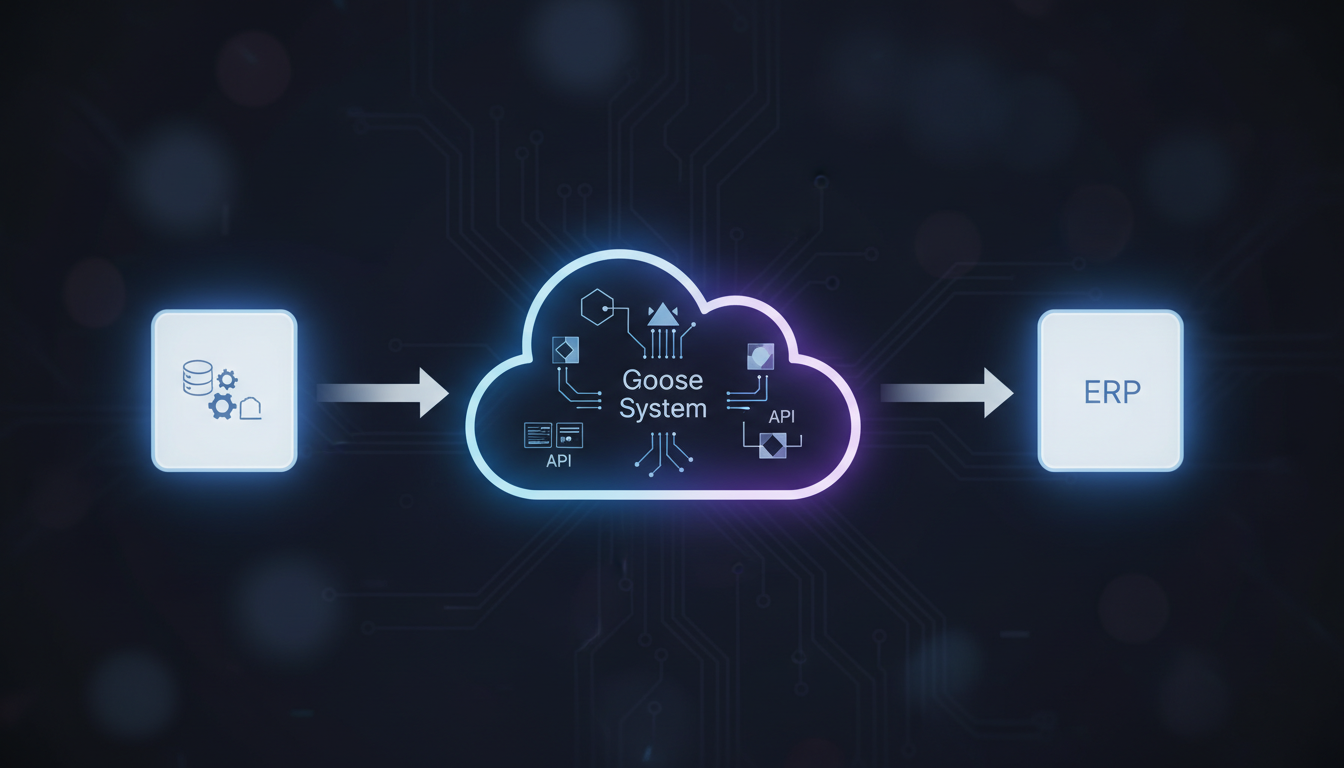
The proprietary Goose inventory system was designed to bridge this digital divide. As a Logistics Technology Specialist, I have seen firsthand how rigid, legacy systems stifle growth. The Goose System API serves as the connective tissue between your enterprise resource planning (ERP) platforms—such as SAP, Oracle, or Microsoft Dynamics—and our specialized warehouse management workflows. This guide provides the technical roadmap for integrating these systems to achieve real-time visibility, eliminate manual data entry, and automate the rigorous recordkeeping requirements of FSMA 204.
By leveraging a RESTful architecture, the Goose System API allows brand owners to treat our 3PL facilities as a seamless extension of their own digital infrastructure. This isn’t just about moving boxes; it’s about moving data with precision.
API Architecture and Endpoints
The Goose System API is built on a REST (Representational State Transfer) architecture, designed for scalability, performance, and ease of integration. For IT directors and operations managers, this means the system utilizes standard HTTP methods (GET, POST, PUT, DELETE) and returns data in lightweight JSON format. This universal language ensures that whether your stack is built on .NET, Java, or Python, the integration process remains straightforward.
Core Principles of the Goose API
Our API follows a stateless communication model. Each request from the client to the server must contain all the information necessary to understand and complete the request. This ensures that the Goose System can handle high volumes of concurrent requests from multiple enterprise clients without performance degradation. For high-volume food processors, this reliability is non-negotiable during peak seasonal demands.
Key Endpoints for Operations
To facilitate comprehensive inventory management, the Goose System API exposes several critical endpoints:
- /inventory/sync: This endpoint provides real-time snapshots of stock levels, including lot attributes, expiration dates, and hold statuses. By polling this endpoint or subscribing to its webhook, ERPs can maintain a “mirror” of the 3PL’s physical inventory.
- /orders/inbound: Operations managers use this to push Advanced Shipping Notices (ASNs) directly from their ERP to the Goose system. This triggers the scheduling of labor and dock space before the physical product even arrives.
- /orders/outbound: Once a sales order is generated in SAP or Oracle, this endpoint transmits the picking instructions to the Goose system, ensuring that First-Expiry-First-Out (FEFO) logic is applied according to the brand owner’s specific parameters.
- /shipments/tracking: Provides real-time updates on carrier status, Bill of Lading (BOL) generation, and final dispatch timestamps.
Data Mapping and Transformation
One of the primary hurdles in ERP integration is data mapping. SAP might refer to a product code as “Material ID,” while Microsoft Dynamics calls it a “SKU Number.” The Goose System API includes a flexible metadata layer that allows for custom field mapping. This ensures that the data being ingested by your ERP matches your internal nomenclature, preventing the common “garbage in, garbage out” scenario that plagues manual entry systems.
| Integration Type | Protocol | Use Case |
|---|---|---|
| Inventory Sync | REST API | Real-time stock levels |
| Order Management | EDI / API | Inbound/Outbound Scheduling |
| Compliance | Webhooks | FSMA 204 KDE Alerts |
Secure Data Exchange for Enterprise ERPs
Security is the cornerstone of the Goose System API. When connecting a 3PL’s warehouse management system (WMS) to an enterprise ERP like SAP or Oracle, data integrity and confidentiality are paramount. Food processing operations involve sensitive proprietary information, including recipes, vendor lists, and customer pricing. Any breach in this data flow could be catastrophic.
Authentication and Authorization
The Goose System API employs OAuth 2.0, the industry standard for secure authorization. Rather than sharing master credentials, the integration uses time-limited access tokens. This allows IT administrators to grant specific permissions to the integration layer without exposing the entire system. For example, an integration might be granted “read-only” access to inventory levels but “write” access for inbound order creation.
Encryption and Multi-Tenancy
All data transmitted via the Goose System API is encrypted in transit using TLS 1.2 or higher. Furthermore, the Goose system is built on a multi-tenant cloud architecture. This means that while multiple clients share the underlying cloud infrastructure, their data is logically isolated. Your data is never co-mingled with another client’s data at the database level, ensuring strict privacy and meeting the compliance standards required by global food brands.
Redundancy and Uptime
For operations managers, system downtime is synonymous with lost revenue. The Goose System API is hosted on geo-redundant servers with a 99.9% uptime SLA. In the event of a localized server failure, the API automatically fails over to a secondary node, ensuring that the flow of data to your SAP or Microsoft Dynamics environment remains uninterrupted. This level of resilience is essential for supporting just-in-time (JIT) logistics strategies where even a two-hour delay in order processing can disrupt a production line.
For more detailed insights on how we manage these connections, you should refer to our foundational document, Integrating the Goose System: A Technical Guide for 3PL Data Connectivity.
Automating FSMA 204 KDE Collection
The FDA’s Food Safety Modernization Act (FSMA) Section 204 has fundamentally changed the requirements for food traceability. For items on the Food Traceability List (FTL), companies are now required to maintain and share Key Data Elements (KDEs) for specific Critical Tracking Events (CTEs). Manual recordkeeping for these requirements is not only labor-intensive but also prone to errors that could lead to non-compliance and legal liability.
The Role of Webhooks in Compliance
The Goose System API automates FSMA 204 compliance through the use of Webhooks. While a standard API requires your system to “ask” for data, a Webhook allows the Goose system to “push” data to your ERP the moment a CTE occurs. For example, as soon as a shipment of leafy greens is received at the warehouse (a “Receiving” CTE), the Goose system triggers a Webhook containing the Traceability Lot Code, the location identifier, and the timestamp. This data is instantly populated in your ERP’s compliance module.
Ensuring KDE Accuracy
Manual inventory errors of 1-3% are often the result of mistyped lot codes or incorrect dates. The Goose system eliminates these errors by capturing data at the source via mobile scanning at the warehouse floor. This data is then transmitted via the API with 100% fidelity. Key Data Elements captured include:
- Traceability Lot Codes: Unique identifiers that follow the product through the supply chain.
- Source Records: Digital links to the original producer or processor.
- Transformation Records: Data points captured if the product is repacked or processed within the facility.
Ready for the “Recall” Test
One of the ultimate goals of FSMA 204 is the ability to provide the FDA with a traceability spreadsheet within 24 hours of a request. By integrating the Goose System API with your ERP, you move from a reactive posture to a proactive one. Instead of scrambling to gather paper logs and spreadsheets from a 3PL partner, your IT team can generate a complete traceability report with a single query because the data has been syncing in real-time all along.
The Strategic Value of Integration
The integration of the Goose System API is more than a technical checkbox; it is a strategic advantage. In the modern food supply chain, agility is the primary differentiator. When an Operations Manager has real-time visibility into stock levels, they can optimize production schedules, reduce safety stock, and minimize waste from expired products.
The transition from manual data entry to API-driven automation removes the “human friction” that slows down logistics. It ensures that when a pallet is scanned in our warehouse, that event is reflected in your corporate dashboard in milliseconds. This level of synchronicity is what enables modern just-in-time logistics and protects the brand’s reputation through superior quality control and compliance.
Frequently Asked Questions
Q: Does the Goose system support EDI?
A: Yes, it supports standard EDI protocols (such as 850, 856, and 940) for high-volume enterprise orders, alongside our REST API options.
Q: How secure is the data?
A: Goose uses industry-standard encryption (TLS 1.2+), OAuth 2.0 for authentication, and a secure multi-tenant cloud architecture to ensure data isolation and safety.
Q: Can we customize the data fields sent via the API?
A: Absolutely. The Goose System API features a flexible metadata layer that allows us to map our internal data points to your specific ERP fields (SAP, Oracle, etc.).
Q: How does the API handle high-traffic periods?
A: The API is built on scalable cloud infrastructure with load balancing and geo-redundancy to maintain 99.9% uptime even during peak seasonal volumes.
Q: What is the typical timeline for an API integration?
A: Depending on the complexity of the ERP and the specific use cases, a standard integration typically takes between 4 to 8 weeks from initial mapping to go-live.
Ready to Modernize Your Data Flow?
Empower your IT team with the full technical specifications of the Goose System. Streamline your ERP connectivity and ensure total FSMA 204 compliance today.