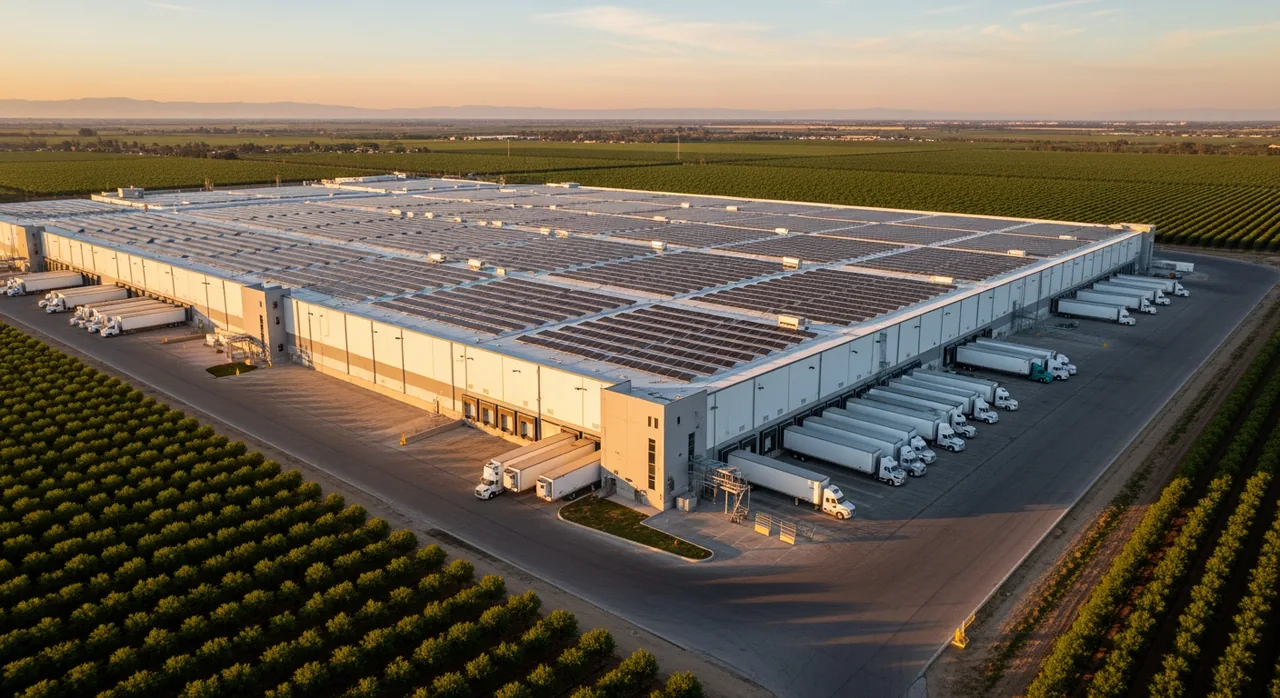
California’s Table Grape Export Industry
California produces approximately 98% of the US commercial table grape crop, with production split between the Coachella Valley (early season, May–June) and the San Joaquin Valley (mid-season through late fall, July–December). The state exports approximately 50% of its table grape production — more than any other California fresh produce commodity — to markets in Asia (primarily China, Hong Kong, Taiwan, South Korea), Europe, Mexico, and Canada.
The long supply chains involved in export — ocean transit to Asia takes 14–21 days, transit to Europe 20–28 days — make cold storage quality management more demanding for export grapes than for domestic distribution, where retail shelf life requirements can be met with shorter cold chain hold periods.
Sulfur Dioxide Treatment: Essential for Long-Haul Export
Botrytis cinerea (gray mold) is the primary post-harvest decay pathogen in table grapes, capable of spreading rapidly through a packed box at cool temperatures if present. For export shipments with transit times of 2–4 weeks, botrytis control is essential to arrive with commercial quality.
Sulfur dioxide (SO2) fumigation is the standard industry tool for botrytis management in California table grapes. SO2 generator pads placed inside each box release controlled amounts of sulfur dioxide gas throughout the cold chain period, inhibiting botrytis spore germination and mycelial growth. Two-pad systems (an initial high-concentration pad plus a slow-release maintenance pad) provide protection for the full export transit period.
SO2 residue management is critical — excessive sulfite residue on grape skin bleaches the berry surface (producing commercially unacceptable “SO2 burn”) and may exceed residue limits in destination markets. Proper pad selection, temperature management, and packaging ventilation are all part of the SO2 management system.
Temperature and Humidity Requirements for Table Grapes
Table grapes require storage at 30–31°F (–1 to –0.5°C) — colder than most other produce but still above the grape freezing point (approximately 27–28°F for most varieties). This narrow temperature window requires well-engineered refrigeration with tight temperature control: a variance of ±1°F from target is ideal; ±2°F is the maximum acceptable range for export quality grapes.
High humidity (90–95% RH) is essential to prevent berry shatter — the natural abscission of berries from the rachis (stem) that occurs when grapes dehydrate. Shattered berries dramatically reduce commercial value. Cold storage rooms used for table grapes must have humidification systems or be designed to maintain high humidity through cooling coil design and airflow management.
Controlled Atmosphere for Table Grapes
CA storage for table grapes — typically 2–3% O2, 5–10% CO2, 88°F or 31°F — extends marketable storage life from approximately 4–6 weeks under standard refrigeration to 6–8 weeks in CA. This extension is particularly valuable for late-season San Joaquin Valley varieties (Red Globe, Autumn Royal, Crimson Seedless) that are harvested in October–November and need to reach January–February Asian New Year markets in premium condition.
CA storage for table grapes requires SO2 management protocols to be recalibrated for the modified atmosphere — SO2 concentration interacts with CO2 and O2 levels in ways that affect both botrytis control efficacy and SO2 burn risk. Experienced CA grape storage operators develop variety-specific protocols that balance these variables for each export destination.