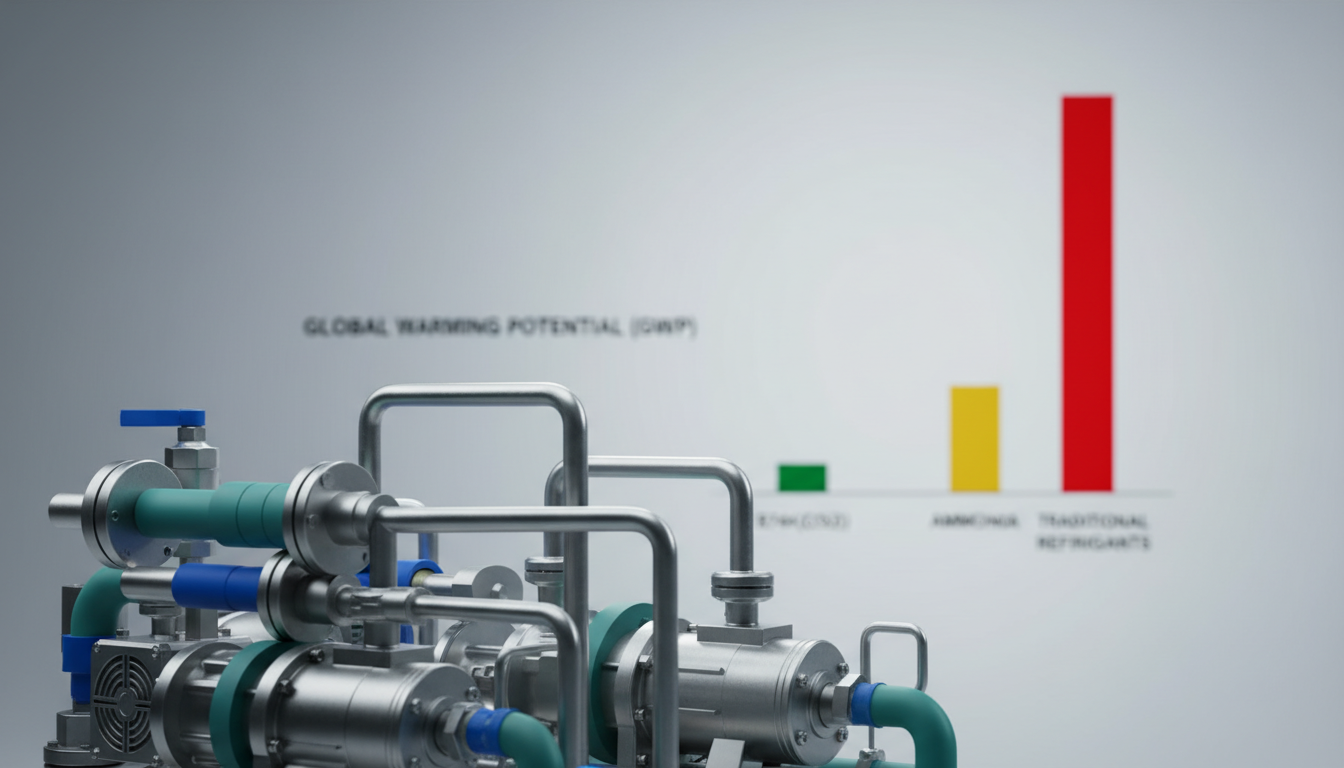
CO2 (R744) is a natural refrigerant with a Global Warming Potential (GWP) of 1, compared to synthetic HFCs which range from 1,400 to 4,000. For organic exporters, R744 eliminates the risk of chemical taint and aligns with the highest environmental standards required by EU and Asian markets.
As a sustainable infrastructure consultant, my role is to navigate the complex intersection of industrial efficiency, regulatory compliance, and environmental stewardship. In the high-stakes world of organic produce exportation, the cold chain is often the most significant carbon contributor and the highest source of regulatory risk The Complete Guide to Cold Storage Benefits for Ca….. For years, the industry relied on synthetic Hydrofluorocarbons (HFCs), but as global climate mandates tighten, the transition to natural refrigerants is no longer a “green luxury”—it is a commercial necessity. Among the available natural alternatives, R744, or CO2 refrigeration, has emerged as the definitive ESG (Environmental, Social, and Governance) gold standard.
The Shift from Synthetic to Natural
The history of industrial refrigeration is a tale of unintended consequences. The industry first moved away from ozone-depleting substances (CFCs and HCFCs) to HFCs like R404A Agricultural Cold Storage at Madera Airport Indust….. While these chemicals saved the ozone layer, they introduced a new crisis: extreme Global Warming Potential. R404A, for instance, has a GWP of 3,922, meaning one kilogram leaked into the atmosphere is equivalent to nearly four metric tons of CO2.
Under the Kigali Amendment to the Montreal Protocol, more than 190 countries have committed to a phase-down of HFCs by 85% by 2047. This is not a distant concern; it is a current operational risk. As quotas tighten, the price of synthetic refrigerants is skyrocketing, and the availability of components for older systems is dwindling. CO2 refrigeration serves as the primary hedge against this volatility.
Thermodynamic Superiority of R744
From a technical standpoint, R744 (CO2) is a remarkable medium. It possesses a high volumetric cooling capacity—nearly 5 to 10 times higher than that of ammonia or HFCs. This allows for smaller pipe diameters and more compact compressor designs, reducing the physical footprint of the refrigeration plant. While CO2 operates at much higher pressures than traditional systems (often exceeding 100 bar in transcritical modes), modern engineering has standardized these high-pressure components, making them as safe and reliable as any low-pressure HFC alternative.
Comparing the Refrigerant Landscape
To understand why R744 is the preferred choice for sustainable infrastructure, one must compare it against the incumbents and other natural alternatives. Below is a breakdown of the key metrics that consultants use to evaluate refrigerant viability for organic export facilities.
| Refrigerant | GWP (Global Warming Potential) | Toxicity | Flammability |
|---|---|---|---|
| R744 (CO2) | 1 | Low | Non-flammable |
| Ammonia (NH3) | 0 | High | Low |
| R404A (HFC) | 3,922 | Low | Non-flammable |
While Ammonia (NH3) boasts a GWP of zero, its high toxicity presents significant risks in organic food processing environments. A leak in an ammonia system requires immediate evacuation and can result in the total loss of inventory due to contamination. CO2, by contrast, is a natural component of the air we breathe and is classified as an A1 refrigerant (low toxicity, non-flammable), making it the safest high-performance option for food-adjacent applications.
R744 and Organic Integrity
Organic certification is about more than just avoiding pesticides during the growing cycle; it is about maintaining the “chain of custody” for the product’s purity from farm to fork. One of the most overlooked risks in organic logistics is “chemical taint” from refrigerant leaks. Synthetic refrigerants, when leaked, can leave residues or impart odors that compromise the organic status of high-value produce like berries, leafy greens, or stone fruits.
By utilizing CO2 refrigeration, exporters eliminate this risk entirely. If a leak occurs in a CO2-based cold storage facility, the gas simply dissipates into the atmosphere. There is no oily residue, no toxic fallout, and no risk of chemical absorption into the produce. This ensures that the organic integrity of the cargo remains unblemished, protecting the exporter’s premium margins and brand reputation.
Furthermore, many forward-thinking organic brands are now auditing their supply chains for “embedded carbon.” They look at the total carbon footprint of the transportation and storage process. Because CO2 systems can be designed for extreme heat recovery—repurposing the heat rejected by the refrigeration cycle to provide hot water for facility wash-downs or space heating—the overall energy efficiency of the facility improves. This contributes to a lower carbon-per-kilogram ratio for the exported produce, a metric that is increasingly required by high-end retailers in the EU.
For more detailed analysis, you may want to explore Why CO2 Refrigeration is the Gold Standard for Organic Produce, which details the specific biological interactions between storage gases and plant respiration.
Meeting Global ESG Mandates
Institutional investors and global retailers are no longer satisfied with vague sustainability claims. They demand data-backed ESG compliance. In the context of infrastructure, this means moving away from assets that will become “stranded” by future legislation. A facility built today with HFC-based refrigeration is a liability; a facility built with R744 is a future-proofed asset.
The “E” in ESG: Decarbonization
Environmental stewardship is the most obvious benefit of R744. By switching from R404A to CO2, a medium-sized export warehouse can reduce its direct CO2-equivalent emissions by hundreds of tons per year. When you factor in the “indirect” emissions—those caused by electricity consumption—modern CO2 transcritical systems equipped with parallel compression and ejector technology often outperform HFC systems in annual energy efficiency, especially in temperate and cooler climates.
The “G” in ESG: Regulatory Governance
Governance involves managing the risks of future regulations. The European Union’s F-Gas Regulation (EU 517/2014 and its subsequent revisions) is the most stringent in the world, effectively banning high-GWP refrigerants in new equipment. Other major markets, including China and California, are following suit with similar bans and taxes. By adopting CO2 refrigeration now, organic exporters ensure they have uninterrupted access to the world’s most lucrative markets without the need for costly retrofits or the fear of non-compliance fines.
The Social Dimension: Safety and Community
The “S” in ESG refers to the safety and well-being of the workforce and the surrounding community. Unlike ammonia, which requires complex emergency response plans and specialized protective gear for maintenance staff due to its caustic nature, CO2 is much more manageable. While high-pressure safety protocols must be followed, the lack of toxicity and flammability makes R744 a socially responsible choice for facilities located near residential areas or integrated within large processing plants.
Technical Implementation: Transcritical vs. Subcritical
As a consultant, I am often asked about the “efficiency gap” in warmer climates. Historically, CO2 systems struggled in tropical environments when the ambient temperature exceeded the critical point of CO2 (31.1°C). At this point, the gas cannot be condensed into a liquid, and the system must operate in “transcritical” mode.
However, recent technological leaps have solved this. The introduction of multi-ejectors and adiabatic cooling on gas coolers allows CO2 systems to operate efficiently even in regions like Southeast Asia or Central America. These advancements mean that the “CO2 Equator”—the geographical line where CO2 was previously thought to be less efficient than HFCs—has effectively been erased. Today, CO2 is a viable 100% sustainable refrigeration solution regardless of latitude.
Key Takeaways for Exporters:
- Zero Ozone Depletion: R744 has an ODP of zero, ensuring compliance with all international environmental protocols.
- Future-Proofing: Avoid the rising costs and eventual bans associated with HFCs and the Kigali Amendment phase-down.
- Organic Market Alignment: Meet the “clean label” expectations of international buyers by eliminating synthetic chemicals from the cold chain.
- Heat Recovery: Leverage the high discharge temperatures of CO2 for free facility heating, further lowering operational costs.
Frequently Asked Questions
Q: Is CO2 refrigeration more efficient?
A: In cooler climates and with advanced transcritical cycles, CO2 matches or exceeds HFC efficiency. With technologies like parallel compression and ejectors, it is now competitive even in warmer regions, offering a significantly lower total environmental footprint.
Q: Is R744 equipment more expensive?
A: While the initial capital expenditure (CAPEX) can be 10–15% higher due to high-pressure components, the total cost of ownership (TCO) is lower. This is due to lower refrigerant costs, energy savings through heat recovery, and the avoidance of future F-gas taxes and retrofits.
Q: Does CO2 refrigeration affect produce shelf-life?
A: CO2 is excellent for shelf-life. Because it allows for very precise temperature control and eliminates the risk of chemical contamination, produce remains fresher for longer, which is critical for long-distance organic exports.
Conclusion
The transition to CO2 refrigeration is the most impactful step an organic exporter can take toward ESG excellence. It protects the product, the planet, and the profit margin simultaneously. In a world where sustainability is the primary currency of international trade, R744 is not just a refrigerant—it is a strategic asset. By embracing 100% sustainable CO2 refrigeration, exporters can guarantee the purity of their produce and the longevity of their business in a carbon-constrained economy.
CTA: Ready to future-proof your cold chain? Review our Sustainability Specs to see how our R744 solutions meet the highest ESG standards.