Pistachio Cold Storage Best Practices: How Central Valley Growers Maximize Market Value
Pistachio Cold Storage Defined
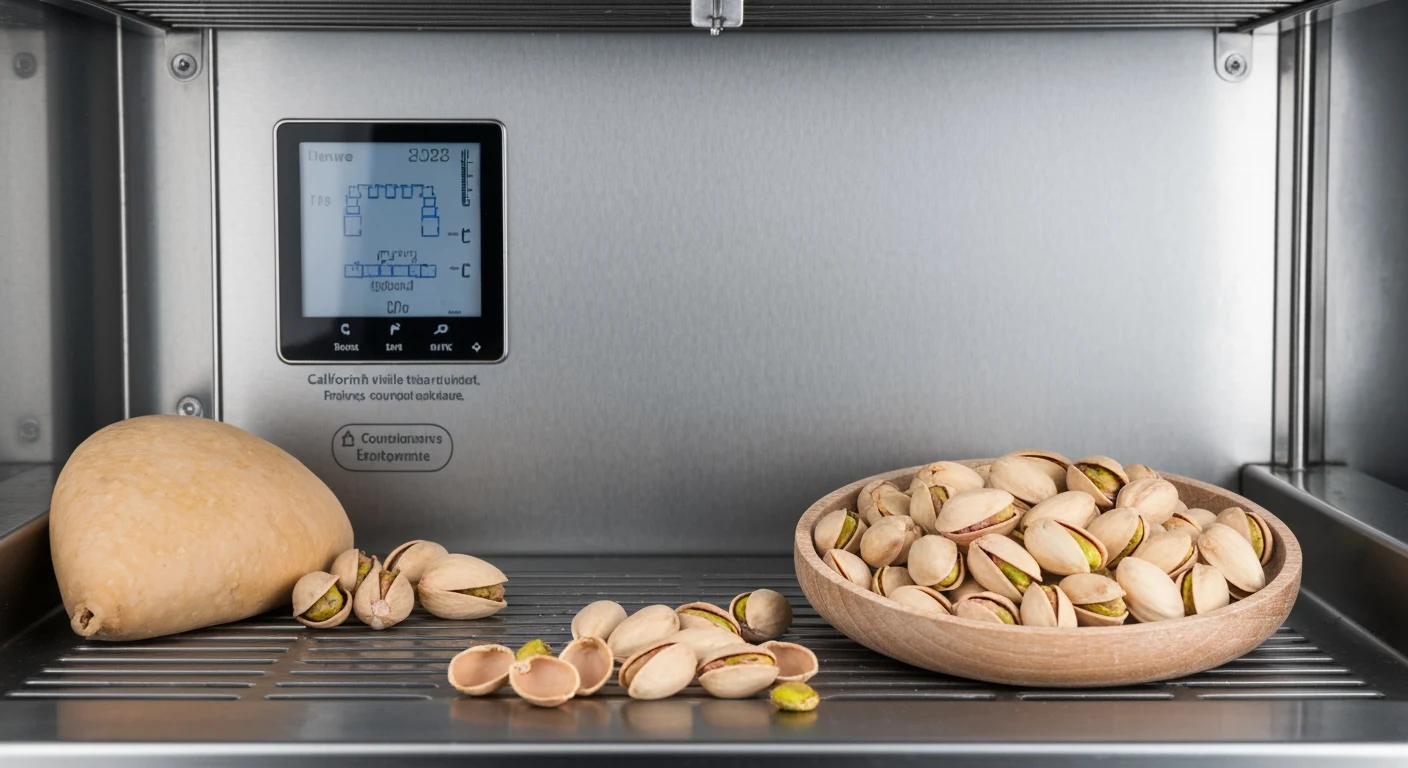
Pistachio cold storage is a precision climate-control system maintaining in-shell and shelled kernels at 32–34°F with 60–70% relative humidity to preserve natural roasting characteristics, prevent rancidity, inhibit aflatoxin synthesis, and extend market availability. For California’s 554,000-acre pistachio industry concentrated in the San Joaquin Valley, cold storage is the critical post-harvest infrastructure enabling year-round sales at premium prices while managing crop concentration risk.
The San Joaquin Valley Pistachio Industry: Scale, Harvest Challenges, and Cold Storage Imperative
California’s Pistachio Dominance: 554K Acres and Rising Demand
California produces 99.5% of U.S. pistachios and ~70% of global supply, with 554,000 acres concentrated in the San Joaquin Valley. The industry generates $2.8+ billion annually, supporting 30,000+ jobs in farming, processing, and logistics. Unlike almonds, pistachios have a compressed 8-week harvest window (August–October), creating acute post-harvest logistics challenges: growers must hull, dry, and store 850,000+ tons of fruit within weeks to prevent quality loss and market gluts that depress prices by 50%+.
Harvest Window Compression and Market Volatility
Pistachio price volatility is among the highest of California tree crops. At harvest (September–October), in-shell pistachios trade at $0.55–$0.75 per pound; by February–April, prices spike to $0.95–$1.15+ per pound as supplies tighten. A grower holding 200,000 lbs of premium in-shell pistachios through cold storage can realize $80,000–$120,000 in additional revenue by releasing strategically during peak-price months. Without cold storage, inventory deteriorates in 4–6 weeks at room temperature; with proper storage at 32–34°F, shelf life extends to 12+ months, enabling year-round market presence.
Pistachio Harvest Physiology: Timing, Hull Rot Prevention, and Pre-Storage Quality Assessment
Optimal Harvest Window: August-September Shell Splitting
Pistachio harvest maturity is determined by hull splitting—the natural separation of the husk from the shell. Splits typically begin in late August and accelerate through September. Premature harvest (before 50% of crop splits) results in: high moisture content, incomplete kernel development, and difficult hulling. Delayed harvest (after 90% splitting) risks: kernel dehydration, increased brittleness, hull staining, and higher aflatoxin contamination risk (warm September temperatures favor A. flavus growth). The optimal window is 60–80% split, typically 10–20 days in September for most San Joaquin Valley orchards. Harvest timing directly influences post-harvest quality and cold storage outcomes.
Hulling and Drying: Critical Pre-Storage Steps
Pistachios must be hulled within 24 hours of harvest to prevent kernel discoloration and aflatoxin growth. The hulling process removes the fleshy outer layer, exposing the shell. Immediately post-hulling, kernels have 30–35% moisture content (wet basis); they must be dried to 5–7% within 48 hours. Under-drying (>8% moisture) increases aflatoxin risk; over-drying (<4% moisture) compromises kernel texture and market appeal. Mechanical dryers using 140–160°F air bring moisture to target in 12–18 hours. Temperature monitoring during drying is critical: excessive heat (>180°F) damages kernel flavor and oil stability, reducing cold storage shelf life.
Pre-Storage Moisture and Visual Quality Assessment
Before cold storage entry, pistachios should be tested for: moisture content (target 5–7%), aflatoxin screening (rapid ELISA tests for >5 ppb contamination), visual sorting for damaged/discolored kernels, and weight per kernel (indicator of uniformity and quality). Premium in-shell pistachios with consistent 45–50 kernels per ounce command $0.25–$0.30 higher per-pound pricing than mixed-size inventory. Cold storage preserves these quality attributes; any defects present at storage entry persist through the entire cold-storage period. Rigorous pre-storage QA avoids storing substandard inventory that will remain substandard for 12 months.
Pistachio Cold Storage Specifications: Temperature, Humidity, and Variety-Specific Requirements
In-Shell vs. Shelled Kernel Storage: Divergent Requirements
In-shell and shelled pistachios have distinct optimal storage parameters. In-shell pistachios (stored in shells) tolerate slightly higher temperatures (34°F) and lower humidity (60% RH) because the shell provides physical protection from moisture exchange and fungal infiltration. Shelled kernels (separated from shells via mechanical cracking) are exposed to environment and require stricter conditions: 32°F and 65–70% RH to prevent moisture loss and surface oxidation. Most San Joaquin Valley operations store both formats; Central Valley Cold Storage’s 254,000 sq ft facility includes separate zones optimized for each product type to prevent cross-contamination and humidity conflicts.
Temperature Precision: 32–34°F for Respiration Suppression
Pistachio kernels, similar to almonds, exhibit temperature-dependent respiration rates following Q10 principles. At 32°F, respiration is reduced ~80% compared to 70°F. This profound metabolic suppression halts rancidity initiation and prevents fungal growth. Critically, pistachios are more sensitive to temperature fluctuations than almonds: swings >3°F trigger temporary metabolism acceleration and condensation risk. Central Valley’s redundant compressor architecture and ±1°F precision control systems are essential for pistachio storage, particularly for premium in-shell lots destined for export or high-end retail channels.
Humidity Equilibrium: 60–70% RH for Kernel Turgidity and Mold Prevention
In-shell pistachios stored at <55% RH lose internal moisture, becoming shriveled and brittle—unacceptable for premium market positioning. At 60–70% RH, kernel moisture remains stable, maintaining the crispness and "pop" characteristic of fresh pistachios. This humidity band is also optimal for suppressing Aspergillus: mold spore germination is inhibited below 65% RH, and condensation is prevented above this band (preventing liquid water on surfaces). Maintaining 65% ±3% RH requires continuous monitoring and HVAC adjustment, particularly during seasonal transitions when outside air moisture varies.
Aflatoxin Prevention in Pistachios: High-Risk Crop and Mitigation Strategies
Why Pistachios Are a Higher Aflatoxin Risk Than Almonds
Pistachios are more susceptible to Aspergillus flavus colonization than almonds due to: (1) the natural hull-shell microenvironment, where fungal spores can establish before harvest and remain protected post-hulling; (2) August–September harvest during peak heat (>95°F), favoring A. flavus growth; (3) higher kernel water activity (aw) in the 5–7% moisture range, supporting spore germination if temperature rises above 50°F. Pre-harvest contamination is common: 20–40% of San Joaquin Valley pistachio orchards test positive for A. flavus at harvest, though only 5–10% exceed the 5 ppb regulatory limit. Cold storage is the last-line defense: any pistachio exceeding 5 ppb aflatoxin at storage entry will remain above the limit regardless of storage conditions.
Thermal Stasis and Moisture Stability: Primary Aflatoxin Controls
At 32–34°F, Aspergillus flavus cannot grow, produce viable spores, or synthesize aflatoxins—even if pre-existing spores are present. This thermal stasis is maintained throughout cold storage, making it a reliable control. Secondary measures include: (1) moisture management—keeping kernels at 5–7% prevents water-activity-driven germination; (2) rapid cooling post-harvest—delaying cooling to 34°F allows any spores present to germinate and begin toxin synthesis before thermal stasis is reached. Growers should cool pistachios to 34°F within 12 hours of hulling and drying completion. Central Valley’s pre-cooling rooms achieve this in <6 hours, documenting cooling curves as part of FSMA 204 compliance.
Testing and Lot Segregation for Regulatory Compliance
Pre-storage testing is mandatory: ELISA or LC-MS testing identifies lots exceeding 5 ppb aflatoxin before they enter inventory, preventing cross-contamination and regulatory non-compliance. Many growers employ conservative lot-level testing (testing every 5,000-lb sublot) to ensure no contaminated kernels enter storage. Post-storage, periodic re-testing (every 3–6 months) confirms that storage conditions remain compliant and no in-storage fungal growth has occurred. Central Valley’s FSMA 204-ready protocols include documented testing logs, temperature records, and traceability data supporting FDA audits and buyer certification.
Pistachio Market Timing and Price Strategy: Cold Storage as a Revenue Multiplier
Seasonal Price Cycles and the $0.40+ Per-Pound Premium Window
Pistachio prices follow a predictable seasonal pattern: At harvest (September–October), in-shell prices are depressed at $0.55–$0.75/lb due to oversupply. By November–December, supplies tighten and prices rise to $0.85–$0.95/lb. The peak window—January–April—sees prices at $0.95–$1.15+/lb, representing a 50–60% premium over harvest prices. A grower with cold-storage capability can time releases to capture this premium: holding 200,000 lbs at harvest (valued at $110,000–$150,000) and releasing in March (at $190,000–$230,000) represents $80,000–$120,000 in additional margin.
Contract Sales and Value-Added Processing Demand
Processors—roasted pistachio manufacturers, snack companies, ingredient suppliers—plan production 4–6 months in advance and contract supplies at forward prices. A grower with cold-storage capacity and reliable year-round inventory can negotiate multi-year contracts at 8–12% premiums above spot prices, stabilizing revenue and reducing price-volatility risk. Without storage, growers are forced to sell at harvest when prices are lowest, leaving premium-price opportunities on the table.
Central Valley Cold Storage: Purpose-Built Pistachio Infrastructure in the Heart of San Joaquin Valley
254,000 Sq Ft Facility with Dedicated In-Shell and Kernel Zones
Central Valley Cold Storage’s Madera location (within the San Joaquin Valley pistachio region) includes dedicated storage chambers optimized for: (1) in-shell pistachios at 34°F/60% RH; (2) shelled kernels at 32°F/65–70% RH; (3) pre-cooling staging area for rapid thermal descent post-harvest. Separate HVAC zones prevent humidity conflicts between product types and enable isolation protocols if a lot exceeds aflatoxin thresholds. The facility’s location within 45 miles of 90% of San Joaquin Valley pistachio acreage minimizes transport time and cooling delays.
Off-Grid 1200 kW Solar + Redundant Backup Power
Pistachio storage is particularly vulnerable to power interruptions. A 24-hour power outage in a 32–34°F storage room at 65% RH can trigger temperature rise to 50°F+ within 8–12 hours, initiating fungal growth and aflatoxin synthesis. Central Valley’s 1200 kW solar array plus dual backup generators ensures continuous cold-chain integrity. This redundancy is critical during California’s summer peak-demand periods when rolling blackouts are increasingly common. Growers storing premium lots worth $200,000+ can justify paying premium storage rates for this operational security.
CCOF Organic Certification and FSMA 204 Compliance
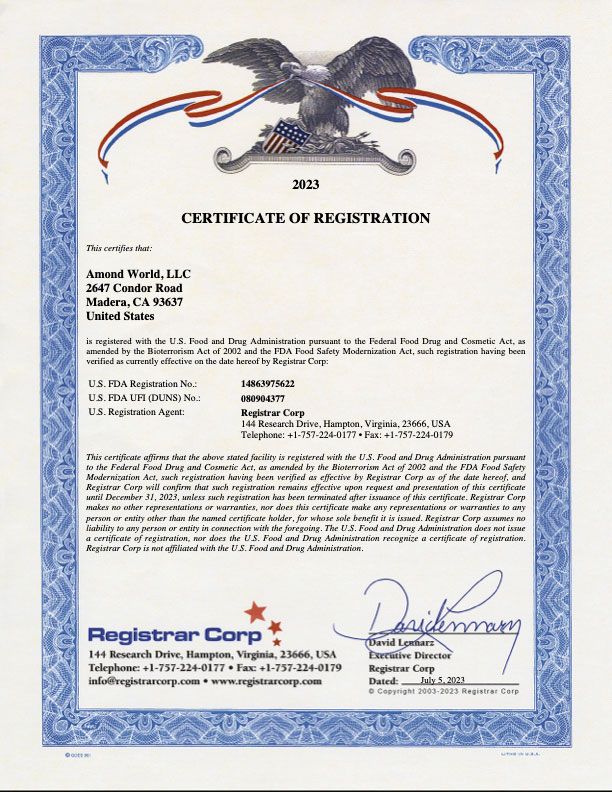
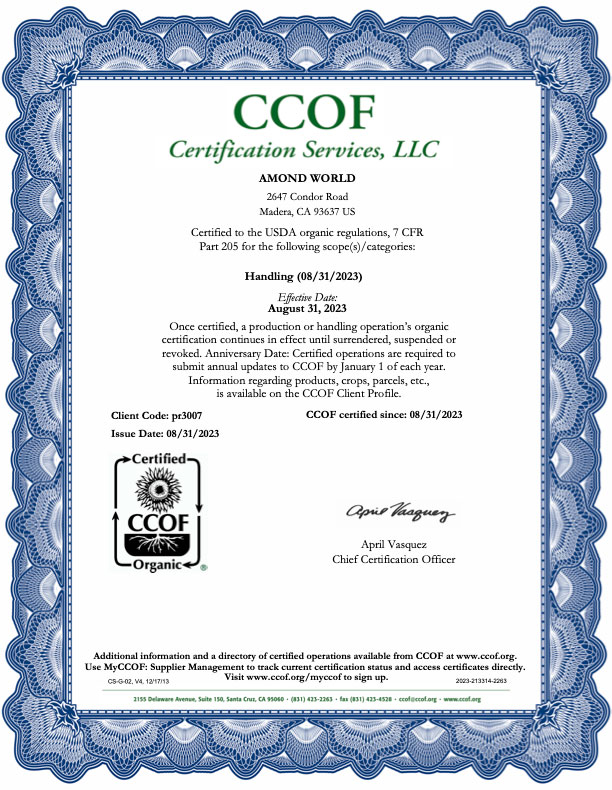
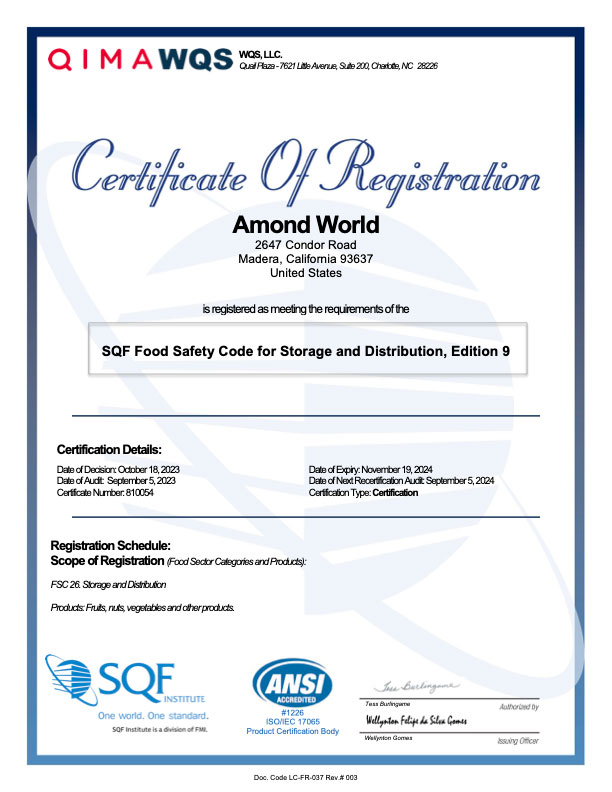
Central Valley holds CCOF certification for organic pistachio storage, critical for certified-organic growers. FSMA 204 compliance includes: temperature/humidity monitoring (logged every 15 minutes), pest management protocols (regular inspections, rodent control, no pesticide residues on facility surfaces), allergen segregation (pistachios stored separately from tree nuts if allergen-sensitive customers are present), and traceability documentation (lot identifiers linked to cooler location, entry/exit dates, and storage conditions). These compliance frameworks streamline buyer audits and reduce liability for growers selling to regulated retail/food service channels.
Monitoring, Documentation, and Quality Assurance Throughout Cold Storage
Real-Time Temperature and Humidity Dashboards
Each pistachio lot stored at Central Valley is assigned independent wireless sensors monitoring temperature (±0.5°F) and humidity (±2% RH) every 15 minutes. Growers access real-time dashboards showing current conditions and historical trends. Automated alerts notify growers immediately if conditions drift (temperature >35°F or <30°F, humidity >72% or <58%), enabling corrective HVAC adjustments within 30 minutes. This transparency eliminates uncertainty and provides documented evidence of compliant storage conditions for buyer audits.
Periodic Quality Testing and Shelf Life Projection
At storage entry, Central Valley collects baseline samples for: moisture content, FFA (free fatty acid) analysis, color assessment, and aflatoxin screening. Every 3 months, repeat testing tracks quality drift. Based on test results and storage conditions, the facility projects quality at future release dates (e.g., “If released March 15, expected FFA is 0.62%; if released May 1, expected FFA is 0.78%”). This forecasting enables growers to optimize release timing and provides objective quality documentation supporting buyer negotiations.
Frequently Asked Questions About Pistachio Cold Storage
Q1: Can in-shell and shelled pistachios be stored in the same cooler?
Not optimally. In-shell pistachios tolerate 34°F/60% RH; shelled kernels require 32°F/65–70% RH. Compromising humidity (storing both at 65%) over-hydrates in-shell pistachios and increases mold risk; storing both at 60% dehydrates shelled kernels. Central Valley maintains separate zones to preserve quality for both product types.
Q2: How long can pistachios remain in cold storage?
Commercial shelf life is 12–18 months at 32–34°F/60–70% RH. FFA remains <0.75% through month 12 for premium lots. Beyond 18 months, oxidative flavor changes begin to emerge. Most commercial sales occur within 12-month windows; extended storage beyond this point is rare.
Q3: What should I do if my pistachios test high for aflatoxin (>5 ppb)?
Lots exceeding 5 ppb cannot be sold as in-shell human consumption and must be diverted to pet food, livestock feed, or ingredient channels (where higher limits apply). Do not enter high-aflatoxin lots into food-grade cold storage. Cold storage does not reduce existing aflatoxin; it only prevents new synthesis. Pre-storage testing identifies contaminated lots before cold-storage entry.
Q4: What’s the ideal humidity for in-shell pistachios—60% or 65% RH?
60–62% RH is optimal for in-shell. This maintains kernel moisture at 5–6% and minimizes mold risk. Humidity above 65% increases condensation risk and can trigger surface mold on shell exteriors if temperature fluctuations occur. Central Valley targets 60% ±2% for in-shell pistachio storage.
Q5: How do temperature fluctuations impact pistachios?
Pistachio kernels are sensitive to rapid temperature swings. A swing from 32°F to 45°F and back causes temporary respiration acceleration and moisture migration to the shell surface, increasing condensation and mold risk. Central Valley’s ±1°F precision control prevents these harmful fluctuations.
Q6: What’s the storage cost for pistachios, and when do I achieve ROI?
Typical cold-storage rates are $0.04–$0.06 per pound per month for premium pistachio storage. For 200,000 lbs stored 6 months, this is $12,000–$18,000. If market timing yields even a $0.10/lb premium at release ($20,000 gain), you’ve more than recovered storage costs. For many growers, strategic cold storage delivers 200–400% ROI on storage costs through price-capture optimization.
Next Steps: Partner with Central Valley Cold Storage for Market-Timing Success
The San Joaquin Valley’s pistachio industry depends on cold storage as the bridge between harvest oversupply and year-round market demand. Growers without storage are captive to harvest-time price lows; growers with reliable, compliant cold storage capture premium prices while building customer relationships spanning multiple months.
Central Valley Cold Storage’s 254,000 sq ft Madera facility is purpose-designed for pistachio operations: separate in-shell and kernel zones, 32–34°F precision, CCOF certification, FSMA 204 compliance, and real-time monitoring dashboards. Our location within the San Joaquin Valley minimizes transport delays and cooling time post-harvest—critical factors for aflatoxin prevention.
Request a free consultation to evaluate your cold-storage strategy. Discuss your expected harvest volume, product mix (in-shell vs. shelled), intended market window, and target release dates. Our team will model your potential market-timing ROI based on historical pistachio prices and your facility layout. For many growers, strategic cold storage adds $0.20–$0.40 per pound in realized value—transforming cold storage from a cost center into a competitive advantage.
Schedule a facility tour and discover how Central Valley Cold Storage maximizes pistachio value.