In the heart of California’s Central Valley, where the soil runs deep and the sun beats down with relentless intensity, we’ve learned a fundamental truth over three generations of farming: the harvest is only the beginning. As a post-harvest physiologist and a grower whose family roots are intertwined with these vines, I’ve seen the industry evolve from simple ice-block cooling to the sophisticated, data-driven table grape cold storage environments we manage today. We produce 99% of the table grapes grown in the United States right here in our valley, and that dominance isn’t just a result of our Mediterranean climate; it’s a result of our mastery over the fruit’s life after it leaves the vine.
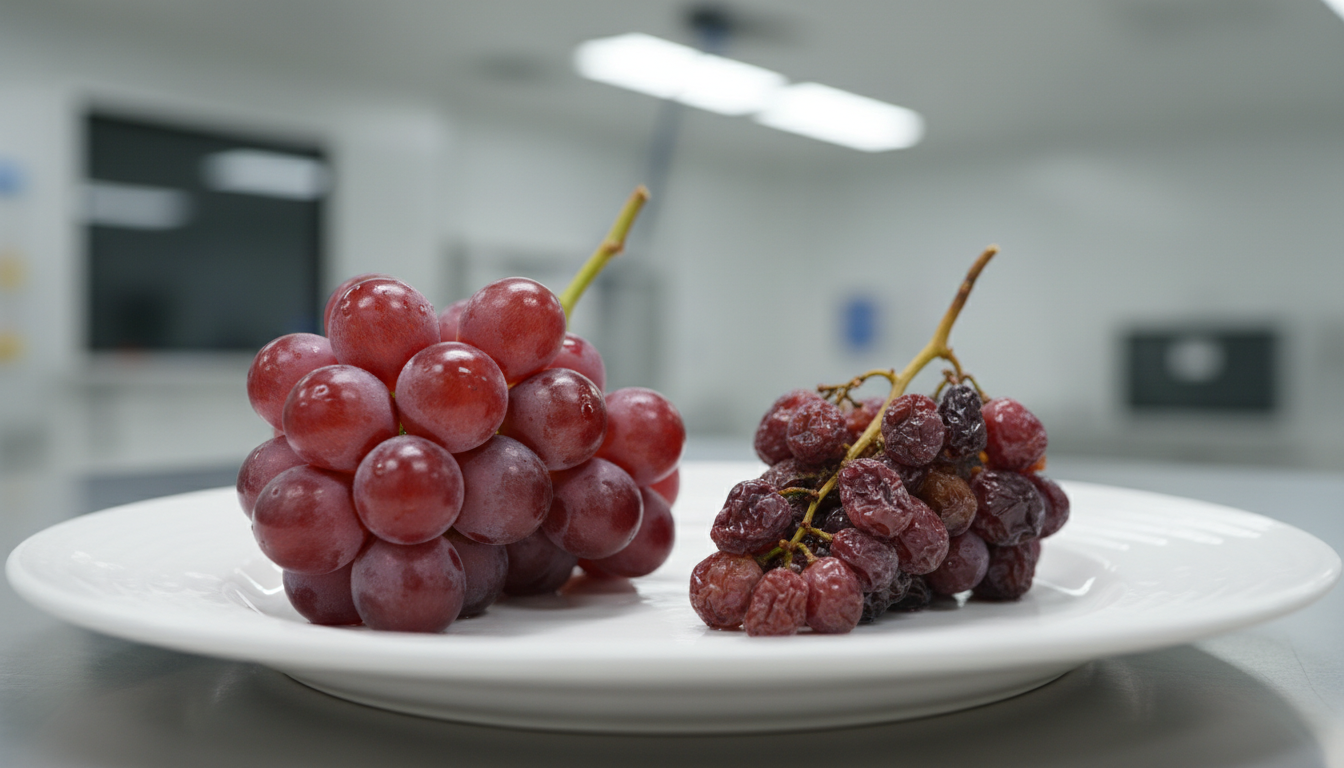
When a consumer reaches for a bunch of grapes in a grocery store in New York or Seoul, they aren’t looking at the Brix levels—though they’ll certainly taste them later. They are looking at the rachis. That green, supple framework that holds the berries is the universal indicator of freshness. If the rachis is brown, brittle, and withered, the fruit is perceived as old, regardless of how sweet the berries remain. Maintaining that “just-picked” turgidity is the greatest challenge in post-harvest management. It requires an uncompromising dance between temperature precision and humidity saturation.
The Fragility of the Rachis
The rachis, or the stem of the grape cluster, is physiologically different from the berries it supports. While the berries are protected by a waxy cuticle that helps retain moisture, the rachis has a much higher surface-area-to-volume ratio and lacks that same protective barrier. This makes it highly susceptible to water loss through transpiration. In the world of post-harvest physiology, we refer to this as the “canary in the coal mine.”
The moment a cluster is harvested, it is cut off from its source of hydration. However, the tissue remains alive. It continues to respire, consuming its own sugars and, more importantly, losing its internal moisture to the surrounding air. If the storage environment is even slightly too dry, the rachis will begin to desiccate. This isn’t just an aesthetic issue; as the rachis dries, it can cause “shatter”—the premature dropping of berries from the cluster—which significantly reduces the marketable yield and retail value of the crop.
To prevent this, we must manage the Vapor Pressure Deficit (VPD). VPD is the difference between the amount of moisture in the air and how much moisture the air can hold when it is saturated. A high VPD means the air is “thirsty” and will pull moisture directly out of the grape stems. By maintaining a table grape cold storage environment with extremely high relative humidity, we reduce the VPD to near zero, effectively “locking” the moisture inside the rachis.
Preventing Desiccation
The technical gold standard for preventing desiccation involves two main pillars: rapid pre-cooling and high-humidity maintenance. When grapes arrive from the field, they often carry a “field heat” that can exceed 90°F. If left at this temperature, the respiration rate is astronomical. We use forced-air cooling to pull that core temperature down to 32°F as quickly as possible—ideally within hours of harvest.
Once the fruit has reached its target temperature, it enters the long-term storage phase. This is where precision becomes paramount. Many generic cold storage facilities struggle to maintain the 90-95% relative humidity required for grapes without causing condensation or “rain” inside the room, which can lead to fungal growth. At Central Valley Cold Storage (CVCS), we utilize specialized bays designed specifically for this delicate balance. By controlling the delta-T (the temperature difference between the cooling coils and the air), we can keep humidity levels high enough to maintain turgidity without compromising the integrity of the packaging.
Furthermore, we must address the internal chemistry of the fruit. This is a topic we cover extensively in our guide on Maintaining Brix and Turgidity: Cold Storage for Table Grapes. The relationship between cold chain integrity and the preservation of the grape’s natural acids and sugars is what separates a premium product from a mediocre one.
Sustainable Cooling for Organic Grapes
The challenge of humidity management is amplified when dealing with organic table grapes. In conventional storage, sulfur dioxide (SO2) pads are often used to inhibit the growth of Botrytis cinerea (gray mold), which thrives in the high-humidity environments grapes require. However, organic standards strictly limit or prohibit these synthetic interventions.
For the organic grower, there is no margin for error. We cannot rely on chemical “crutches” to prevent decay. Instead, we must use absolute temperature precision. By holding organic grapes at exactly 31-32°F—just above the freezing point of the berry (which is lowered by its sugar content)—we can naturally slow the growth of fungal spores while maintaining the 95% humidity needed for rachis health. Sustainable cooling in this context means utilizing energy-efficient systems that can hold these tight tolerances without the fluctuations that “pump” moisture out of the fruit.
Our approach at CVCS involves individually settable temperature and humidity controls for each bay. This allows us to sequester organic lots in environments where the airflow and moisture levels are optimized specifically for their needs, ensuring that organic fruit reaches the shelf with the same turgidity and snap as conventional varieties.
The Science of Turgidity and Shelf Life
Turgidity is the state of being swollen and distended due to high fluid content. In grapes, this is what provides the “snap” when you bite into a berry. It is a direct result of cellular water pressure. Once that pressure is lost, the cells collapse, the texture becomes “mealy,” and the flavor profile flattens.
In the Central Valley, we understand that our table grape cold storage practices are essentially a race against senescence (the biological aging of the fruit). By lowering the temperature to near 32°F, we reduce the rate of ethylene production and the fruit’s sensitivity to it. This slows down the ripening process and the eventual breakdown of the cell walls. When combined with 90-95% humidity, we can extend the marketable life of a grape from a few days to several months.
| Storage Phase | Target Temp | Humidity | Expected Life |
|---|---|---|---|
| Initial Cooling | 32°F | 95% | N/A |
| Long-term | 31-32°F | 90% | 4-8 Weeks |
Operational Excellence in the Central Valley
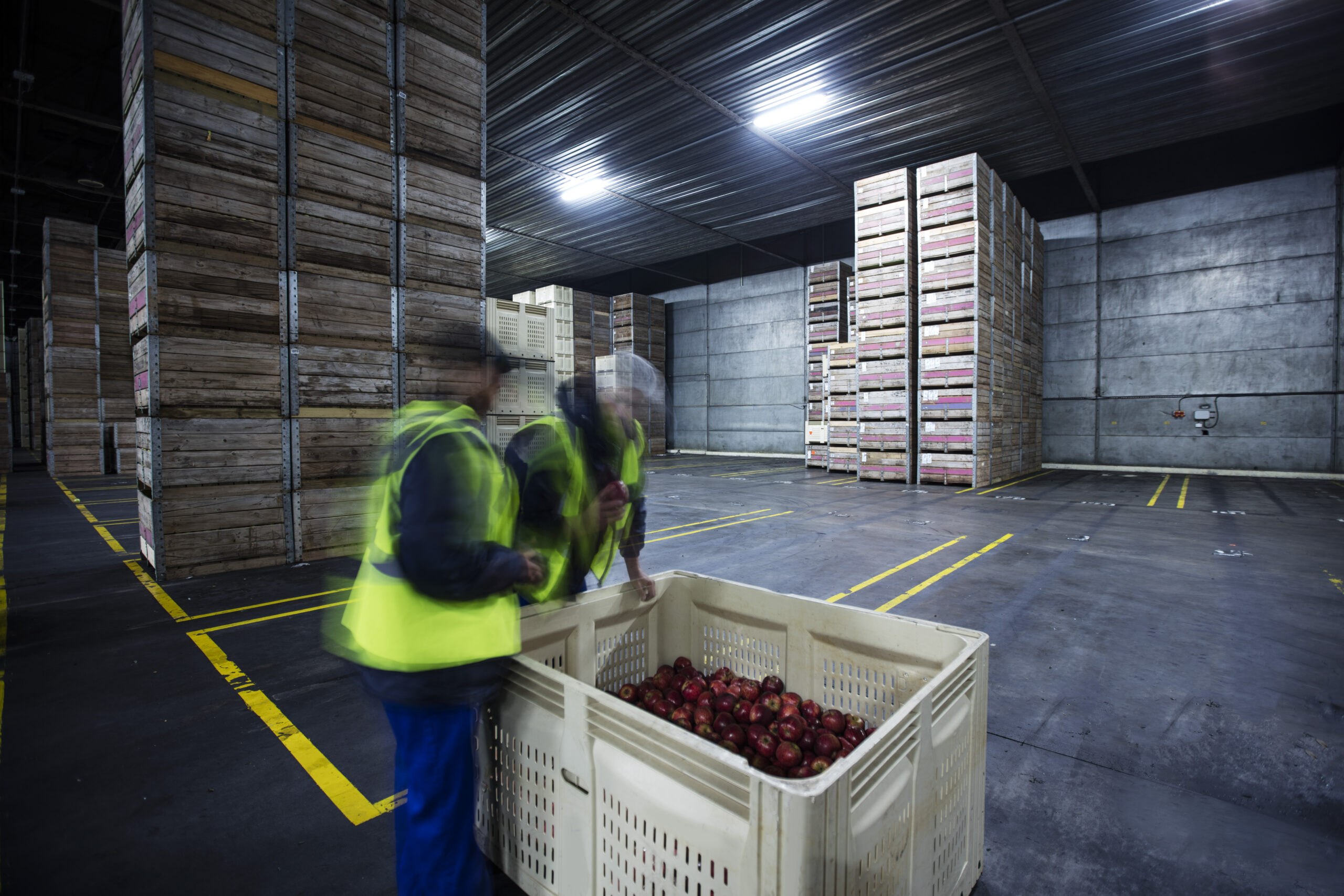
As a multi-generational grower, I’ve seen what happens when shortcuts are taken. A facility that isn’t dedicated to the specific needs of grapes will often keep the air too dry to protect their own equipment from frosting, or they will store grapes alongside ethylene-producing fruits like apples or stone fruit. This is a recipe for disaster. Grapes are highly sensitive to odors and ethylene; storing them in a shared environment is the fastest way to ruin a season’s hard work.
Our facility’s USP—the ability to provide individually settable temperature and humidity—is not just a luxury; it’s a necessity for modern agriculture. Whether it’s a late-season Allison or an early-season Flame, each variety has its own respiration rate and physical characteristics. Being able to pivot our storage strategy to match the specific physiological needs of the variety is how we maintain the reputation of Central Valley produce on the global stage.
Frequently Asked Questions
- Q: Can grapes be stored with other produce?
A: Grapes are sensitive to ethylene and odors; they should be stored in dedicated bays for maximum quality. Cross-contamination with high-ethylene emitters like peaches or tomatoes can accelerate rachis browning and berry softening. - Q: What happens if the temperature drops below 31°F?
A: While the high sugar content (Brix) in grapes acts as a natural antifreeze, temperatures consistently below 30°F risk “chill injury” or actual freezing of the berries, which destroys the cell structure and leads to complete loss of turgidity upon thawing. - Q: Why is 95% humidity necessary?
A: At lower humidity levels, the air actively pulls water from the stems. Since the rachis lacks a thick waxy coating, it loses moisture rapidly, turning brown and brittle within days if the environment is not properly saturated.
In conclusion, managing table grape cold storage is a specialized field that requires a deep understanding of plant physiology and advanced mechanical systems. For us in the Central Valley, it is an art form backed by rigorous science. By focusing on the fragility of the rachis and maintaining uncompromising standards for temperature and humidity, we ensure that the fruit on a consumer’s table is as fresh as the day it was clipped from the vine in our sunny California fields.