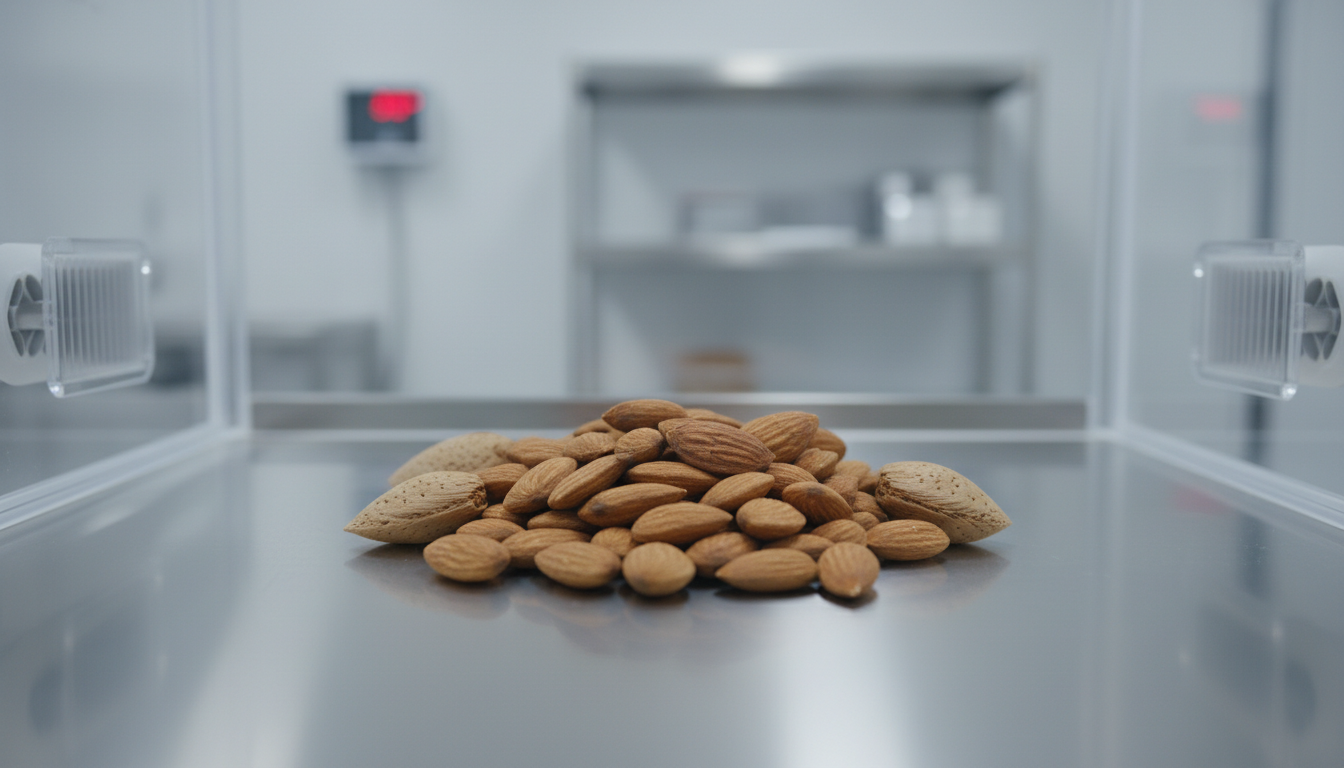
Key Takeaways: California almonds and pistachios can maintain peak quality for up to two years when stored at 34°F with 50% relative humidity. Central Valley Cold Storage provides these precise conditions, preventing rancidity and insect infestation while allowing growers to wait for optimal market pricing, potentially increasing ROI by 30%. Dairy Cold Storage in Californias San Joaquin Vall….
In the heart of California, the Central Valley serves as the world’s orchard. Producing over 80% of the global almond supply and the vast majority of domestic pistachios, Central Valley Agriculture is the engine of the global nut market The Complete Guide to Cold Storage Benefits for Ca….. However, growing a premium crop is only half the battle. For the modern grower, the true challenge lies in post-harvest management: the ability to preserve quality while navigating a volatile global commodity market.
As an Agricultural Commodity Specialist, I have observed that the difference between a break-even year and a high-profit year often comes down to the timing of the sale. When the harvest hits in late summer and fall, the market is frequently flooded, driving prices to their seasonal floor. A robust long-term storage strategy allows growers to bypass these “harvest lows,” holding inventory in pristine condition until demand—and prices—peak. This article explores the technical and economic imperatives of high-quality cold storage for almonds and pistachios.
The Economics of Nut Storage
The economic landscape of Central Valley Agriculture has shifted. We are no longer in an era where nuts are moved immediately from the huller/sheller to the end-buyer. Today’s growers must act as savvy portfolio managers. By utilizing strategic cold storage, growers can achieve a 30-40% profit gain through seasonal premiums.
Why does this margin exist? Global demand for California almonds and pistachios is not uniform throughout the year. Demand spikes significantly around major international holidays, including the Lunar New Year in Asia, Diwali in India, and the Christmas season in Europe and North America. If a grower is forced to sell their entire yield in October because they lack the facilities to store it, they miss out on the price appreciation that occurs in the following spring and summer.
Furthermore, inventory financing often requires the product to be held in a certified, climate-controlled environment. By leveraging inventory financing, growers can access liquidity based on the value of their stored nuts, allowing them to cover operating costs for the next season without being forced into a premature sale. This financial flexibility is the cornerstone of modern agribusiness in Madera and the wider Central Valley.
Preventing Oxidation and Rancidity
Nuts are unique among agricultural commodities because of their high lipid (oil) content. While these fats are the source of the nut’s nutritional value and flavor, they are also highly susceptible to oxidation. When almonds or pistachios are exposed to heat, light, or fluctuating humidity, the fats begin to break down into free fatty acids, resulting in rancidity—a bitter off-flavor that renders the product unmarketable.
The Science of the “Gold Standard”
Research consistently shows that 34°F is the “gold standard” for nut preservation. At this temperature, the enzymatic activity that leads to oxidation is drastically slowed. For almonds, this can extend the shelf life from a few months at ambient temperature to over two years. Pistachios, which are slightly more delicate due to their split shells, can maintain “fresh-harvest” quality for 12 to 18 months under these conditions.
Pest Mitigation Through Temperature
One of the most frequent questions we receive is: Can cold storage prevent nut infestation? The answer is a definitive yes. Most common storage pests, such as the Navel Orangeworm or the Indian Meal Moth, become dormant at temperatures below 40°F. By maintaining a consistent 34°F, we effectively eliminate the risk of insect proliferation without the need for excessive chemical fumigants, preserving the organic integrity and “clean label” status of the crop.
CVCS General Storage Specs
At Central Valley Cold Storage (CVCS), we have engineered our Madera facilities to meet the rigorous demands of long-term nut preservation. It isn’t enough to simply “keep things cold.” Precision is required to maintain the specific moisture balance of the nut meat. If the environment is too dry, the nuts lose weight (and therefore value); if it is too humid, mold and yeast growth become existential threats.
Our facility utilizes advanced psychrometric controls to maintain a steady 50% relative humidity (RH). This specific set point ensures that the moisture content of the almonds remains within the industry-standard 3% to 6% range, preventing the shells from becoming brittle while ensuring the nut meat stays crisp.
Ideal Storage Conditions by Variety
| Nut Variety | Max Storage Duration | Ideal Temp | Ideal Humidity |
|---|---|---|---|
| Almonds | 24 Months | 34°F | 50% |
| Pistachios | 12-18 Months | 34°F | 50% |
| Walnuts | 12 Months | 32-34°F | 55% |
By adhering to these specifications, CVCS ensures that Central Valley Agriculture products retain their color, texture, and nutritional profile, whether they are destined for a snack pack in Tokyo or an industrial bakery in New York.
Seasonal Pricing Advantages
The strategic deployment of cold storage is essentially a form of market arbitrage. In the Central Valley, harvest traditionally begins in August and runs through October. During this window, the sheer volume of supply creates a “buyer’s market.” Commodity buyers know that growers have limited bin space and are often eager to move product to clear debt or make room for the next variety.
However, by utilizing a long-term storage strategy, a grower can wait. As the global supply chain tightens in the late spring, prices often rally. For example, if the USDA reports a smaller-than-expected bloom for the upcoming year, the value of the “old crop” currently in cold storage will skyrocket. Without the ability to store at 34°F, the grower would have no choice but to have sold months prior.
- Market Timing: Hold inventory for 6-9 months to capture post-harvest price recovery.
- Quality Premiums: Buyers pay more for “Grade A” nuts that show no signs of darkened skins or “rancid” odors caused by poor storage.
- Risk Mitigation: Protect against localized market crashes by having the ability to ship to different global regions as their specific demand windows open.
Conclusion
In the competitive world of Central Valley Agriculture, the difference between success and stagnation is often found in the details of the supply chain. High-quality cold storage is no longer a luxury; it is a vital financial tool that protects the physical integrity of the crop while maximizing its market value. By maintaining a consistent 34°F and 50% humidity, growers can ensure their almonds and pistachios remain in peak condition for up to two years, allowing them to sell when the price is right, not just when the harvest is over.
As the industry continues to evolve, those who invest in sophisticated storage strategies will be the ones who lead the market. Don’t leave your profit to chance or the mercy of the immediate post-harvest market. Protect your hard work and your bottom line with precision climate control.
Are you ready to optimize your post-harvest strategy?
For more detailed specifications on optimal conditions and storage techniques, consult our comprehensive almond storage guide, pistachio cold storage guide which provides commodity-specific best practices and industry standards.