In the Central Valley, our legacy isn’t just written in the soil; it’s etched into the ledgers that span generations. For those of us who have spent decades watching the sun rise over almond orchards and citrus groves, we understand a fundamental truth that many outsiders miss: farming is as much a game of financial timing as it is a feat of biology. We pour our sweat, our history, and our capital into the ground, waiting for that one window of time where the harvest is ready. But as any multi-generational grower can tell you, the moment the crop comes off the tree is often the worst time to sell it.
This is the paradox of the Central Valley grower. We are often asset-rich and cash-poor at the exact same moment. While our bins are overflowing with high-value commodities, our bank accounts are being drained by the immediate demands of harvest labor, fuel, haulage, and the looming costs of preparing the ground for the next cycle. This “harvest gap” has forced many families to sell their hard-earned yields at seasonal lows just to maintain liquidity. However, the modern agricultural landscape offers a more sophisticated path. By utilizing agricultural inventory financing, we can transform our stored produce from a dormant stack of pallets into a dynamic financial engine.
The Harvest Liquidity Squeeze
The “harvest squeeze” is a phenomenon we know all too well. When the bulk of the valley’s production hits the market simultaneously, the basic laws of supply and demand work against the producer. Prices dip as the market becomes saturated. For a grower, this creates a high-pressure environment. You have bills to pay today, but your crop will be worth significantly more in six months. In the past, the choice was binary: sell now for pennies on the dollar to get cash, or hold the crop and risk running out of operating capital.
As an agricultural finance consultant who has worked alongside families from Bakersfield to Redding, I have seen how this pressure can erode the long-term viability of a farm. Selling at the “harvest low” doesn’t just hurt this year’s bottom line; it reduces the capital available for reinvestment in better equipment, smarter irrigation, and more resilient rootstocks. The solution lies in changing how we view our inventory. We must stop seeing cold storage as a mere holding pen and start seeing it as a vault.
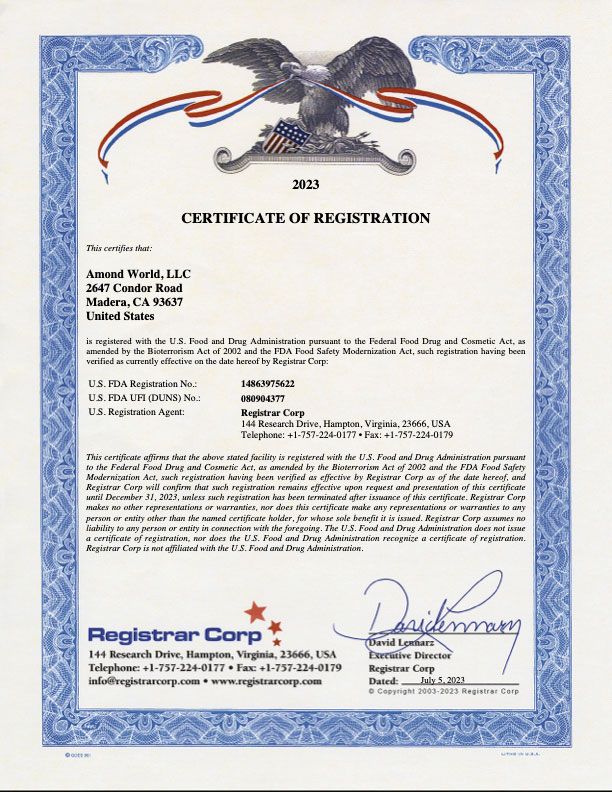
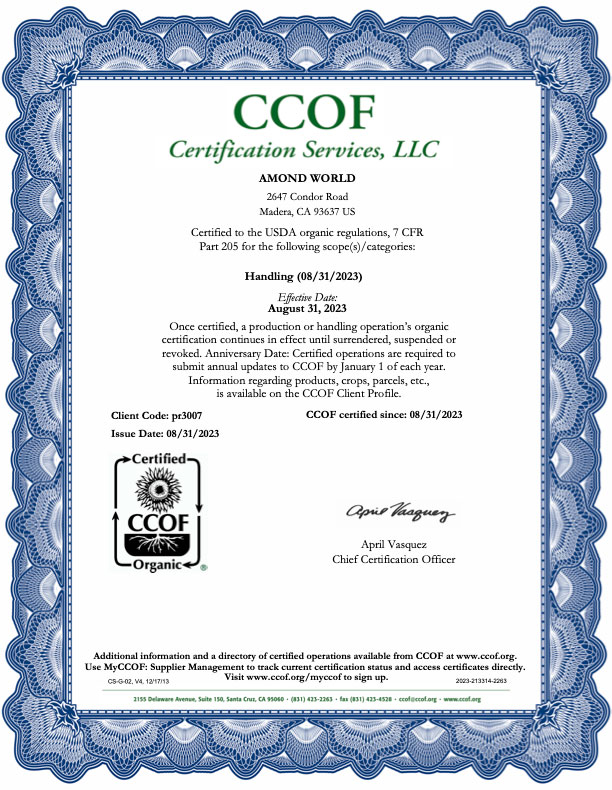
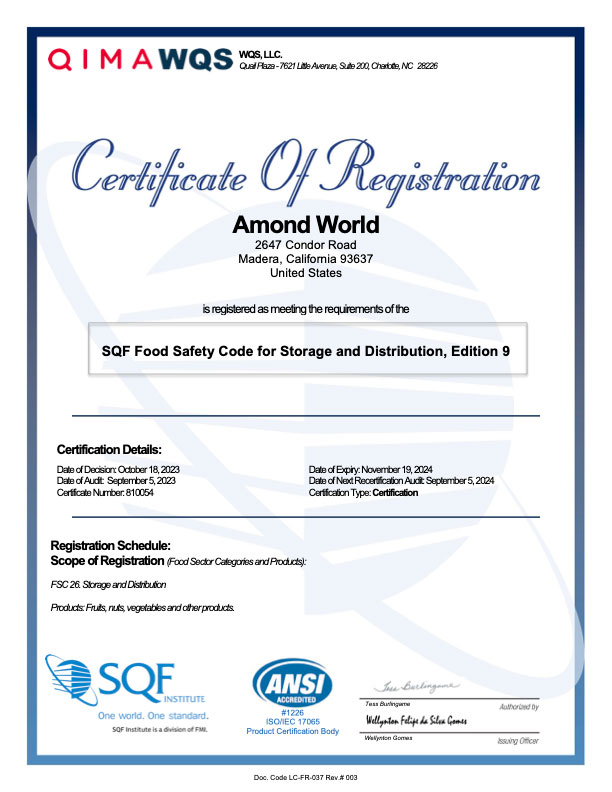
When you move your product into a certified, high-visibility facility like Central Valley Cold Storage (CVCS), you aren’t just protecting the physical integrity of your nuts or fruit. You are “seasoning” an asset. In the eyes of a lender, a crop sitting in a state-of-the-art facility with rigorous climate controls and transparent inventory management is a “bankable asset.” This is the cornerstone of agricultural inventory financing.
Turning Pallets into Capital
So, how does a grower turn a pallet of walnuts or a bin of citrus into liquid capital without actually selling the product? The process is more straightforward than many realize, provided you have the right storage partner. Inventory-backed financing—often referred to as a warehouse receipt loan—allows you to use your stored crop as collateral for a short-term revolving line of credit or a term loan.
Lenders, particularly those familiar with the nuances of California agriculture, are willing to lend against the value of the inventory because they know the asset is secure. However, they require three things to move forward:
- Verification: A third-party confirmation that the inventory exists.
- Preservation: Proof that the inventory is being stored in conditions that prevent spoilage or degradation.
- Valuation: A clear understanding of the market value of the commodity.
This is where the choice of your cold storage facility becomes a financial decision. A facility that offers real-time inventory tracking and maintains precision temperature logs provides the transparency lenders crave. When CVCS handles your storage, the paperwork becomes a bridge rather than a barrier. By leveraging these assets, you can secure the liquidity needed to cover post-harvest expenses, fund winter operations, or even invest in new acreage, all while your crop remains in the warehouse, waiting for the market to turn in your favor.
Consider the flexibility this provides. Instead of being at the mercy of the first buyer who walks through the door, you are now a market player with the staying power to negotiate. You have the cash to keep your operation running, and you still own the upside when the market price recovers.
Strategic Market Timing
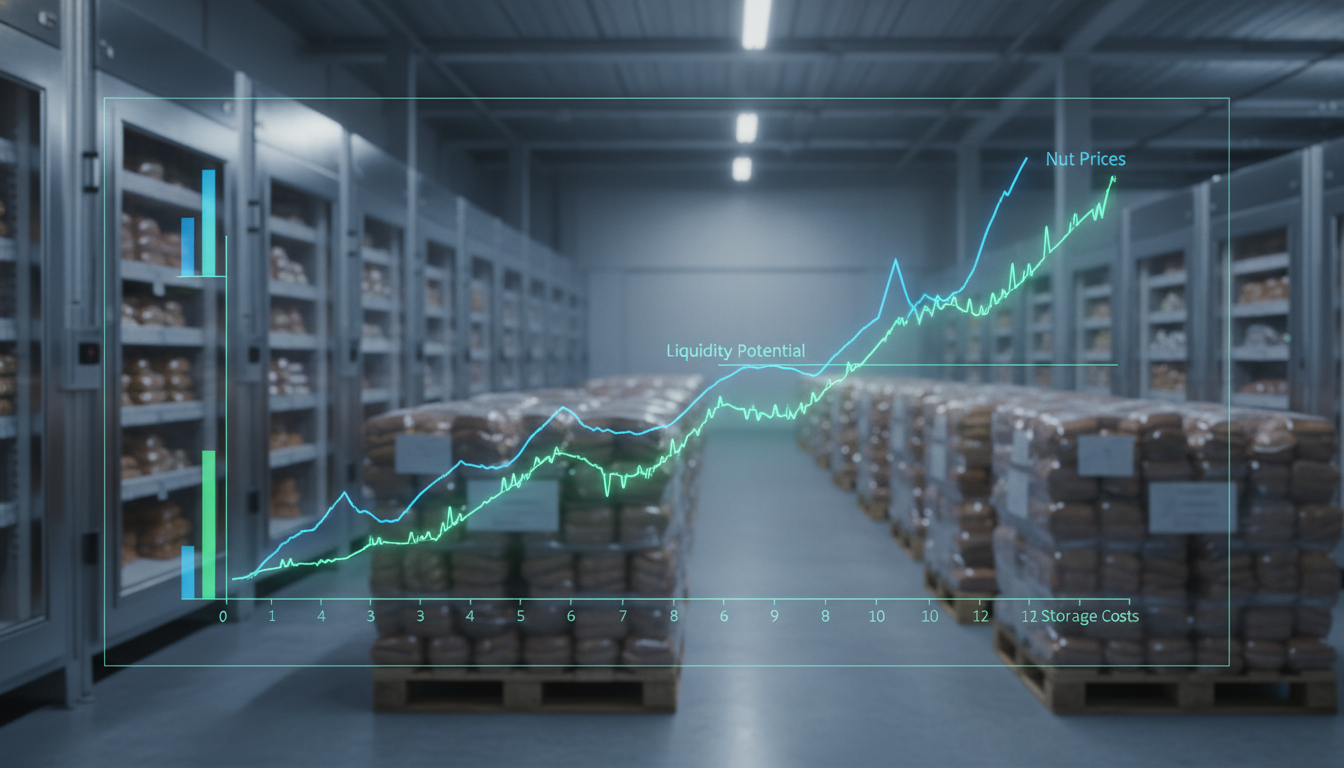
The financial math behind agricultural inventory financing is compelling. Historical data consistently shows that for many of our staple crops in the Valley, the price delta between harvest and the following spring is substantial. For instance, supporting data suggests that prices for nuts often rise 20-30% in the 6 months following the harvest surge.
If you sell at harvest to meet your cash flow needs, you are effectively paying a 20-30% “liquidity tax.” If you instead use that inventory to secure financing, the interest on the loan is typically a fraction of the price increase you’ll realize by waiting. You aren’t just avoiding a loss; you are capturing a significant premium.
The following table illustrates the stark difference between the traditional “sell-at-gate” model and the inventory-backed storage model:
| Financing Option | Immediate Sale | Inventory-Backed Storage |
|---|---|---|
| Market Price | Harvest Low | Seasonal High |
| Liquidity | Immediate | Via Loan |
| Net Profit | Lower | 30-40% Higher |
As you can see, the net profit gain isn’t just marginal—it’s transformative. For a multi-generational farm, that 30-40% difference in net profit is the difference between surviving a tough year and thriving through a decade. It’s the capital that allows the next generation to take the reins with a healthy balance sheet.
By utilizing Financing Your Cold Storage: Flexible Options for Central Valley Growers, you gain the ability to play the long game. You can wait for the international demand to spike, wait for the post-holiday shortages, or wait for the tactical moments when buyers are desperate for the quality you’ve preserved at CVCS.
The Role of CVCS in Your Financial Strategy
In the Central Valley, your word is your bond, but in the world of high-stakes finance, your data is your bond. One of the primary reasons I recommend CVCS to my clients is their commitment to technological transparency. When we approach a lending partner for agricultural inventory financing, we need more than just a handshake. We need a digital trail.
CVCS provides the rigorous documentation that turns a stack of almonds into a liquid asset. Their systems ensure that the lender knows exactly how much product is on hand, what its condition is, and that it hasn’t been moved or co-mingled. This level of security reduces the lender’s risk, which often translates to better interest rates and higher loan-to-value (LTV) ratios for the grower.
Furthermore, our facility understands the unique rhythms of the Valley. We aren’t just a warehouse; we are a strategic partner in your cash flow management. Whether you are dealing with walnuts, pistachios, or dried fruit, the goal is the same: to ensure that your hard work in the field yields the maximum possible return on your balance sheet.
The Paradigm Shift: From Liability to Asset
For too long, many growers have viewed the cost of storage as a necessary evil—a drain on the year’s profits. It’s time to shift that perspective. Storing produce shouldn’t be a liability; it’s a bankable asset. When you utilize high-quality cold storage coupled with a smart financing strategy, the cost of storage is no longer an expense—it’s an investment in market timing.
As we look toward the next harvest, ask yourself: Is your crop working for you, or are you working for your crop? If you are selling early just to keep the tractor running, you are leaving your family’s potential on the table. By leveraging the inventory you already have, you can secure the liquidity you need today while protecting the profits of tomorrow. This is how we build lasting agricultural legacies in the Central Valley—by being as smart with our capital as we are with our land.
Frequently Asked Questions
Q: Do you offer direct financing?
A: We offer flexible payment plans and work with partners to facilitate inventory-backed lending strategies. Our goal is to ensure your storage costs work within your operational budget while helping you unlock the value of your crop.
Q: What types of crops qualify for inventory-backed financing?
A: Generally, non-perishable or semi-perishable commodities that can be stored for 6-12 months—such as almonds, walnuts, pistachios, and certain dried fruits—are ideal candidates for this type of agricultural inventory financing.
Q: How does storage quality affect my loan?
A: Lenders prioritize security. Storing your crop in a facility with professional-grade climate control and pest management ensures the collateral doesn’t lose value, making lenders more likely to offer favorable terms.