California Almond Harvest to Cold Storage: A Month-by-Month Timeline for Growers
Timing is everything in almond production. A grower who waits for optimal hull split harvests a higher-quality kernel. A grower who gets product into cold storage within the right window preserves that quality for months of market timing.
January – February: Dormancy and Pre-Season Preparation
Almond trees are dormant. This is planning season.
- Finalize cold storage contracts for the coming harvest. Lock in rates before peak-season pricing.
- Determine volume estimates based on projected yield.
- Service harvest equipment. Confirm cold storage facility maintenance is complete.
March – April: Bloom and Pollination
According to the Almond Board of California, almond bloom begins in late February and peaks in March.
- Bloom success determines how much cold storage capacity you will need in Q3-Q4.
- Strong bloom = book additional capacity now while rates are favorable.
May – July: Crop Development and Hull Split
Hull split timing varies by variety: Nonpareil (mid-July), Carmel (early-mid August), Butte and Padre (late July to mid-August).
- Target hull split at 75-80% before starting to shake.
- Harvesting before optimal hull split reduces kernel quality. Waiting too long increases insect pressure.
August – September: Harvest
According to the Almond Board of California, mechanical tree shakers harvest the crop by shaking almonds to the ground.
- Shaking: Nonpareil first (early August), then pollinizer varieties through September.
- Drying: Almonds dry on the orchard floor for 7-10 days.
- Sweeping: Sweeper machines push dried almonds into windrows.
- Pickup: Harvester machines vacuum windrows into carts for transport.
| Variety | Hull Split | Harvest Window | Notes |
|---|---|---|---|
| Nonpareil | Mid-July | Early-mid August | Largest kernel, premium pricing. |
| Carmel | Early August | Mid-late August | Common pollinizer for Nonpareil. |
| Butte | Late July | Mid August | Smaller kernel, strong flavor. |
| Padre | Late July | Mid-late August | Late-harvest variety. |
September – October: Hulling, Drying, and Quality Assessment
Target moisture for cold storage intake is 5-6% according to UC Davis guidelines. Higher moisture risks mold and aflatoxin.
- Hulling: Removes the outer hull. Hulls sold as livestock feed.
- Quality grading: USDA-grade almonds by size, defect rate, and moisture.
- Critical decision: Once almonds reach 5-6% moisture, enter cold storage within 48-72 hours.
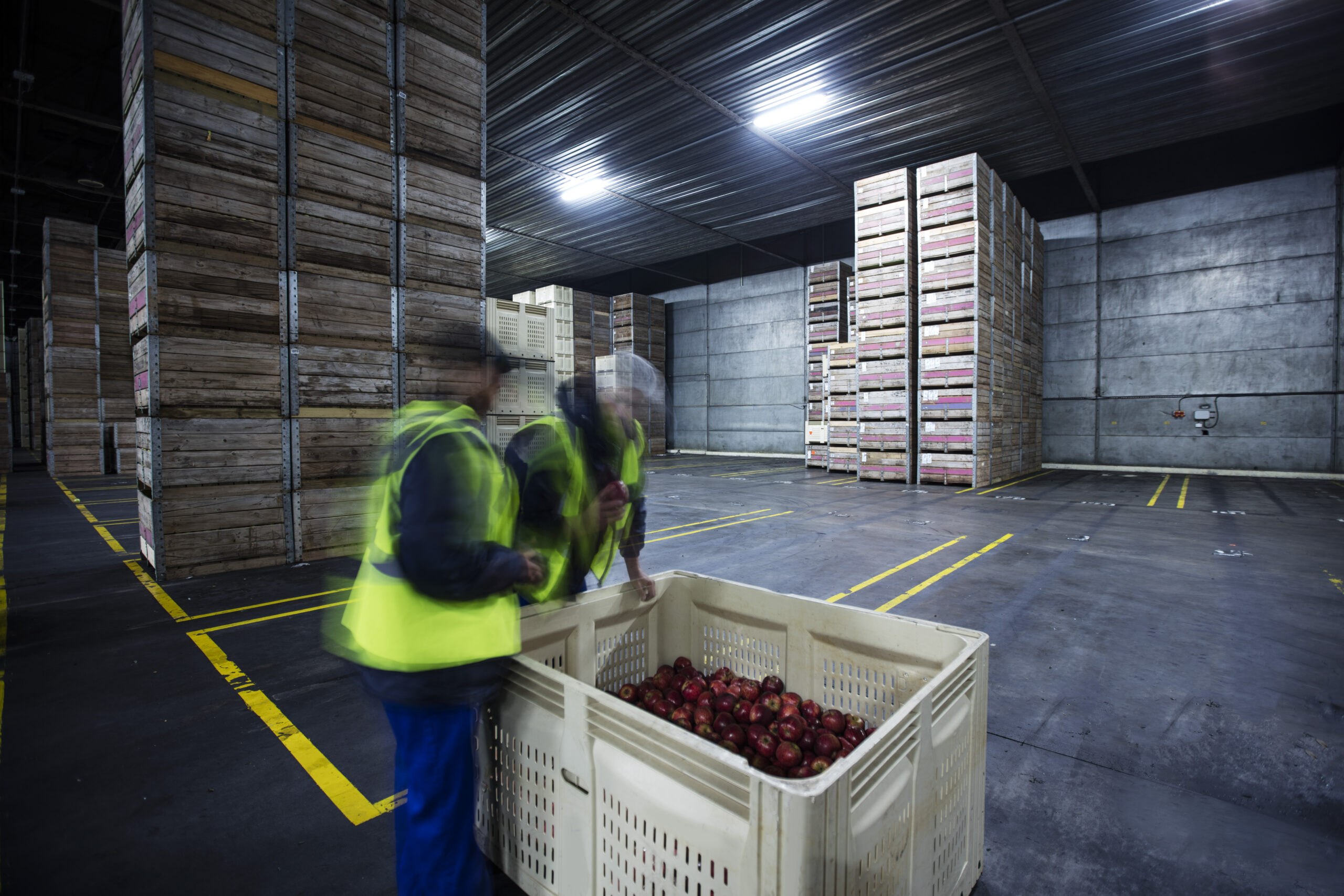
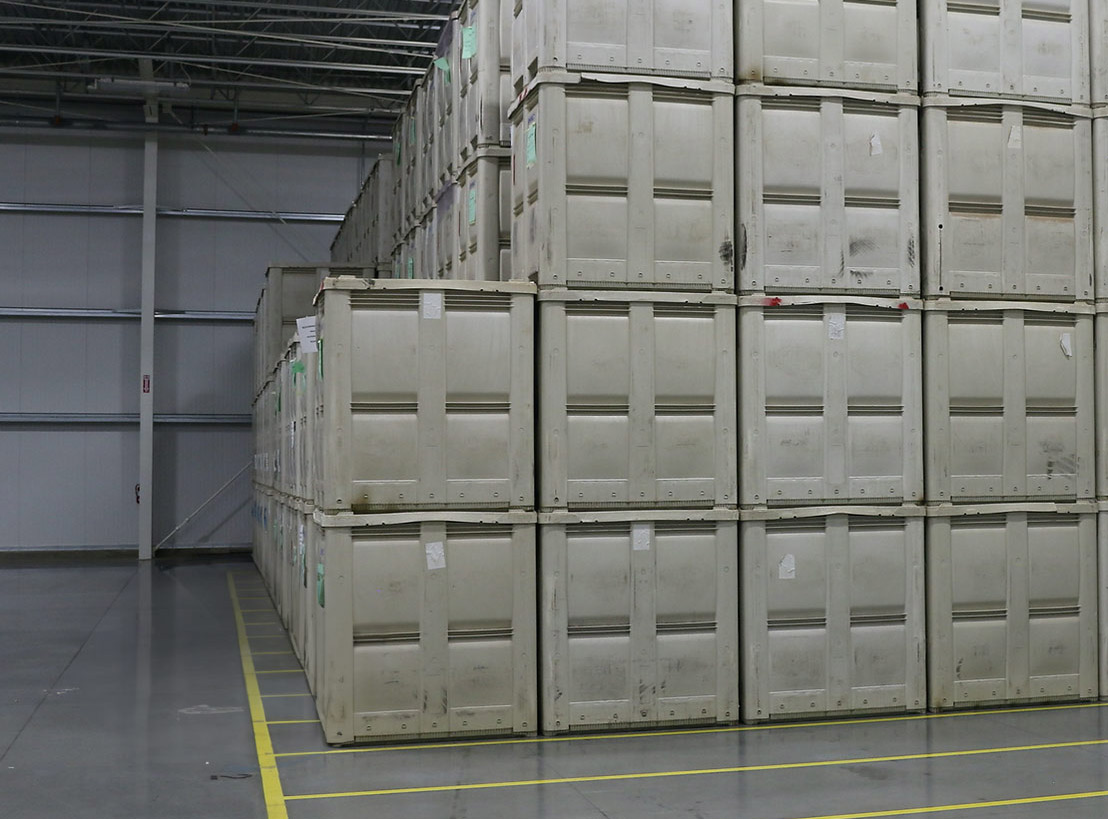
October – November: Cold Storage Intake
Peak intake season.
- Temperature: 32-36 F for short-term. 0 F for long-term holds.
- Humidity: 65-70% RH.
- Lot tracking: FSMA 204 requires lot-level traceability. Review requirements.
- Staging: Avoid temperature shock. Move gradually: ambient to 36 F to 0 F over 24-48 hours.
See our complete almond cold storage guide for detailed intake protocols.
December: Holiday Market Window
First major market timing opportunity. Holiday demand creates a pricing window for baking almonds and gift nuts.
January – March: Market Timing and Inventory Release
- Monitor Almond Board of California position reports for supply/demand data.
- Sell in tranches rather than dumping entire inventory.
- Quality check stored lots before shipping: verify moisture, flavor, appearance.
Learn how growers use cold storage to capture better almond prices.
Storage Duration and Quality
- 32-36 F, 65-70% RH: 4-8 months with good quality
- 0 F frozen: 12-24 months, minimal quality loss
- Ambient (70 F+): Quality declines within 2-3 months
Long-term storage strategy guide.
FAQ: Almond Harvest Timeline
A: January-March, before harvest pricing kicks in.
A: 5-6% per UC Davis. Above 6% risks mold.
A: Yes. 0 F eliminates insects without chemicals. Essential for organic. Fumigation-free guide.
A: December holidays, March-April baking, June-July pre-harvest tightening.
A: Within 48-72 hours of target moisture.
Planning almond storage? Central Valley Cold Storage in Madera offers multi-zone temperature control, FSMA 204 traceability, and fumigation-free organic storage. Book harvest capacity now. Contact us for a quote.