As a sustainable infrastructure consultant, I have watched the California grid transition from a reliable utility into a liability for high-value cold chain operations. For facilities housing temperature-sensitive assets—ranging from Central Valley almonds and stone fruits to pharmaceutical-grade biologics—the traditional reliance on municipal power is no longer a viable business strategy Agricultural Cold Storage at Madera Airport Indust….. Cold storage resilience today is defined by the ability to maintain a strictly controlled environment regardless of the utility’s status. Through the integration of industrial-scale solar arrays and massive battery energy storage systems (BESS), facilities like Central Valley Cold Storage (CVCS) are rewriting the rules of risk management.
The Fragility of the Municipal Grid
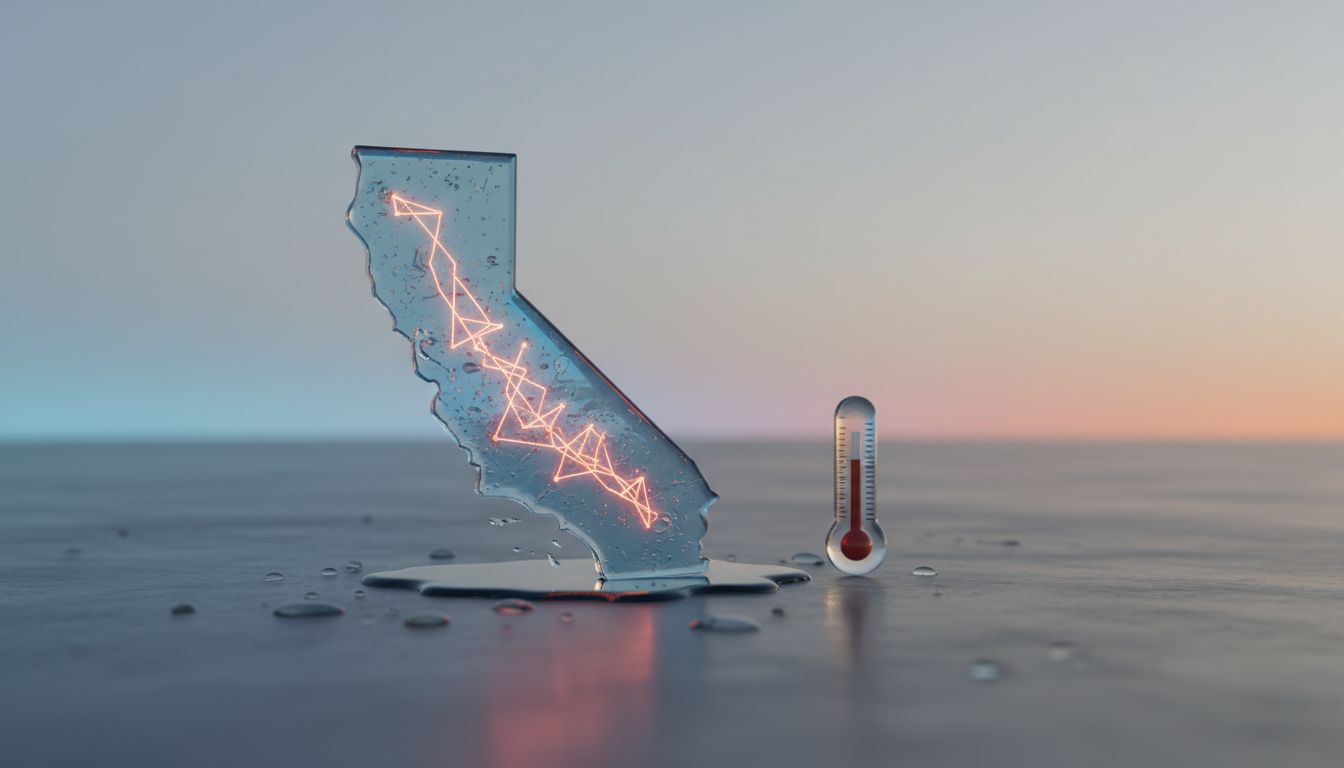
California’s power grid is currently caught in a “pincer maneuver” of increasing demand and decreasing reliability. On one side, the push for electrification increases the total load; on the other, the physical infrastructure is increasingly susceptible to wildfires and extreme heat events. The most visible symptom of this fragility is the Public Safety Power Shutoff (PSPS).
To mitigate wildfire risk, major California utilities have been forced to preemptively de-energize lines during high-wind events. The data is sobering: in a single fire season, one major California utility implemented over 20 PSPS events. For a traditional cold storage facility, a single PSPS event can be catastrophic. Even if a facility has a diesel backup generator, these systems are prone to mechanical failure during prolonged runs, require complex refueling logistics during regional emergencies, and are increasingly restricted by California Air Resources Board (CARB) regulations.
The municipal grid also suffers from “invisible” instabilities. Brownouts and frequency fluctuations can wreak havoc on sensitive compressor motors. In a grid-dependent facility, these micro-interruptions lead to premature equipment wear and unexpected downtime. When we discuss cold storage resilience, we are addressing the fundamental need to decouple high-value inventory from a grid that is no longer designed to guarantee 100% uptime.
Defining Thermal Drift
At the heart of the “Thermal Insurance” concept is the prevention of thermal drift. In the world of thermodynamics, thermal drift is the gradual deviation of a facility’s internal temperature away from its required set point following a power failure. While well-insulated modern warehouses can maintain temperatures for a short window, the “drift” begins the moment the cooling cycles stop.
For high-value agricultural assets, even a drift of a few degrees can trigger a “loss of integrity” clause in a buyer’s contract. In many cases, the product doesn’t have to spoil to be rendered valueless; it merely has to breach a specific temperature threshold for a documented period. This is where traditional cargo insurance often fails the producer. Cargo insurance typically covers transit accidents or total loss due to fire, but it rarely covers the subtle degradation of quality caused by grid-related thermal drift at a storage site.
By achieving 100% off-grid autonomy, a facility ensures that the cooling cycle is never interrupted. The solar-plus-storage architecture provides a “continuous wave” of power. During the day, the solar array powers the compressors and charges the batteries; at night, the batteries take over. There is no “switch-over” time, no generator lag, and most importantly, zero thermal drift. This level of precision is the new gold standard for agricultural preservation.
Energy Autonomy as the Ultimate Financial Safeguard
When we move beyond the mechanical benefits, the financial logic of Thermal Insurance becomes undeniable. In a standard risk assessment, energy autonomy acts as a hedge against three primary financial drains: inventory loss, escalating utility costs, and rising insurance premiums.
Traditional facilities are at the mercy of Time-of-Use (TOU) rates. In California, the cost of electricity during peak afternoon hours can be quadruple the off-peak rate. For a cold storage operation, these peak hours often coincide with the hottest part of the day when the refrigeration load is highest. This creates a “perfect storm” of high demand and high pricing. An autonomous facility, however, operates on a fixed-cost basis. Once the infrastructure is in place, the marginal cost of the next kilowatt-hour is effectively zero.
Furthermore, insurance providers are beginning to recognize the lower risk profile of off-grid facilities. A facility that can prove 100% uptime through a microgrid is a significantly lower liability than one dependent on a PSPS-prone circuit. By integrating these resilience protocols, operators can negotiate better terms, essentially allowing the infrastructure to pay for itself through both energy savings and risk mitigation. This is the intersection of sustainability and fiscal pragmatism—the core of The Future of Cold Storage.
The following table illustrates the stark contrast between the status quo and the new standard of resilience provided by Central Valley Cold Storage (CVCS).
| Risk Factor | Grid-Dependent Facility | Off-Grid CVCS Facility |
|---|---|---|
| PSPS Event | Total Shutdown / Generator Reliance | 100% Operation |
| Brownout | Compressor Damage Risk | Zero Impact |
| Price Surge | High Variable Cost | Fixed Cost |
| Uptime | 98% (Grid Average) | 100% |
The Role of Battery Microgrids in Asset Protection
To understand how Thermal Insurance works in practice, we must look at the architecture of Battery Microgrids. These are not merely “backups”; they are the primary intelligence of the facility. A sophisticated microgrid manages the flow of energy in real-time, balancing the intermittent nature of solar production with the constant demand of industrial refrigeration.
For California’s Central Valley, where solar irradiance is among the highest in the country, this model is particularly effective. The sheer volume of energy that can be harvested and stored allows for a surplus that acts as a “thermal buffer.” In the event of several consecutive cloudy days—or a state-wide grid emergency—the stored energy capacity is sized to maintain the cold chain without interruption. This is the operational guarantee that separates a resilient facility from a vulnerable one.
This autonomy also allows for “sub-cooling” strategies. During peak solar production, the facility can be cooled slightly below the required set point (using “free” energy), effectively turning the frozen product itself into a thermal battery. This reduces the load on the BESS during the night, further extending the facility’s resilience window.
The Truth About Cold Chain Integrity
The hard truth for California producers is that the municipal grid is no longer a “set it and forget it” utility. It is a variable that must be managed. When we talk about cold storage resilience, we are talking about removing the “grid variable” from the equation entirely. For a grower who has spent a year tending to an orchard, the final stage of the journey—storage—should not be the point of highest risk.
Central Valley Cold Storage was designed from the ground up to address this specific vulnerability. By utilizing a 100% off-grid autonomy model, CVCS provides a level of security that traditional warehouses simply cannot match. It is the difference between hoping the power stays on and knowing the temperature will never move. This is the essence of Thermal Insurance.
Frequently Asked Questions
- Q: What is thermal insurance?
A: It is an operational framework where energy autonomy (solar+battery) guarantees that inventory never leaves its optimal temperature range, acting as a physical hedge against cargo loss. - Q: How does off-grid power affect operating costs?
A: It transitions energy from a variable, rising expense to a fixed infrastructure cost, eliminating peak-hour surcharges and protecting against utility rate hikes. - Q: Can off-grid systems handle extreme heatwaves?
A: Yes. In fact, systems are sized for peak summer loads. While the grid struggles during heatwaves, off-grid systems thrive on the abundant solar energy available during those same periods.
As we look toward a future defined by climate uncertainty, the definition of a “prime” facility is shifting. It is no longer just about location or square footage; it is about energy sovereignty. For those looking to secure their place in the global supply chain, the move toward off-grid resilience is not just an environmental choice—it is a mandatory evolution for asset protection.