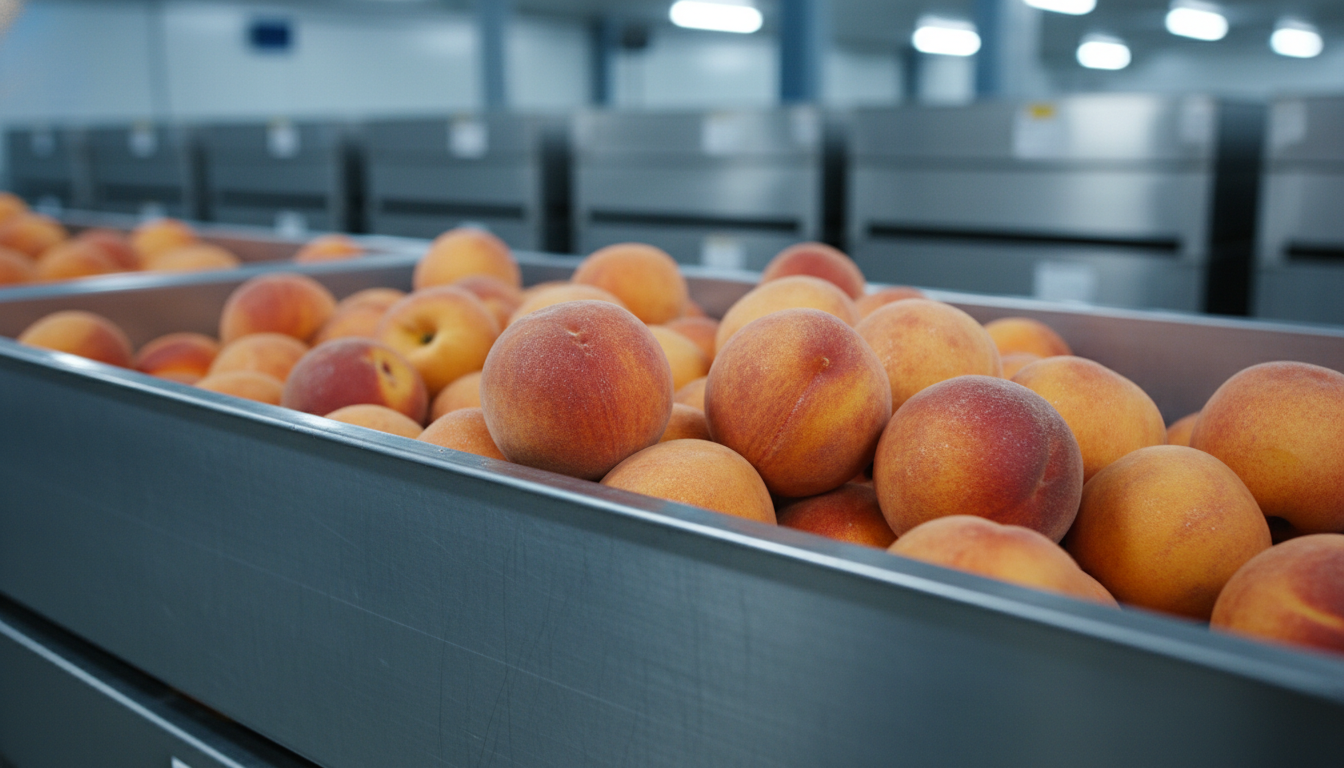
In the high-stakes environment of Central Valley agriculture, the transition from the orchard to the consumer is a race against metabolic decay. For stone fruits—specifically peaches, nectarines, and plums—the post-harvest window is notoriously volatile Dairy Cold Storage in Californias San Joaquin Vall….. As a post-harvest physiologist, I have observed that the difference between a premium, juicy fruit and a mealy, unmarketable one often comes down to the first 24 hours of stone fruit cold storage. With the Central Valley producing over 90% of U.S. nectarines and plums, the infrastructure in Madera serves as the heartbeat of the nation’s summer fruit supply chain.
Managing stone fruit requires an intimate understanding of climacteric respiration. Unlike non-climacteric fruits, stone fruits continue to ripen after harvest, triggered by an autocatalytic burst of ethylene production The Complete Guide to Cold Storage Benefits for Ca….. This physiological trait is both a tool for market flexibility and a liability for storage longevity. To maximize market windows, growers must employ precise thermal and atmospheric interventions that arrest senescence without inducing chilling injury.
The Critical Parameters of Stone Fruit Longevity
Successful storage is predicated on three pillars: rapid field heat removal, precise temperature maintenance, and high-saturation humidity. The goal is to slow the fruit’s metabolic rate to a crawl. When we reduce the temperature of a peach from 80°F to 32°F, we reduce its respiration rate by nearly tenfold, effectively extending its shelf life from days to weeks.
| Commodity | Ideal Temp | Humidity | Storage Life |
|---|---|---|---|
| Peaches | 31-32°F | 90-95% | 2-4 Weeks |
| Plums | 31-32°F | 90-95% | 3-5 Weeks |
| Nectarines | 31-32°F | 90-95% | 2-4 Weeks |
- Key Takeaway 1: Stone fruits require near-freezing temperatures (31-32°F) to halt ripening.
- Key Takeaway 2: Humidity must stay above 90% to prevent desiccation and skin shrivel.
- Key Takeaway 3: Constant ethylene monitoring is required to prevent premature softening in mixed-cultivar environments.
The Killing Zone: Avoiding Thermal Mismanagement
The most common failure in stone fruit logistics occurs within what physiologists call the “Killing Zone.” This refers to the temperature range between 36°F and 46°F (2°C to 8°C). While it might seem intuitive that any cooling is better than no cooling, storing stone fruit within this intermediate range is often more damaging than leaving it at room temperature.
Inside the Killing Zone, the fruit’s metabolic processes become desynchronized. The enzymes responsible for pectin breakdown—specifically pectinmethylesterase (PME) and polygalacturonase (PG)—cease to function in harmony. PME continues to work, de-esterifying pectins, but PG (which normally breaks them down into soluble sugars) is inhibited by the cold. This results in the accumulation of low-methoxy pectins that bind with water to form a gel. To the consumer, this manifests as mealiness or “woolliness”—a dry, mealy texture despite the fruit being full of juice. Additionally, internal browning (flesh oxidation) is accelerated in this range.
To bypass the Killing Zone, Central Valley Cold Storage (CVCS) utilizes high-capacity forced-air cooling systems designed to pull field heat out of the fruit pulp within hours of harvest. By rapidly driving the core temperature down to 31-32°F, we skip the metabolic disruption of the Killing Zone entirely. At these lower temperatures, the enzymatic activity is suppressed uniformly, preserving the potential for normal ripening once the fruit is eventually moved to the retail shelf.
Managing the Freezing Point and Soluble Solids
Precision is vital because the freezing point of stone fruit is often near 29.5°F to 30.5°F, depending on the Soluble Solids Content (SSC) or Brix level. High-Brix fruit, common in the Madera and Fresno growing regions, has a lower freezing point, providing a slight safety margin. However, a deviation of just two degrees can result in irreversible cellular rupture from ice crystals. Our facility’s use of individually settable bays allows us to calibrate the environment to the specific Brix levels of a given lot, ensuring we stay as close to the physiological limit as possible without crossing into freezing territory.
Humidity and Vapor Pressure Deficit
While temperature controls the rate of chemical change, humidity controls the physical integrity of the fruit. Stone fruits have relatively thin skins and lack the thick waxy cuticles found in apples or citrus. This makes them highly susceptible to water loss through transpiration. This process is driven by the Vapor Pressure Deficit (VPD)—the difference between the moisture inside the fruit and the moisture in the surrounding air.
In a low-humidity cold storage environment, the dry air acts like a sponge, pulling water out of the fruit. Even a 5% loss in moisture can result in visible skin shrivel around the stem end, a loss of “snap” in nectarines, and a significant reduction in saleable weight. To combat this, stone fruit cold storage must maintain a relative humidity (RH) of 90% to 95%.
At CVCS, we manage VPD through advanced ultrasonic humidification and airflow modulation. By saturating the air, we reduce the moisture gradient, keeping the water where it belongs: inside the fruit. For fruit that has already experienced stress during transport, we employ protocols discussed in our guide on The Science of Rehab Storage: Rehydrating Produce for Market, which focuses on recovering turgor pressure through controlled atmospheric adjustments.
Ethylene: The Silent Ripener
Ethylene management is the final piece of the technical puzzle. Stone fruits are high ethylene producers, but they are also highly sensitive to it. In a closed storage environment, the ethylene produced by a single overripe bin can trigger a ripening cascade across the entire room. This leads to premature softening and a drastically shortened market window. Our Madera facility utilizes potassium permanganate scrubbers and high-frequency air exchanges to ensure that ethylene concentrations remain below 1 part per million (ppm), effectively keeping the fruit in a state of “suspended animation.”
Leveraging Madera for Stone Fruit Logistics
Location is a physiological factor in post-harvest management. The proximity of the storage facility to the orchard dictates the “harvest-to-cool” interval. In the heat of a Central Valley summer, fruit sitting on a loading dock or in a trailer can gain 5-10°F of core temperature per hour. This “heat gain” accelerates respiration and consumes the fruit’s limited carbohydrate reserves.
By leveraging Madera as a logistical hub, growers minimize the transit time from the tree to the precooler. CVCS’s infrastructure is specifically designed for the high-volume, fast-turnover nature of the stone fruit season. Our individually settable temperature and humidity bays provide a level of granularity that traditional “big box” cold storage cannot match. We recognize that a Honeyfire nectarine may have different storage requirements than a Black Splendor plum, even if they arrive on the same day.
Advanced Monitoring and Transparency
Modern produce growing is data-driven. Growers need to know that their product is being maintained at the precise set points promised. Our facility integrates real-time thermal monitoring, allowing for constant oversight of pulp temperatures. This data is critical for “Export Grade” fruit, where the cold chain must be documented to satisfy international phytosanitary and quality requirements.
Frequently Asked Questions
Q: Can stone fruit be stored with other produce?
A: Generally no. Stone fruits are high ethylene producers and are also sensitive to ethylene. Storing them with ethylene-sensitive greens or floral products will cause rapid spoilage of the other commodities. Furthermore, the 31°F temperature required for stone fruit is too cold for many other items like tomatoes or citrus, which would suffer chilling injury.
Q: How does CVCS prevent mealiness?
A: Mealiness is prevented by rapid cooling immediately post-harvest. By using high-velocity forced-air cooling, we bypass the ‘killing zone’ (36-46°F) where the enzymatic breakdown of pectins goes awry. Maintaining the fruit at a consistent 31-32°F ensures that the ripening process is paused uniformly.
Q: What is the maximum storage life for a California peach?
A: Under optimal conditions (31°F, 95% RH, <1ppm Ethylene), most peach cultivars will maintain excellent quality for 2 to 4 weeks. However, this is highly dependent on the fruit’s maturity at the time of harvest. Fruit harvested at “well-mature” stages has better flavor potential but a shorter storage life than “mature” harvested fruit.
Conclusion: Protecting the Harvest
The technical management of stone fruit cold storage is a balancing act between biology and technology. By understanding the metabolic triggers of peaches, nectarines, and plums, and by utilizing the advanced infrastructure available in Madera, Central Valley growers can ensure that their produce reaches the consumer with the same quality it had the moment it was picked. The combination of rapid cooling, VPD management, and ethylene control is the only way to safeguard the investment made in the orchard.
Ready to optimize your post-harvest strategy?
Reserve Stone Fruit Storage Space at our Madera Facility