“`html
In the high-stakes agricultural landscape of California’s Central Valley, the delta between profit and loss is often measured in milligrams. As a post-harvest physiologist, I have spent decades observing the delicate dance between cellular respiration and environmental equilibrium. For the modern grower, the harvest is only the beginning of a race against time and physics. Once a commodity is detached from its parent plant, it loses its primary source of hydration and begins a metabolic decline known as senescence. While standard cold storage aims to slow this decline, suboptimal dry storage conditions can lead to catastrophic “shrink”—the loss of water weight that directly erodes the bottom line.
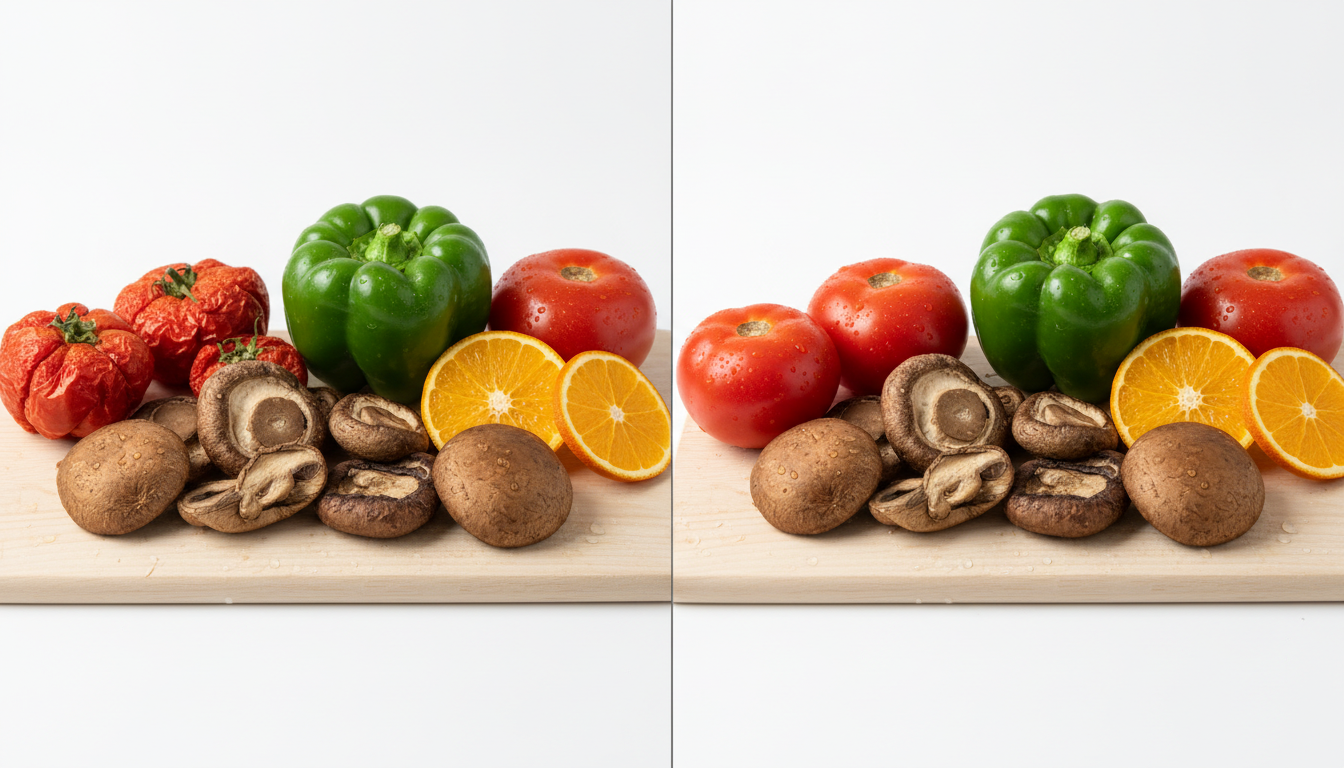
Central Valley Cold Storage (CVCS) has pioneered a technical intervention to this biological inevitability: Rehab Storage. This proprietary process is not merely about holding inventory; it is a clinical application of thermodynamics and plant physiology designed to restore turgidity and recover lost market value. By understanding the science of moisture migration, growers can move beyond passive storage and into active inventory recovery.
Why Produce Loses Weight: The Mechanics of Transpiration
To understand the necessity of rehab storage, one must first understand the mechanism of moisture loss. Produce is largely composed of water—often upwards of 80% to 95% by mass. This water is held within the vacuoles of plant cells, providing the internal pressure (turgor pressure) that keeps a fruit or vegetable crisp and structurally sound. When produce is placed in a dry storage environment, it encounters a significant Vapor Pressure Deficit (VPD).
Vapor Pressure Deficit is the difference between the amount of moisture the air can hold at saturation and the amount of moisture currently present. In the arid conditions of the Central Valley, standard dry warehouses often see humidity levels as low as 20% to 30%. Because the internal environment of a piece of produce is effectively at 100% relative humidity, a steep gradient is formed. Through the process of transpiration, water molecules migrate from the high-pressure environment of the produce tissues to the low-pressure environment of the dry air.
This is not merely a cosmetic issue. Supporting data indicates that water loss of just 5% can make many fruits and vegetables unmarketable. Beyond 5%, we observe visible shriveling, a loss of “snap” or crunch, and a dulling of the cuticle’s natural luster. Furthermore, as water leaves the cells, the concentration of sugars and acids changes, which can accelerate internal breakdown and shorten the remaining shelf life. For the grower, this translates to a lighter product on the scale and a lower grade at the inspection table.
The Physics of Rehydration: How Rehab Storage Works
Rehab Storage at CVCS is a specialized “rescue” service that reverses the effects of dehydration through controlled atmospheric manipulation. The process operates on the principle of reducing the VPD to a point where the moisture gradient favors the produce, while simultaneously managing the risks of microbial proliferation. Our proprietary protocol maintains a precise environment of 34°F at 55% humidity.
While 55% humidity may seem lower than the 90% levels used for long-term storage of leafy greens, it is the strategic “sweet spot” for rehydrating commodities that have already suffered stress. If produce previously held in dry storage is suddenly thrust into a 95% humidity environment, the rapid change can cause physiological shock, leading to split skins or the rapid germination of fungal spores like Botrytis cinerea. CVCS’s Rehab Storage uses a stabilized 55% humidity level to facilitate a steady, controlled re-absorption of moisture into the interstitial spaces of the plant tissue.
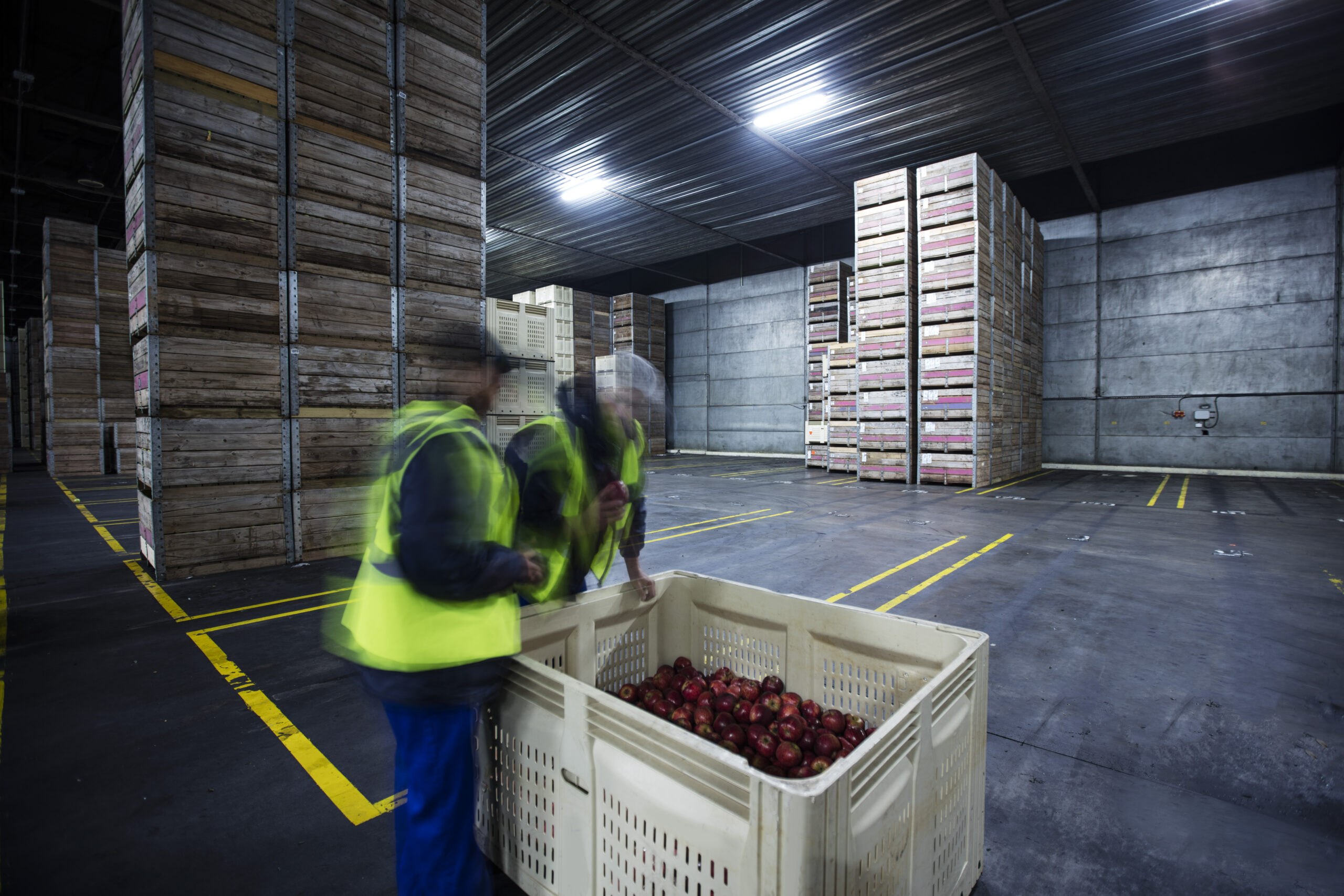
At 34°F, the metabolic rate of the produce is significantly retarded. This cold temperature serves two purposes: first, it slows the respiration rate, preserving the internal carbohydrate stores of the produce; second, it increases the air’s density, allowing for more precise control over the moisture distribution within the cold storage facility. In this controlled state, the produce acts as a sponge, slowly pulling moisture back into its cellular structure, restoring the turgor pressure that was lost during its time in suboptimal dry storage.
When to Use Rehab Storage
Not every batch of produce requires “rehab,” but for those that do, the timing is critical. There are three primary scenarios where Central Valley growers utilize our specialized services:
- Logistical Bottlenecks: When a shipment is delayed at a dry cross-dock or held in a non-refrigerated staging area, the resulting moisture loss can be significant within just 48 hours. Rehab storage can “reset” the clock on this inventory before it reaches the final buyer.
- Market Timing: In instances where growers hold inventory waiting for a price correction, but the initial storage conditions were less than ideal, rehab storage ensures that the product entering the market weeks later looks and weighs as much as it did on harvest day.
- Warehouse Errors: If inventory was accidentally placed in a low-humidity zone or near high-airflow areas (which accelerates evaporation), it may show signs of wilting. Rehab storage serves as a corrective measure to restore the product’s visual and physical integrity.
It is important to note that Rehab Storage is most effective on “structurally sound but dehydrated” produce. It cannot reverse rot or mechanical bruising, but it is highly effective at restoring the “crispness” to commodities like stone fruit, citrus, and certain root vegetables that have lost their luster due to transpiration.
ROI of Moisture Recovery: The Economics of Weight
In the agricultural sector, we sell by the pound. A 3% to 5% loss in weight across a fleet of trucks is not just a statistical anomaly; it is a direct hit to the gross revenue of the harvest. By utilizing CVCS Rehab Storage, growers can effectively “buy back” their lost weight at a fraction of the market price of the commodity.
| Metric | Dry Storage (Standard) | CVCS Rehab Storage |
|---|---|---|
| Humidity | 20-30% | 55% (Controlled) |
| Weight Loss | 3-5% per month | <1% (Recovery Mode) |
| Visual Appeal | Shriveled/Dull | Crisp/Bright |
| Profit Impact | Negative | Positive Recovery |
Consider a grower moving 100,000 lbs of produce. Under standard dry storage conditions, a 4% shrink results in a loss of 4,000 lbs. If the market rate is $1.50/lb, that is a $6,000 loss per lot. By transitioning that inventory into Rehab Storage, the recovery of even 2% of that moisture weight results in a $3,000 gain in value, far exceeding the marginal cost of the specialized storage service. Furthermore, the improvement in visual appeal often allows the product to be sold as Grade A rather than being discounted due to shriveling.
Conclusion
Post-harvest management is often viewed as a defensive game—an attempt to lose as little as possible. However, the introduction of Rehab Storage changes the strategy to an offensive one. By leveraging the principles of post-harvest physiology and precise environmental control, Central Valley Cold Storage allows growers to recover lost assets. We don’t just store your produce; we rehabilitate it, ensuring that every bin and pallet that leaves our facility is in peak condition for the marketplace.
Frequently Asked Questions
Q: How long does rehab storage take?
A: The duration varies significantly based on the commodity’s surface-area-to-volume ratio and the initial degree of dehydration. However, visible improvements in turgidity and measurable increases in weight often occur within 7-14 days of entering the controlled 55% humidity environment.
Q: Is there a risk of mold in rehab storage?
A: Because we maintain a strict 34°F temperature and cap humidity at 55%, we minimize the “dew point” risks that typically lead to condensation and mold growth. Our process is designed to be a safe, gradual rehydration rather than a high-moisture shock.
Ready to restore the value of your inventory?
Inquire About Rehab Storage today and speak with our post-harvest specialists about a custom recovery plan for your produce.
“`