E-Commerce Grocery and Cold Storage: How Direct-to-Consumer Is Changing the Central Valley Supply Chain
The E-Commerce Grocery Explosion: Market Share Transformation 2015-2026
E-commerce penetration in U.S. grocery markets has accelerated dramatically from 1.3% of total sales in 2015 to 13.2% in 2025, with projections reaching 18-22% by 2030. This represents a fundamental structural shift in food supply chain architecture, driven by consumer preference for delivery convenience, reduced shopping trip frequency, and pandemic-accelerated adoption of online ordering. The trajectory is particularly pronounced in high-density urban markets (San Francisco Bay Area, Los Angeles, New York metro) where e-commerce exceeds 20% of total grocery sales.
Amazon Fresh, launched in 2017 with 170 store locations by 2025, has emerged as the dominant pure-play e-commerce grocery provider. Whole Foods (acquired by Amazon in 2017) has expanded online fulfillment to all 500+ locations. Walmart eGrocery (launched 2015) operates in 4,500+ store-based fulfillment locations. Traditional online grocery providers (Instacart, delivering from conventional supermarkets) command approximately 40% of U.S. e-commerce grocery volume as of 2025. Emerging specialty e-grocery providers (Imperfect Foods, Misfits Market, Sunbasket, local farm-to-table services) collectively capture 8-10% of the market.
Cold storage infrastructure has not kept pace with e-commerce growth. Approximately 60% of new cold storage capacity added in 2020-2025 was designed specifically for e-commerce fulfillment, yet e-commerce still represents only 13% of total grocery sales. This indicates structural oversupply of e-commerce dedicated infrastructure relative to current volume, but massive capacity for continued growth as e-commerce penetration approaches 18-22% by 2030.
Traditional vs. E-Commerce Cold Storage: Fundamental Architectural Differences
Traditional wholesale cold storage is designed for product consolidation and bulk storage. A typical produce grower ships 200-400 pallet loads weekly to consolidation facilities where inventory is aggregated from multiple sources, stored for 5-30 days, then shipped to retail distribution centers in full-truck quantities. This model minimizes handling, optimizes transportation efficiency, and consolidates inventory around fixed storage locations.
E-commerce cold storage operates under fundamentally different requirements. Amazon Fresh customer orders average 40-60 items with 8-12 perishable items requiring temperature control. Individual orders require rapid assembly from disaggregated inventory, careful packaging for direct consumer shipment, temperature maintenance during 24-48 hour transit, and integration with delivery routing optimization. The order-fulfillment model demands rapid inventory turnover (5-7 day average holding period vs. 15-25 days for traditional wholesale), precise inventory tracking at individual SKU level, and integrated labor-intensive picking and packing operations.
Traditional Wholesale Facility Architecture: Large open storage bays optimized for double-deep racking (16-20 feet high), minimal inter-product segregation, low labor intensity per unit of throughput, 15-30 day holding periods, truck-load minimum ordering requirements. Representative facility: 200,000 square feet, 5,000-6,500 pallet positions, 15-20 labor personnel, $2.8-3.4 million annual revenue at standard pricing.
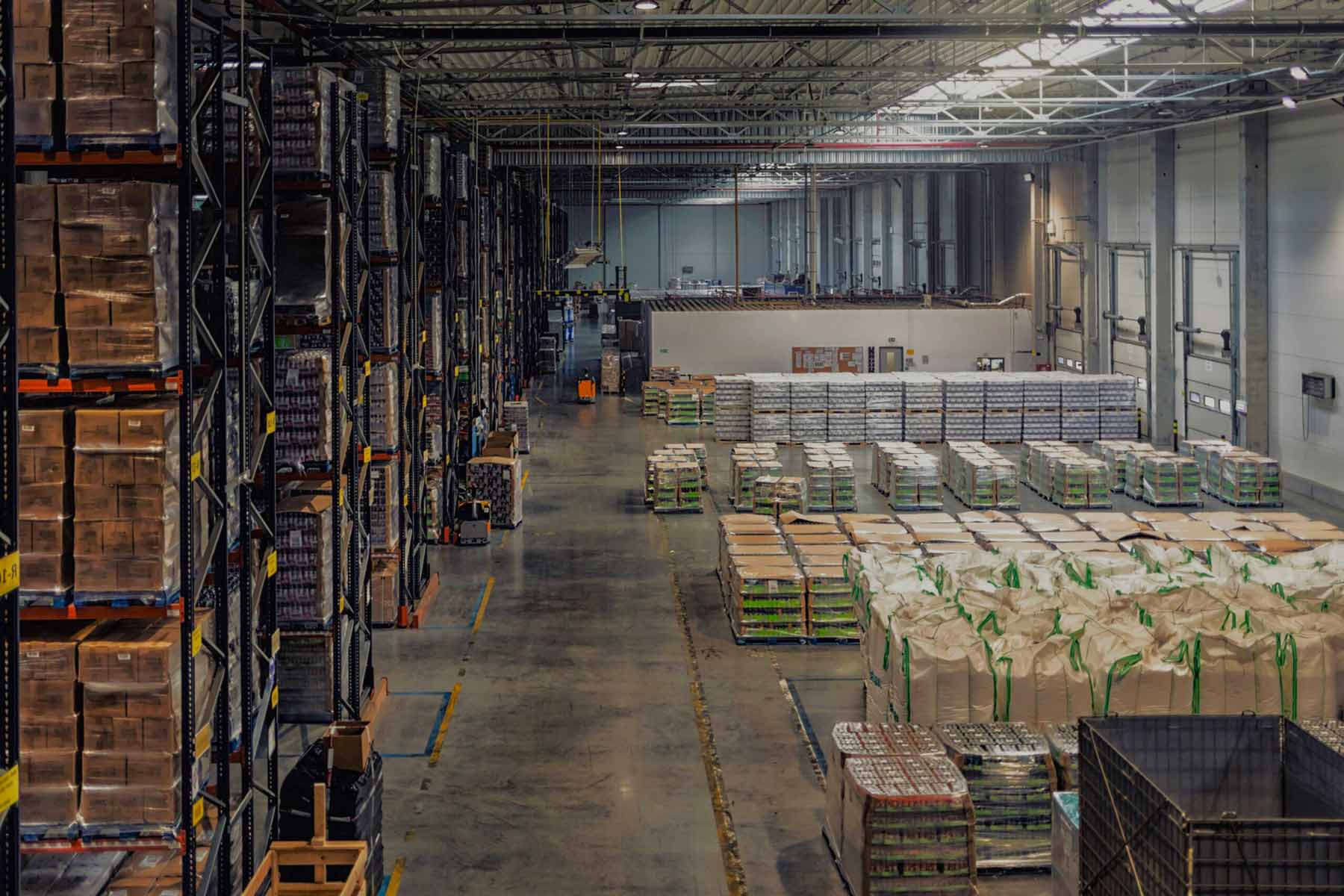
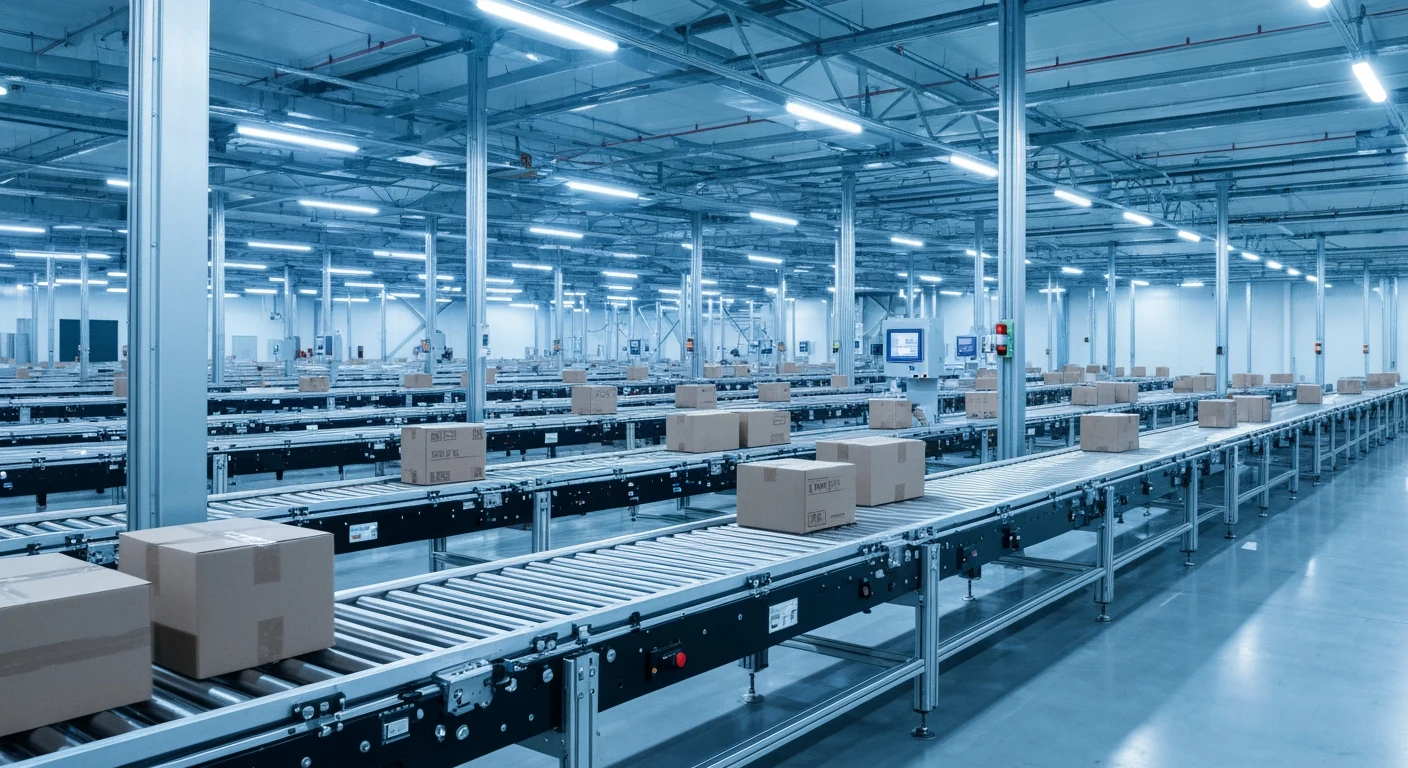
E-Commerce Fulfillment Architecture: Modular compartmentalized zones optimized for individual order assembly, precise temperature and humidity control across zones, high labor intensity (pick/pack/ship), 3-7 day holding periods, case-lot and individual item ordering. Representative facility: 120,000-150,000 square feet, 2,000-2,500 traditional pallet positions (equivalent), 35-50 labor personnel, $3.2-4.1 million annual revenue at premium e-commerce pricing.
The architectural differences create distinct competitive positioning and financial models. E-commerce facilities generate higher revenue per square foot (approximately $26-27 per sq ft annually vs. $14-16 for traditional wholesale) but incur 40-60% higher labor costs as percentage of revenue. Facilities with sophisticated automation (robotic picking, automated sortation, integrated conveyor systems) can approach traditional wholesale labor efficiency while maintaining e-commerce service levels, but capital requirements increase dramatically (additional $8-15 million in automation for a 120,000 square foot facility).
Last-Mile Cold Chain: The Critical Bottleneck in E-Commerce Grocery
The last-mile delivery segment—between fulfillment center and consumer residence—represents the most challenging cold chain component in e-commerce grocery. Traditional wholesale distribution maintains continuous cold chain from storage facility through retail shelf: products are loaded into refrigerated trucks, maintained at controlled temperature through distribution networks, and displayed in refrigerated retail cases. Discontinuity risk is minimal, and spoilage rates are typically 1-3% of product cost.
E-commerce last-mile delivery operates under radically different constraints. Amazon Fresh delivery vehicles operate at ambient temperature with insulated, phase-change-cooled packaging protecting individual shipments. Delivery windows span 6-8 hours from fulfillment to consumer residence, during which exterior temperatures may fluctuate 20-40°F (from morning cool-down to afternoon heat). Consumer receipt habits (delayed opening, ambient storage before refrigeration) further extend exposure to non-controlled temperatures. Studies indicate that ambient temperature exposure in e-commerce delivery contributes 4-8% spoilage rates—2-3x higher than traditional cold chain.
Technology innovation is critical to last-mile cold chain improvement. Advanced insulated packaging with improved phase-change materials (targeting 18-24 hour thermal stability) reduces temperature fluctuation to ±3°F during delivery. Real-time temperature monitoring with IoT sensors provides proof-of-temperature-control documentation. Delivery route optimization (minimizing customer wait times, scheduling deliveries during cooler hours) reduces ambient exposure. Evolving delivery models (scheduled customer arrivals during delivery windows, direct refrigerator placement for premium service) are emerging as differentiators for high-value grocery customers.
Micro-Fulfillment Centers: Distributed Hub Architecture
The geographic constraints of e-commerce grocery create fundamental advantage for distributed fulfillment hub networks rather than centralized warehouses. Consumer delivery expectations (same-day or next-day delivery, narrow time windows) are incompatible with centralized distribution centers 300+ miles from urban delivery zones. Instead, successful e-commerce grocery providers are deploying “micro-fulfillment centers” (MFCs) strategically positioned within 50-100 miles of target urban markets.
A micro-fulfillment center is typically 30,000-60,000 square feet, automated or semi-automated order picking, designed for 500-1500 orders daily, with direct delivery vehicle positioning for last-mile deployment. MFC capital costs are approximately $8-15 million, creating strong incentive for technological efficiency to achieve positive unit economics within 3-5 year payback periods. Amazon currently operates approximately 75-100 MFCs across the United States, with expansion targets reaching 200+ locations by 2028.
The Central Valley’s geographic position relative to California’s major urban centers (90-180 miles from San Francisco Bay Area, Los Angeles, and Inland Empire) positions regional cold storage facilities ideally for MFC deployment. A facility positioned in Madera or Fresno County can serve Bay Area customers with 12-18 hour delivery windows, Los Angeles customers with 16-20 hour windows, and Inland Empire customers with 4-6 hour windows. This geographic positioning is superior to centralized distribution models and creates natural demand for expanded cold storage capacity optimized for e-commerce fulfillment.
Amazon Fresh and Whole Foods Impact on Regional Cold Storage Demand
Amazon Fresh’s expansion and integration with Whole Foods (post-acquisition) has fundamentally altered Central Valley cold storage demand. Amazon Fresh stores operate as micro-fulfillment centers, with 60-70% of inventory dedicated to online order fulfillment and 30-40% supporting in-store retail sales. This model requires significantly more frozen and refrigerated inventory depth compared to traditional supermarkets (which maintain 3-5 day inventory) or natural food retailers (which historically maintained 5-7 day inventory). Amazon Fresh stores require 10-15 day inventory depth supporting both in-store and fulfillment demand.
Whole Foods online ordering (deployed post-acquisition to 200+ locations by 2025) similarly increased cold chain inventory requirements. Traditional Whole Foods stores maintained 3-4 day inventory turnover. Post-Amazon integration, online order fulfillment requires expanded inventory depth and dedicated cold storage allocation. The acquisition’s network effects—allowing Same-Day delivery of Whole Foods products via Amazon delivery infrastructure—created new cold chain requirements for consolidated fulfillment and staging areas.
Amazon’s supply chain engineering mindset has driven cold storage facility modernization across regions where Amazon operates. Facilities not meeting Amazon’s quality, sustainability, and operational standards face de-selection from Amazon supply networks, creating pressure for competitors to match or exceed Amazon’s facility standards. This competitive escalation benefits modern, well-capitalized facilities like CVCS while creating pressure on older, less-efficient competitors.
DTC Farm-Box Services and Specialty E-Commerce Growth
Beyond mainstream e-commerce grocery (Amazon Fresh, Walmart), a growing segment of direct-to-consumer (DTC) agricultural services has emerged, focused on premium, locally-sourced, or specialty product categories. Services such as Imperfect Foods, Misfits Market, Sunbasket, local CSA (Community Supported Agriculture) boxes, and regional farm-direct delivery services have scaled rapidly, capturing $8-12 billion in aggregate annual U.S. revenue by 2025.
DTC farm-box services typically operate through regional fulfillment hubs consolidating product from multiple growers, implementing quality control and damage assessment, assembling individual customer boxes, and arranging regional delivery. This business model requires substantial cold storage capacity optimized for rapid sorting, quality assessment, and re-segregation by customer destination. Unlike wholesale channels where a single 100-pallet load moves as unit, DTC operations require handling individual items, small lot segregation, and customized product assembly.
The unit economics of DTC farm-box services depend heavily on cold storage facility efficiency. Typical gross margins of 40-50% on product sales must cover (1) cold storage warehouse costs, (2) labor-intensive picking and packing, (3) last-mile delivery, and (4) loss and spoilage. Cold storage represents 8-14% of total cost of goods sold. Facilities with efficient layout, integrated labor management systems, and temperature precision reducing spoilage can achieve 1-2% competitive cost advantage translating to 8-15% gross margin improvement.
Central Valley Cold Storage’s positioning serves this emerging DTC segment through specialized infrastructure supporting rapid product sorting, quality assessment, and custom lot consolidation. The facility’s multi-temperature zones enable parallel processing of different product categories, and the integrated inventory management systems support the SKU-level precision required for customized box assembly.
Supply Chain Transparency and Traceability in E-Commerce
E-commerce grocery customers expect unprecedented transparency into product sourcing, handling, and freshness. Unlike traditional wholesale distribution where intermediaries (brokers, processors, retailers) control customer information, e-commerce DTC models create direct shipper-to-consumer relationships where supply chain transparency becomes a primary marketing message.
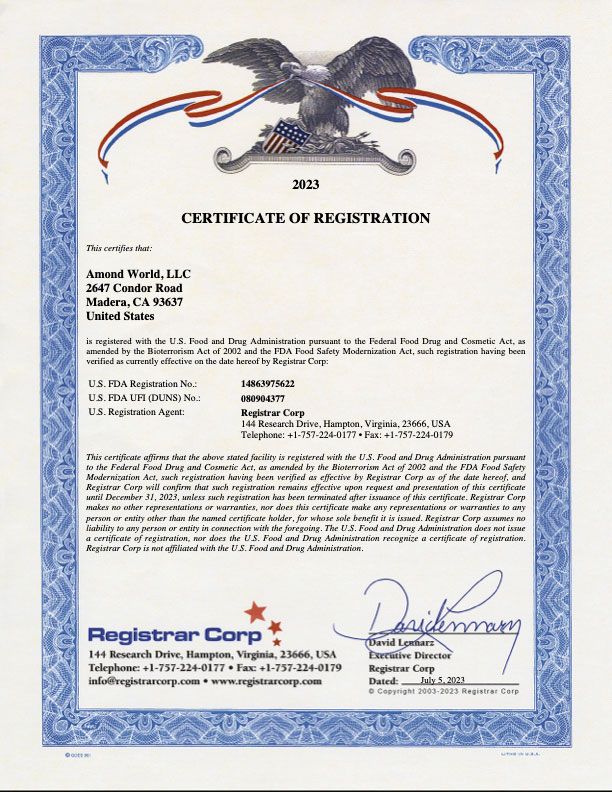
Cold storage facilities supporting e-commerce channels must provide granular product traceability, real-time temperature monitoring documentation, and audit-trail evidence of proper handling. FSMA 204 compliance becomes operationally critical—not just for regulatory adherence, but for customer confidence and product liability management. Facilities providing blockchain-backed or third-party-verified supply chain transparency capture premium positioning in DTC markets.
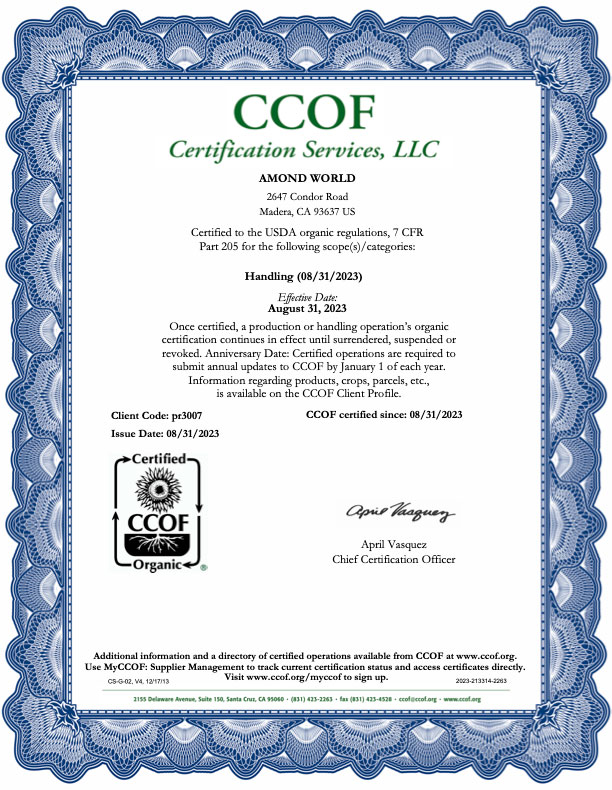
CCOF organic certification, coupled with comprehensive handling documentation and temperature proof-of-control, enables DTC services to command 25-35% price premiums for certified organic products. CVCS’s organic certification and FSMA 204 compliance support this transparency-driven premium positioning in the highest-growth e-commerce segments.
Demand Volatility and Capacity Planning in E-Commerce
E-commerce grocery demand exhibits different volatility characteristics compared to traditional wholesale. Wholesale demand follows agricultural seasonal cycles (harvest peaks, post-harvest consolidation periods, off-season troughs). E-commerce demand follows both seasonal patterns and consumer behavior patterns: peak demand during winter months (cold weather, holiday gifting, indoor delivery preference), lower demand during summer when consumers prefer fresh retail channels, and demand spikes around promotional events (Amazon Prime Day, holiday sales, special offers).
This volatility creates capacity planning challenges for cold storage facilities. A facility designed for peak e-commerce seasonal demand (November-December) will experience 40-50% underutilization during summer months (June-September). Conversely, facilities designed for average annual demand cannot accommodate peak periods. Successful e-commerce cold storage operators deploy flexible pricing (peak season premiums, off-season discounts) to manage demand variance and smooth utilization across seasons.
The trend toward e-commerce concentration during winter months creates opportunity for facilities to deploy countercyclical wholesale operations during summer. CVCS’s positioning across both wholesale consolidation and e-commerce fulfillment enables seasonal portfolio balancing: summer peak wholesale activity in conventional produce consolidation, winter peak e-commerce fulfillment activity for DTC and retail e-commerce channels.
FAQ: E-Commerce Cold Storage and Market Trends
- Q: How much faster must inventory turn for e-commerce vs. traditional wholesale cold storage?
- A: Traditional wholesale averages 15-25 day holding periods with 1-2 inventory turns monthly. E-commerce averaging 3-7 day holding periods requires 4-10 monthly turns. This 4-5x faster turnover requires different facility layout, labor structure, and inventory management systems designed for rapid order fulfillment rather than bulk consolidation.
- Q: What is the geographic competitive advantage of Central Valley facilities for e-commerce?
- A: Central Valley positioning within 90-180 miles of Bay Area, Los Angeles, and Inland Empire enables same-day or next-day delivery to these high-density markets. This geographic advantage is impossible for more distant locations and creates natural competitive moat for regional facilities in e-commerce supply chains.
- Q: How does e-commerce cold chain spoilage impact total cost of ownership?
- A: E-commerce last-mile delivery exhibits 4-8% spoilage rates (2-3x wholesale levels) due to ambient temperature exposure and delivery handling. This 2-4% product loss cost must be absorbed in e-commerce fulfillment operations, effectively reducing gross margins by 8-15% relative to wholesale operations. Facilities optimizing cold storage and packaging can reduce spoilage to 2-3%, creating material cost advantage.
- Q: What technology infrastructure is required for e-commerce fulfillment?
- A: E-commerce facilities require integrated inventory management systems (real-time SKU tracking), order management systems (pick/pack optimization), temperature monitoring (proof-of-control documentation), and last-mile delivery integration (route optimization, delivery window management). Capital requirements for this automation are 20-30% of facility capital cost.
- Q: Is e-commerce growth sustainable, or is it a temporary pandemic-driven phenomenon?
- A: E-commerce grocery growth is structural and sustainable. Current 13% penetration is projected to reach 18-22% by 2030 based on consumer behavior shifts, retailer capability expansion, and emerging technologies (autonomous delivery, temperature-controlled packaging). Year-on-year growth rates may moderate, but e-commerce will remain fastest-growing distribution channel through 2030+.
- Q: How are traditional retailers responding to e-commerce competition in cold chain?
- A: Traditional retailers are deploying omnichannel strategies combining in-store retail with e-commerce fulfillment. Whole Foods, Kroger, Safeway and regional chains are investing in fulfillment infrastructure and expanding online grocery offerings. This omnichannel approach requires cold storage facilities capable of serving both channels simultaneously—creating opportunity for flexible, multi-capability facilities.
Conclusion: E-Commerce as Driving Force in Cold Storage Evolution
E-commerce grocery has fundamentally transformed cold storage from a commodity supply-chain-support function to a strategic competitive asset. Facilities optimized for e-commerce fulfillment—with rapid turnover, temperature precision, sophisticated inventory management, and geographic positioning for last-mile delivery—are capturing the highest-growth market segments. Traditional wholesale-focused facilities face margin compression from low-cost competitor entry and shifting customer demand toward e-commerce-enabled shippers.
Central Valley Cold Storage’s positioning as a modern, flexible facility capable of supporting both traditional wholesale consolidation and emerging e-commerce fulfillment places the facility at the epicenter of the cold storage market transformation. The facility’s planned expansion to 380,000 square feet will create capacity to capture e-commerce growth while maintaining wholesale relationships—delivering portfolio diversification and margin stability across cyclical demand volatility.
For produce companies, retailers, and shippers evaluating cold storage partnerships in support of e-commerce and DTC strategies, facility selection should prioritize geographic positioning (proximity to target delivery markets), operational flexibility (ability to serve both wholesale and e-commerce simultaneously), and technological infrastructure (inventory precision, temperature monitoring, integration capability). CVCS meets all these criteria and is ideally positioned for accelerating e-commerce cold chain requirements.
Ready to optimize your e-commerce cold chain? Central Valley Cold Storage offers the geographic positioning, technological infrastructure, and operational flexibility to support rapid e-commerce growth. Schedule a consultation to discuss your direct-to-consumer or last-mile fulfillment requirements.