META: Pistachio cold storage near you in California’s Central Valley. CCOF-compatible, fumigation-free refrigerated storage at Madera Airport Industrial Park Mastering the Produce Cold Chain: From Harvest to ….. Export-ready quality.
Pistachio Cold Storage Near Me: Central Valley Refrigerated Storage for California’s Dominant Nut Crop
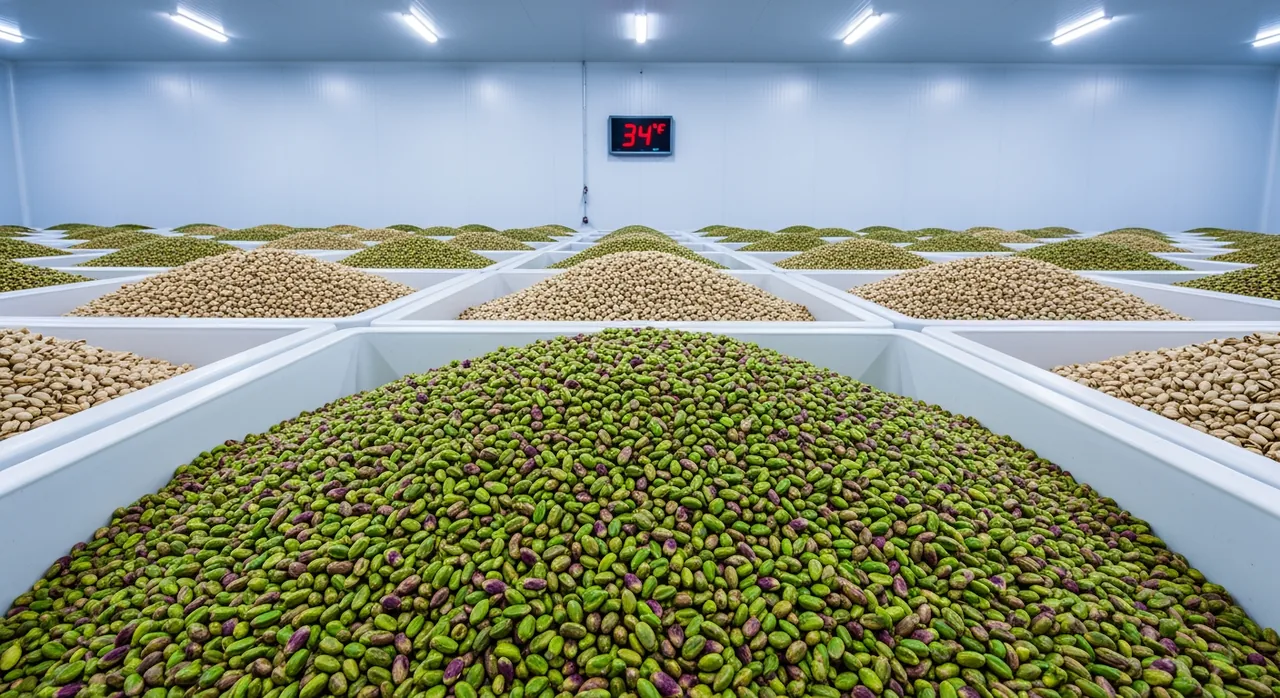
Definition: Pistachio cold storage is temperature-controlled warehousing maintained at 28–34°F with precise humidity management to preserve kernel color, prevent hull staining, suppress aflatoxin risk, and eliminate fumigation requirements — extending pistachio shelf life and protecting export market eligibility throughout the storage period. Export Readiness: Meeting EU and Asian Standards f….
California produces approximately 98 percent of the United States’ pistachio supply. Madera County sits in the geographic center of that production footprint, ranking fourth statewide in pistachio output alongside Fresno, Kings, and Tulare counties. If you’re a pistachio grower or processor in the San Joaquin Valley searching for cold storage near me, Central Valley Cold Storage at the Madera Airport Industrial Park is the purpose-built agricultural cold storage option for this region — 50 million pounds of capacity, off-grid power, and CCOF-compatible organic storage protocols.
Why Pistachio Cold Storage Is Different From General Refrigerated Warehousing
Pistachios have specific post-harvest vulnerabilities that general-purpose cold storage doesn’t address. Kernel color — the light, even green-to-yellow tone that signals freshness to buyers — degrades under heat exposure. Hull staining from delayed processing creates quality downgrades. And moisture management must be precise: too dry and the shell can crack, too humid and mold risk climbs.
Central Valley Cold Storage maintains storage at 28–34°F with 55–65% humidity — parameters that arrest the enzymatic and chemical processes that degrade pistachio quality after harvest. The facility stores pistachios in both in-shell and shelled forms, accommodating product at multiple stages of the processing chain.
Organic Pistachio Storage: CCOF Compatibility Without Fumigation
Organic pistachio production in Madera County is growing, driven by export demand — particularly from European buyers who require CCOF or equivalent certification and specifically exclude fumigated product. Conventional dry storage cannot serve this market: ambient temperatures build insect pressure that requires fumigation, and fumigation voids organic certification.
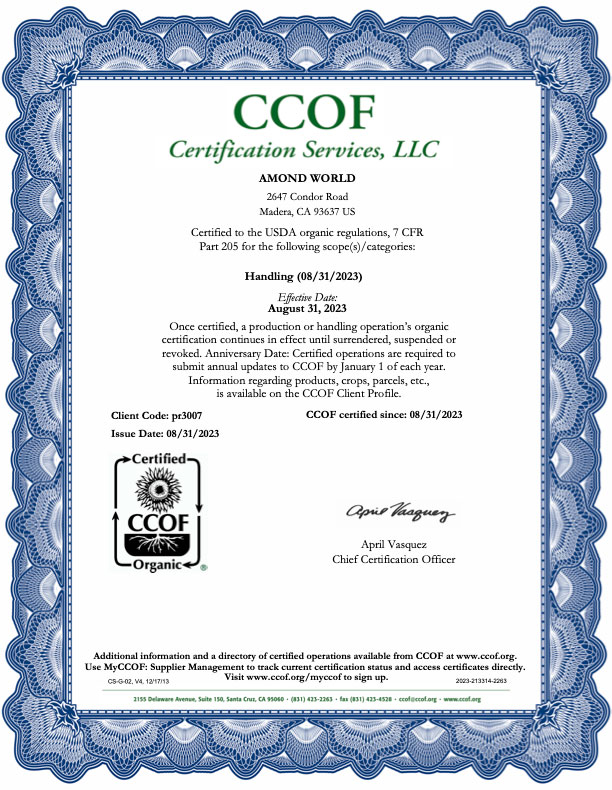
Central Valley Cold Storage handles organic pistachios with a distinct protocol: storage below freezing, which is lethal to insects at all life stages without chemical intervention. This means your organic certification status is fully preserved through the storage period. The facility is compatible with CCOF certification requirements, and lot separation ensures organic product is never commingled with conventionally stored crops.
Export Market Access: What Fumigation-Free Storage Unlocks
The EU, Japan, South Korea, and several Middle Eastern markets have tightened import restrictions on fumigated agricultural products over the past decade. For California pistachio exporters, this creates a real commercial problem: dry-stored product that requires fumigation may be disqualified from buyer specifications in those markets, or face additional testing requirements that add cost and delay.
Pistachios stored at Central Valley Cold Storage are fumigation-free from intake through shipment. That documentation chain — intake records, storage condition logs, outbound certificates — supports phytosanitary compliance for USDA APHIS export certifications and satisfies buyer requirements in major import markets. For Madera County growers and processors selling into export channels, cold storage is increasingly a market access requirement, not just a quality decision.
Aflatoxin Risk Management in Pistachio Storage
Aflatoxin — a mycotoxin produced by Aspergillus mold species — is one of the most serious quality risks in pistachio storage. Aflatoxin contamination can disqualify entire lots from sale and creates significant liability for growers and handlers. The conditions that allow aflatoxin development are heat and humidity above the thresholds that cold storage prevents.
At 34°F, Aspergillus activity is suppressed. The humidity management at 55–65% keeps the storage environment outside the moisture range that supports mold growth. Cold storage doesn’t eliminate aflatoxin risk entirely — incoming product quality matters — but it substantially reduces the conditions under which contamination develops during the storage period.
Shelf Life and Market Timing for Pistachio Growers
Pistachios stored in refrigerated conditions at 34°F retain quality for up to 24 months — long enough to span two full market cycles. This gives growers and handlers the flexibility to sell when buyer demand and pricing are favorable rather than when harvest timing forces inventory movement.
California’s pistachio crop has significant year-to-year variation due to the crop’s alternate-bearing cycle. In high-production years — like the 1.5 billion pound record crop in 2023 — harvest-time pricing is compressed by supply volume. Growers who can hold inventory through the high-supply window and sell into the following year’s tighter supply often achieve meaningfully better net prices. Cold storage capacity makes that strategy executable.
Trucking Access for Pistachio Growers Across Madera County
Pistachios come to Central Valley Cold Storage from growing regions across Madera County and from adjacent counties — Fresno, Kings, and Tulare county growers are all within a few hours’ truck haul. The Madera Airport Industrial Park location provides direct access to Highway 99 and Highway 41, the primary north-south and east-west trucking corridors connecting the valley’s producing regions to processing and storage facilities.
For growers currently trucking to processors in Firebaugh, Lost Hills, or Tulare, adding a cold storage run at Madera is a route extension, not a new logistics operation.
Contact Central Valley Cold Storage
Pistachio storage capacity at the Madera Airport Industrial Park fills ahead of harvest. If you’re planning storage for this year’s crop — or evaluating your options before the next growing season — contact Central Valley Cold Storage now to discuss volume, timing, and available capacity. Visit centralvalleycoldstorage.com to inquire or schedule a facility tour.
Frequently Asked Questions
What temperature does pistachio cold storage require?
Central Valley Cold Storage holds pistachios at 28–34°F depending on the lot type. Conventional pistachios are stored at 34°F with 55–65% humidity. Organic pistachios are held below freezing (below 32°F), which eliminates pest pressure without chemical treatment and preserves organic certification status.
Does cold storage preserve pistachio kernel color?
Yes. Kernel color degradation in pistachios is driven primarily by heat and oxidation. Storage at 34°F arrests the enzymatic browning processes that cause color loss, preserving the light green-to-yellow kernel color that buyers in food manufacturing, retail, and export channels require for premium pricing.
Can I store organic and conventional pistachios at the same facility?
Yes, but they must be stored separately. Central Valley Cold Storage’s five independent refrigeration bays allow lot separation by crop type, certification status, and grower. Organic product is never commingled with conventional lots, preserving CCOF certification eligibility throughout the storage period.
Does fumigation-free cold storage meet EU export requirements?
Cold storage at Central Valley Cold Storage is fumigation-free — product enters, is stored, and exits without chemical treatment. The facility maintains documentation supporting USDA APHIS phytosanitary certifications and provides storage condition records that satisfy buyer requirements in EU, Japanese, and South Korean import markets. Specific export compliance depends on destination country regulations — consult your export agent for current requirements.
How does cold storage reduce aflatoxin risk in pistachios?
Aflatoxin is produced by Aspergillus mold species that require both heat (above 50°F) and elevated humidity to proliferate. Cold storage at 34°F and 55–65% humidity keeps the storage environment outside the conditions that support Aspergillus activity during the storage period. It does not retroactively remediate incoming contamination — incoming product quality remains the grower’s responsibility.
How far is Central Valley Cold Storage from major pistachio growing areas?
The Madera Airport Industrial Park facility is approximately 25 miles from Fresno, 35 miles from Chowchilla, and within two hours of most Madera, Kings, and northern Fresno county growing regions via Hwy 99 and Hwy 41. Growers in Tulare County are typically 60–90 miles south — a standard truck haul for commodity storage.
What documentation does the facility provide for FSMA 204 compliance?
Central Valley Cold Storage is FSMA 204 compliant and provides lot-level intake documentation, continuous storage condition logs (temperature and humidity), and outbound shipping records. This documentation chain satisfies the FDA’s Section 204 traceability requirements for pistachio storage and supports buyer documentation requests in food manufacturing and export channels.