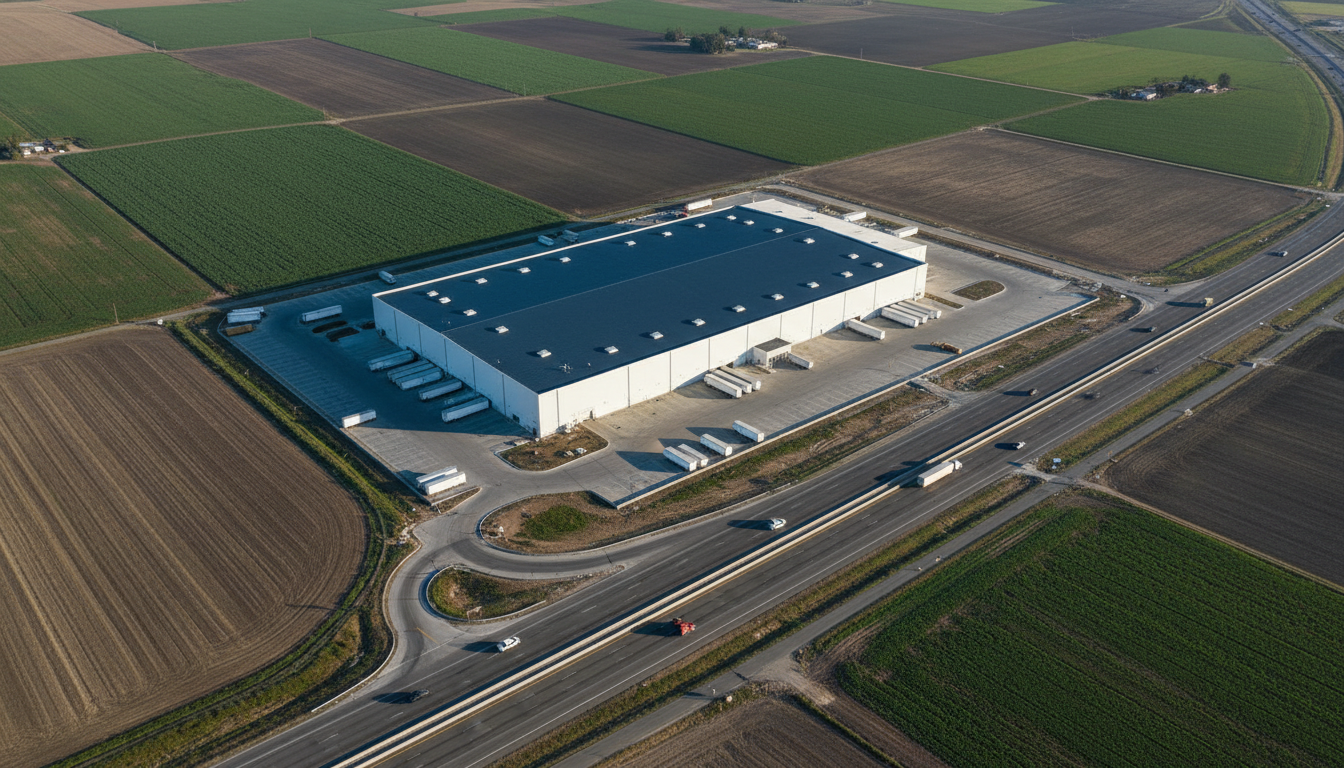
Zero-Click Summary: First-mile cold storage in Madera, CA, minimizes the time between harvest and thermal stabilization. By removing field heat within hours of picking, Central Valley Cold Storage (CVCS) preserves the metabolic integrity of table grapes and nuts, reducing transport respiration and extending the global export window.
In the high-stakes ecosystem of international agricultural exports, the “First Mile” is not merely a geographic measurement; it is a critical physiological window. For exporters managing the transit of high-value perishables from California’s Central Valley to markets in Asia, Europe, and the Middle East, the first few hours post-harvest dictate the terminal quality of the product upon arrival. In Madera, California—a region that generates over $2 billion in agricultural value annually—the implementation of strategic first mile cold storage Madera solutions has become the definitive competitive advantage for logistics professionals and growers alike.
As a Logistics Technology Specialist, I have observed that the breakdown of the cold chain rarely occurs in the middle of the ocean or during final-mile delivery. Instead, the most catastrophic losses in shelf life are attributed to “thermal inertia” during the initial stages of the supply chain. This article explores why Madera’s proximity to the source of production is the linchpin of a successful global export strategy.
The Science of Field Heat
When a table grape is harvested or a nut is shaken from a tree in the Madera sun, it does not immediately cease its biological processes. It remains a living organism, respiring and generating internal heat. This “field heat” is the primary catalyst for enzymatic degradation and microbial growth. The rate of respiration—the process by which the produce consumes its own sugars and moisture—is directly proportional to its temperature.
In Madera, where summer temperatures frequently exceed 100°F (38°C), the internal temperature of the produce can spike rapidly. For every 10°C (18°F) increase above the ideal storage temperature, the rate of deterioration typically doubles or even triples. First mile cold storage Madera facilities are designed to intercept this biological countdown. By utilizing forced-air cooling and high-capacity refrigeration systems immediately adjacent to the fields, exporters can achieve “thermal stabilization” far faster than by transporting goods to distant hubs in Los Angeles or the Bay Area.
The technical objective is to reach the “7/8ths cooling time”—the point at which 87.5% of the temperature difference between the initial field heat and the refrigerated air has been removed. Achieving this within the first mile ensures that the product enters its dormant state before cellular breakdown begins, effectively “locking in” the freshness required for a 21-day sea voyage.
Reducing Dwell Time
In logistics, “dwell time” is the enemy of profitability. For agricultural exporters, dwell time represents the period produce sits in an unrefrigerated environment—on a loading dock, in a staging area, or in the back of a non-insulated truck. Every hour of delay in cooling can result in a day of lost shelf life for fresh produce. This is the fundamental “Key Takeaway” for any international buyer: the clock starts at the snap of the stem, not at the loading of the container.
By positioning cold storage at the first mile in Madera, the transit time from the orchard to the cooling unit is reduced from hours to minutes. This proximity allows for “continuous flow” harvesting, where small loads are ferried to the facility throughout the day rather than waiting for a full truckload to be aggregated in the field heat. The following table illustrates the devastating impact of distance on product longevity:
| Distance from Farm | Cooling Delay | Potential Shelf Life Loss |
|---|---|---|
| 10 Miles (Madera) | 1 Hour | Minimal |
| 100 Miles | 4-6 Hours | 15-20% |
| 250 Miles | 12+ Hours | 30%+ |
For an exporter shipping table grapes to Shanghai, a 20% loss in shelf life is the difference between a premium product and a total cargo loss. By utilizing Madera-based assets, exporters mitigate the risks of “cold chain breaks” that occur during long-haul drayage to secondary storage sites.
Madera: The Nexus of Ag Logistics
Madera’s emergence as a strategic hub is no accident of geography. It sits at the absolute heart of the Central Valley, positioned perfectly between the massive nut orchards of the north and the sprawling vineyards of the south. This “Heart of the Central Valley” location provides a unique USP (Unique Selling Proposition) for brand owners: it is the point of least resistance for agricultural movement.
The infrastructure in Madera is specifically tuned for heavy-duty agricultural logistics. Unlike urban centers where cold storage facilities must contend with traffic congestion and restrictive zoning, Madera’s facilities are designed for high-volume throughput. The proximity to State Route 99 provides a direct artery to the Ports of Oakland and Long Beach, but the real value lies in the “pre-port” processing. In Madera, exporters can consolidate loads, perform phytosanitary inspections, and ensure deep-chill stabilization before the product ever touches a long-haul chassis.
Furthermore, Madera County’s $2 billion annual agricultural output ensures a highly skilled local labor force and a robust network of ancillary services, from specialized palletizing to USDA-certified inspection stations. For more comprehensive insights into the regional landscape, see The Definitive Guide to Cold Storage in California’s Central Valley.
Technological Integration in the First Mile
Modern first mile cold storage Madera is not just about big refrigerators; it is about data-driven preservation. For international exporters, visibility is paramount. Modern facilities in the region now offer real-time temperature monitoring and humidity controls that can be accessed remotely by the exporter. When a shipment of almonds or pistachios is brought in, the moisture content is monitored with precision to prevent the development of aflatoxins—a critical requirement for EU and Japanese markets.
For highly respirative crops like cherries or table grapes, advanced facilities utilize modified atmosphere (MA) technologies right at the first mile. By adjusting the levels of Oxygen and Carbon Dioxide within the storage environment immediately after cooling, the metabolic rate of the fruit is suppressed further than temperature alone could achieve. This synergy of rapid cooling and atmospheric control is only possible when the facility is located within the “First Mile” radius.
The Economic Impact on Export Parity
Exporters often focus on freight rates and container costs, but the true cost of logistics includes the “invisible” cost of shrink and quality claims. A product that arrives at its destination with even minor dehydration or stem browning will be subject to price re-negotiations or “protection” claims by the receiver. By investing in first-mile cooling in Madera, exporters are essentially purchasing insurance against these claims.
The efficiency of Madera’s logistics hub also allows for better “Asset Utilization.” Because the cooling is done at the source, the refrigerated containers (reefers) used for ocean transit don’t have to work as hard to pull down the temperature of the cargo; they only need to maintain it. This reduces the risk of equipment failure during the trans-Pacific or trans-Atlantic voyage and ensures the integrity of the cold chain remains unbroken from the Madera soil to the international grocery shelf.
Summary of Strategic Benefits
- Maximum Nutrient Retention: Rapid cooling preserves the vitamins and antioxidants that international consumers demand.
- Structural Integrity: Maintaining the “turgor pressure” in fruits prevents bruising during the vibrations of sea and rail transport.
- Regulatory Compliance: Immediate cooling helps meet stringent phytosanitary standards for export to sensitive markets.
- Extended Sales Window: Every day saved in the first mile is an extra day the retailer has to sell the product at full price.
Frequently Asked Questions
Q: Why is Madera a strategic hub?
A: It sits at the geographic center of California’s nut and grape production, minimizing ‘dwell time’ between field and fridge. This central location reduces the carbon footprint of the first mile and ensures that produce is stabilized before the heat of the day can cause irreversible damage.
Q: What is the primary difference between first-mile storage and port-side storage?
A: Port-side storage is for consolidation and transit prep; first-mile storage is for biological preservation. If you wait until the port to cool your produce, you have already lost the battle against field heat and respiration.
Q: Can Madera facilities handle both nuts and fresh fruit?
A: Yes, though they require different protocols. Fresh fruit requires rapid BTU removal and high humidity, while nuts require precise moisture control and cooler, stable temperatures to prevent rancidity and mold. Madera’s specialized facilities are equipped to bifurcate these needs under one roof.
Conclusion
For the international agricultural exporter, Madera, CA is more than just a dot on the map—it is the strategic starting line of the global cold chain. The ability to leverage first mile cold storage Madera allows for a level of quality control that is simply unattainable when cooling is delayed. In an era where global consumers demand “picked-yesterday” freshness, the first mile is where that promise is kept.