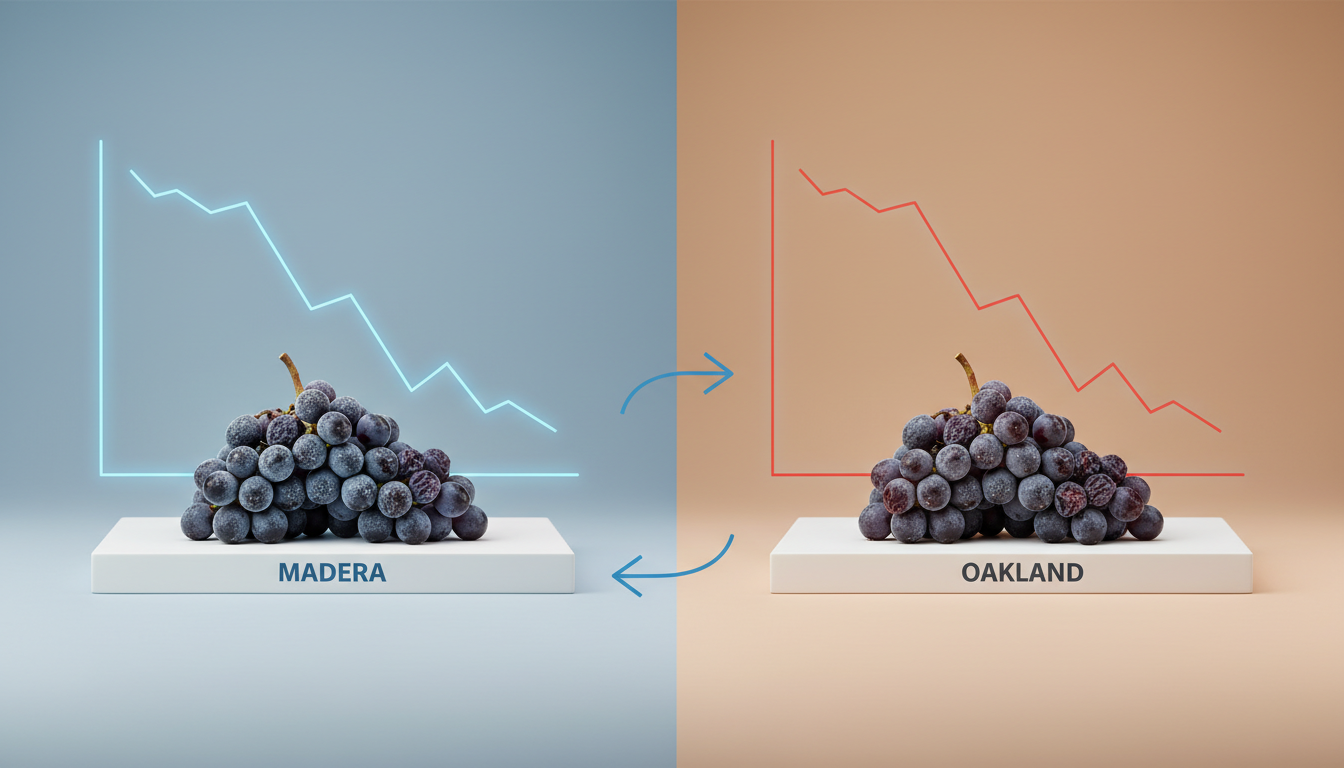
In the following forensic analysis, we will examine why the geographic positioning of cold storage facilities—specifically those located in Madera, California—serves as the critical “reset button” for the senescence clock. By understanding the physics of heat transfer and the biochemistry of respiration, it becomes clear why proximity to the field is the single most important factor in determining the ultimate shelf-life and profitability of global exports. Ethylene Management: Preventing Cross-Contaminatio….
Field Heat: The Silent Margin Killer
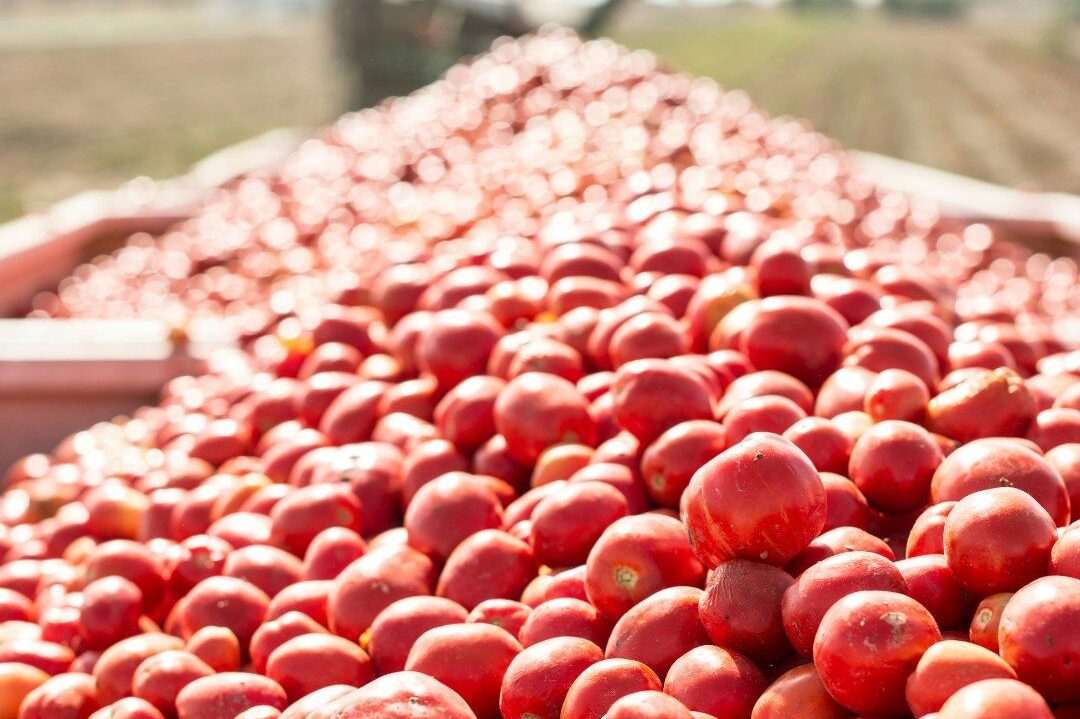
The moment a harvester severs a product—be it a head of romaine, a cluster of table grapes, or a stone fruit—the specimen loses its access to water and nutrients. However, it remains a living, breathing organism. This process is known as respiration, where the plant consumes its stored chemical energy (glucose) and oxygen to produce carbon dioxide, water, and, most critically, heat. In the high-temperature environment of the San Joaquin Valley, where field temperatures frequently exceed 90°F (32.2°C), the rate of this metabolic activity is catastrophic.
According to the Van’t Hoff Rule and the Q10 coefficient, the rate of a chemical reaction—including the enzymatic processes that drive decay—typically doubles or triples for every 10°C increase in temperature. When produce is harvested at 90°F rather than being maintained at a target storage temperature of 34°F, the respiration rate can increase by a factor of 10 or more. This is not merely a theoretical concern; it is a rapid depletion of the product’s internal fuel. Once these sugars and moisture reserves are spent, cellular collapse (senescence) occurs, leading to wilting, softening, and increased susceptibility to pathogens.
The “First-Mile” imperative dictates that this “field heat” must be extracted immediately. We often speak of the “4-hour window.” Within this timeframe, the latent heat within the tissue must be neutralized. If a pallet of produce sits on a loading dock or in an unrefrigerated staging area for even two hours in the Madera sun, the internal thermal mass generates its own heat, creating a feedback loop that accelerates degradation. The following table illustrates the forensic reality of shelf-life loss relative to the delay in pre-cooling.
| Hours at Field Temp (90°F+) | Respiration Rate Increase | Estimated Shelf-Life Loss | Cellular Impact |
|---|---|---|---|
| 1 Hour | 2x – 3x | 8 – 12 Hours | Initial sugar consumption begins. |
| 2 Hours | 4x – 5x | 24 Hours | Significant moisture loss (VPD increase). |
| 4 Hours | 8x – 10x | 2 – 3 Days | Enzymatic breakdown of cell walls. |
| 6 Hours | 12x+ | 5+ Days | Irreversible senescence/Pathogen vulnerability. |
As the data suggests, First-Mile Cold Storage acts as a cryogenic pause. By reducing the core temperature to the biological “compensation point” within that first 4-hour window, we can effectively preserve the “days” of shelf life that would otherwise be evaporated by the SJV heat. For exporters targeting markets in Asia or Europe, those 3 to 5 days are the difference between a premium product and a total loss at the port of entry.
Madera’s Geographic Advantage
In logistics, we often focus on “last-mile” delivery, but in post-harvest physiology, the “first-mile” is where the battle for quality is won or lost. Madera, California, occupies a unique “Goldilocks” zone for the San Joaquin Valley’s agricultural output. It is positioned at the nexus of the world’s most productive permanent crop acreage, placing cold storage assets within minutes, rather than hours, of the harvest crews.
The physics of this advantage are simple: distance equals time, and time—at field temperature—equals decay. Consider the alternative: produce harvested in the Madera or Fresno area that must be trucked to port-adjacent facilities in Oakland or Long Beach before receiving its initial pre-cooling. Even with refrigerated transport, the “residual heat” of the product often exceeds the cooling capacity of a standard reefer unit, which is designed to maintain temperature, not to extract field heat. This is a common misconception in the industry. A reefer van lacks the high-velocity airflow and the massive BTU-exchange capacity of a dedicated pre-cooling facility.
By utilizing a Madera Staging model, growers can move product from the field to a high-capacity forced-air or hydro-cooling system within 60 to 90 minutes. This eliminates the “thermal debt” that accumulates during long-haul transit to the coast. Furthermore, Madera’s proximity to Highway 99 and I-5 allows for a streamlined flow where the “cooling” and “staging” happen at the source. This ensures that when the product finally begins its journey to the port, it is thermally stable, with its metabolic rate fully suppressed.
From a forensic standpoint, we see significantly lower “shrink” (product loss) in lots that utilize source-adjacent pre-cooling. The reduction in Vapor Pressure Deficit (VPD)—the difference between the moisture in the fruit and the surrounding air—is much more manageable when the product is cooled immediately. Rapid cooling closes the stomata of the plant, locking in moisture and maintaining the “turgor pressure” that gives produce its crispness and weight. This weight retention directly impacts the ROI, as shippers are literally selling the water they managed to keep inside the product through superior thermal management.
Thermodynamic Efficiency of CO2 Cooling
Beyond simple proximity, the method of cooling at the first mile is critical. Modern facilities in the Madera region are increasingly adopting advanced thermodynamic cycles, including CO2 (R744) refrigeration systems. From a physiological perspective, these systems offer a level of precision that traditional ammonia or synthetic refrigerant systems struggle to match.
Pre-cooling is essentially an exercise in heat extraction. We are moving energy out of the organic tissue and into a refrigerant medium. The efficiency of this exchange is governed by the temperature delta (ΔT) and the flow rate of the cooling medium. High-velocity forced-air cooling, common in Madera’s “first-mile” facilities, pulls air through the palletized product rather than just around it. This ensures that the center of the pallet—the “core”—reaches the target temperature as quickly as the exterior. Without this forced-air intervention, the core of a pallet can remain at 80°F+ for over 24 hours, even in a cold room, leading to “internal cooking” and rot.
The use of CO2 as a refrigerant is particularly noteworthy for its high volumetric cooling capacity. CO2 systems can operate at higher pressures and provide extremely stable temperatures with minimal fluctuation. For sensitive crops like berries or leafy greens, a temperature oscillation of even 2 degrees can trigger ethylene production, which further accelerates ripening and decay. The thermodynamic stability of modern Madera facilities allows for a “flatline” temperature profile, which is the ideal state for long-term storage and international transit.
Furthermore, the integration of First-Mile Cold Storage with automated monitoring allows us to track the “Thermal Debt” of a shipment in real-time. We can calculate exactly how much shelf-life was preserved by measuring the time-to-cool (TTC). In our forensic audits, we consistently find that Madera-cooled products arrive at destination ports with higher brix levels (sugar content), better acid-to-sugar ratios, and significantly higher Vitamin C retention compared to products that faced a delayed cooling cycle. This is the tangible result of arresting the senescence clock through thermodynamic intervention at the source.
Summary of Post-Harvest Benefits
- Enzymatic Arrest: Immediate cooling halts the enzymes responsible for cell wall degradation.
- Moisture Retention: Rapidly reducing the ΔT between the product and the air minimizes transpiration.
- Ethylene Suppression: Low temperatures inhibit the production and sensitivity to ethylene, the “ripening hormone.”
- Pathogen Inhibition: Most post-harvest fungi and bacteria are thermophilic; dropping temperatures below 40°F drastically slows their proliferation.
Frequently Asked Questions
Q: How fast should produce be cooled?
A: Ideally, produce should reach its 7/8ths cooling time (the time required to remove 87.5% of the temperature difference between the initial field heat and the cooling medium) within 4-6 hours to minimize cellular breakdown.
Q: Why can’t a refrigerated truck handle the pre-cooling?
A: A standard reefer unit is designed for temperature maintenance. It lacks the static pressure and CFM (cubic feet per minute) of airflow required to penetrate a densely packed pallet and extract field heat from the core of the product.
Q: Does First-Mile storage really affect the bottom line?
A: Yes. By reducing shrink by even 5% and extending shelf-life by 3 days, exporters can access more distant markets and command higher prices for “fresh-arrival” quality, significantly increasing the ROI per acre.
In conclusion, the physics of pre-cooling are non-negotiable. As we have seen, every hour of delay at field temperature results in a geometric loss of product integrity. Madera’s strategic location provides the essential infrastructure for First-Mile Cold Storage, allowing growers to effectively “stop time” and preserve the physiological peak of their harvest. For any serious player in the global agricultural supply chain, source-adjacent cooling is not an option—it is the foundation of quality assurance.
Are you ready to stop the clock on your harvest decay?