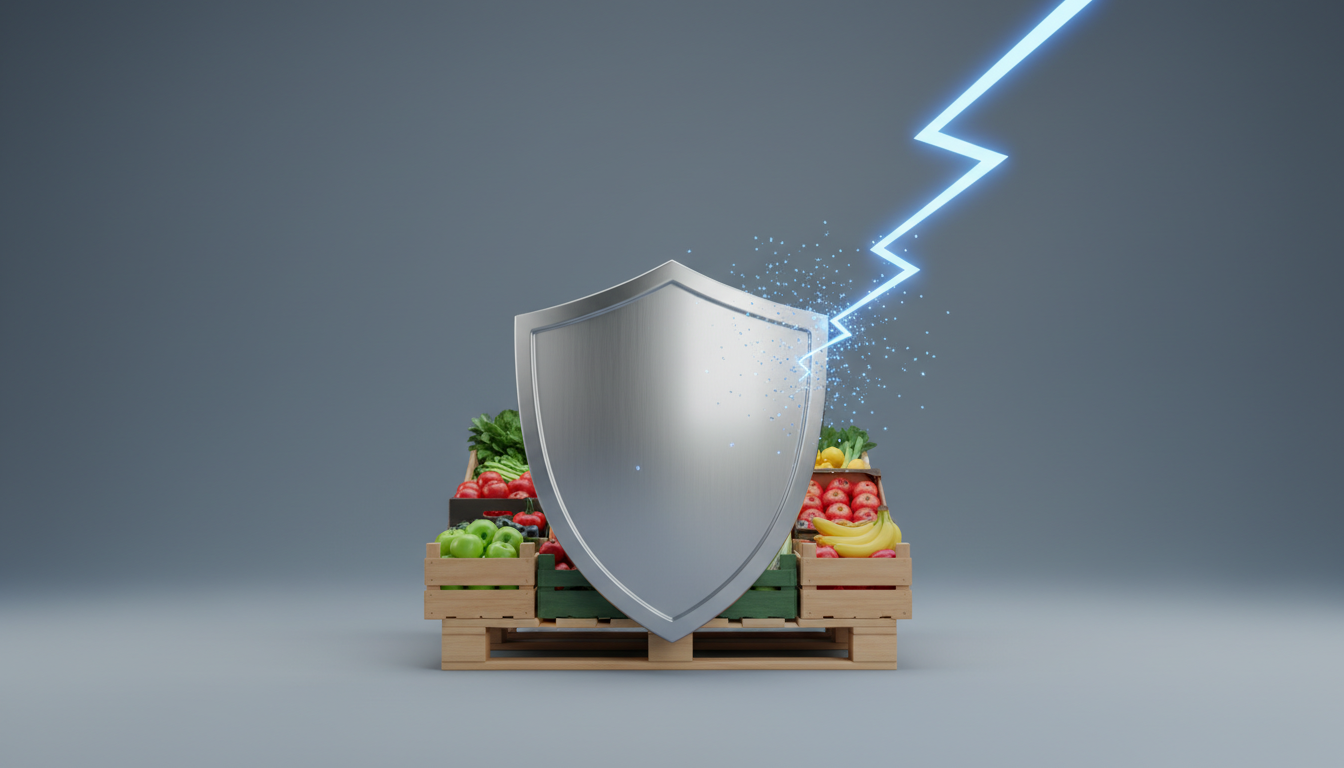
Thermal Insurance: Protecting Your Assets
In the high-stakes world of agricultural logistics, the traditional definition of insurance is undergoing a radical shift. For Procurement Directors and Enterprise RFP managers overseeing $100M+ in inventory assets, the primary threat to the bottom line is no longer just transit accidents or market volatility; it is the fragility of the electrical grid. In the California Central Valley, where the nexus of global food supply meets an increasingly unstable energy infrastructure, “Thermal Insurance” has emerged as the most critical financial safeguard for the modern enterprise.
Thermal Insurance is not a policy purchased from a brokerage. It is an operational reality achieved through Cold Storage Reliability and off-grid autonomy. At Central Valley Cold Storage (CVCS), we define Thermal Insurance as the absolute guarantee that high-value agricultural inventory never leaves its optimal temperature range, regardless of external grid conditions, Public Safety Power Shutoffs (PSPS), or localized brownouts. For the stakeholder managing massive inventory portfolios, this distinction represents the difference between a profitable quarter and a catastrophic write-down.
The Financial Risk of Grid Dependency
For decades, the assumption in procurement was that the utility provider was a reliable partner in the cold chain. That assumption is now a liability. As California’s energy landscape shifts toward decentralized but often strained resources, the frequency of grid instability has increased. For a facility holding $100M in perishable assets—ranging from premium nuts and fruits to high-value processed goods—even a momentary lapse in power is not merely an inconvenience; it is a financial trigger event.
The Hidden Cost of ‘Shrink’ and Thermal Degradation
Agricultural “shrink” is a term often used to describe physical loss, but in the context of cold storage, it often refers to the invisible degradation of product quality. When a grid-dependent facility loses power, temperatures begin a slow but inevitable climb. Even if backup generators kick in, the latency between power loss and restoration often results in “thermal spiking.”
These spikes, even if they stay within a “safe” range for short periods, accelerate the metabolic processes of agricultural products. This leads to reduced shelf life, loss of nutrient density, and compromised texture. For an enterprise, these factors manifest as insurance claims, rejected shipments, and damaged brand reputation. Industry data suggests that thermal failure in the cold chain costs the global agricultural sector billions of dollars annually. In California specifically, the economic impact of PSPS events has forced a re-evaluation of how inventory is hedged against energy risk.
The Limitations of Traditional Backup Power
Many procurement officers rely on the presence of diesel generators as a checkbox for “reliability.” However, from a technical and financial perspective, diesel is a flawed solution for modern Cold Storage Reliability. Generators are mechanical systems prone to failure; they require fuel deliveries that may be impeded during regional emergencies, and they are increasingly subject to stringent air quality regulations and carbon taxes. Furthermore, the transition time—the “gap” between grid failure and generator stabilization—is where the most significant thermal risk resides.
| Risk Factor | Grid-Dependent Storage | CVCS (Thermal Insurance) |
|---|---|---|
| Power Outage | High Risk (Inventory Loss) | Zero Risk (Microgrid) |
| Temp Deviation | High Probability | < 0.5 Degree Variation |
| Financial Impact | Catastrophic | Guaranteed Stable |
Off-Grid Storage: The Ultimate Risk Mitigation
To truly protect $100M in assets, one must decouple the facility from the vulnerabilities of the public utility. This is the core value proposition of Central Valley Cold Storage. As the largest off-grid solar-plus-battery cold storage facility in the United States, CVCS operates as a self-sustaining island of thermal stability.
The Microgrid Advantage
The CVCS microgrid is a sophisticated ecosystem of high-output solar arrays and massive industrial battery storage. Unlike traditional facilities that react to power outages, our facility is designed for permanent autonomy. This Cold Storage Reliability is rooted in the physics of our energy profile. By generating and storing our own power on-site, we eliminate the #1 cause of cold chain failure: the third-party utility connection.
For an RFP Director, this offers a unique “Enterprise Risk Profile” improvement. When you move inventory into an off-grid microgrid environment, you are effectively removing the variable of “Energy Uncertainty” from your financial modeling. This allows for more accurate forecasting of shelf-life and reduces the contingency capital that must be held against potential inventory loss.
Technical Precision and Thermal Inertia
True Thermal Insurance is measured in fractions of a degree. Grid-dependent facilities often experience temperature fluctuations of 3 to 5 degrees during peak demand periods when they are forced to “load shed” or reduce power consumption to save costs. At CVCS, our autonomous energy supply allows us to maintain a consistent environment with less than 0.5 degrees of variation.
This level of precision is critical for high-value commodities. For example, in the nut industry, consistent temperature and humidity control prevent the development of rancidity and mold, preserving the premium value of the crop. For the procurement professional, this technical precision is a form of asset protection that pays dividends in product longevity and customer satisfaction.
Securing Your Supply Chain for 2025
As we look toward the 2025 fiscal year and beyond, the pressures on the California grid are expected to intensify. Increased electrification of the transport sector, aging infrastructure, and extreme weather patterns mean that the “grid-dependent” model of cold storage is becoming an obsolete strategy for risk-averse enterprises.
The Economics of Resilience
From a financial standpoint, Thermal Insurance through off-grid storage is an investment in “Operational Alpha.” By choosing a facility that is immune to grid fluctuations, enterprises can often negotiate better terms with their own cargo and inventory insurers. Insurers recognize that the “Peril of Power Failure” is virtually eliminated in an off-grid microgrid environment. This can lead to lower premiums and higher coverage limits for high-value assets.
Furthermore, the ESG (Environmental, Social, and Governance) benefits of utilizing a solar-powered facility cannot be overstated. For many Fortune 500 companies, Scope 3 emissions—the emissions generated in the supply chain—are the most difficult to reduce. CVCS provides a turnkey solution for reducing the carbon footprint of the cold chain, aligning financial risk mitigation with corporate sustainability mandates.
Strategic Procurement: Moving Beyond the “Per Pallet” Rate
When evaluating cold storage providers, procurement directors have traditionally focused on the “price per pallet.” However, this metric is deceptive because it fails to account for the “Cost of Failure.” A facility that is $1 cheaper per pallet but carries a 5% higher risk of thermal deviation is, in reality, significantly more expensive when the risk is weighted against the $100M asset value.
The shift toward “Value-Based Procurement” in the cold chain prioritizes resilience. Decision-makers are now asking:
- What is the facility’s historical uptime during PSPS events?
- Does the facility have an autonomous power source, or does it rely on a vulnerable grid?
- What is the verified temperature variance over a 24-hour cycle?
At CVCS, we welcome these technical inquiries because our infrastructure was built specifically to answer them. We provide the “Thermal Insurance” that traditional warehouses simply cannot offer.
The Competitive Edge of Guaranteed Continuity
In a disrupted market, the ability to fulfill orders while competitors are sidelined by power outages is a massive competitive advantage. If a major heatwave triggers rolling blackouts across the Central Valley, grid-dependent facilities may be forced to restrict access or limit the cooling load. CVCS remains fully operational, ensuring that your supply chain moves without friction. This continuity is the ultimate hedge against market volatility.
Conclusion
Managing $100M in agricultural inventory requires more than just a warehouse; it requires a fortress. In an era where energy reliability is no longer a given, the transition to off-grid, microgrid-powered storage is the most logical step for any enterprise serious about risk management. Thermal Insurance is the new standard for the agricultural cold chain, providing a financial safeguard that traditional insurance policies can only hope to mimic through post-loss compensation.
By prioritizing Cold Storage Reliability through CVCS’s innovative solar-plus-battery infrastructure, procurement directors are doing more than just storing product—they are securing the future of their brand, the integrity of their assets, and the stability of their bottom line.
Frequently Asked Questions
Q: What is ‘Thermal Insurance’?
A: It’s the operational guarantee that your product never leaves its ideal temperature range, regardless of grid status, powered by our autonomous microgrid.
Q: How does it help my bottom line?
A: It eliminates the risk of waste, “shrink,” and insurance claims due to power failure, while potentially lowering your overall risk profile for insurance renewals.
Q: Is this only for extreme weather events?
A: No. While it protects against extremes, Thermal Insurance also ensures daily precision with less than 0.5-degree temperature variation, which preserves product quality better than standard grid-tied facilities.
Q: How does this impact our ESG goals?
A: Because our facility is powered by the largest off-grid solar + battery system in the U.S., storing your assets with us significantly reduces your Scope 3 supply chain emissions.
Discuss Your Risk Management Strategy
Ready to move your high-value assets into a more secure, off-grid environment? Contact our logistics technology specialists today to review your inventory’s risk profile and learn how Thermal Insurance can protect your $100M+ portfolio.