Stone Fruit Cold Storage: Post-Harvest Ripening Management for Central Valley Growers
Stone Fruit Cold Storage Defined
Stone fruit cold storage is a post-harvest ripening management system maintaining peaches, plums, nectarines, and cherries at 32–45°F (variety-dependent) with 90–95% relative humidity to suppress ethylene-driven ripening, control firmness decline and wooliness development, prevent internal breakdown, extend shelf life from 5–7 days (ambient) to 20–35 days (cold storage), and enable market-timing flexibility for California’s May–August stone fruit harvest season.
California Stone Fruit Industry: Seasonal Concentration, Ripening Complexity, and Cold Storage Imperative
Stone Fruit Production Scale: 1.2 Million Tons May–August
California produces over 1.2 million tons of stone fruit annually, including: peaches (430,000 tons), plums (240,000 tons), nectarines (180,000 tons), cherries (160,000 tons), apricots (90,000 tons), and specialty varieties. The harvest is heavily concentrated in May–August: ~85% of annual production is picked in 16 weeks. This severe harvest concentration creates acute post-harvest challenges: rapid ripening, high ethylene production, warm ambient temperatures (often 95–105°F during harvest), rapid quality loss, and oversupply-driven price collapses at harvest followed by supply scarcity and price spikes 4–8 weeks post-harvest.
The Ripening Paradox: Maturity vs. Marketability
Stone fruit quality is determined by ripeness—a complex physiological process involving: firmness decline, sugar accumulation, acid decrease, aroma compound synthesis, and skin color development. However, ripe stone fruit has short shelf life (3–5 days at 70°F) and is highly susceptible to mechanical damage, decay, and internal breakdown. Growers face a dilemma: harvest at full ripeness for superior flavor and consumer appeal (but short shelf life, requiring rapid sales during peak-supply harvest window when prices are lowest), or harvest at earlier ripeness for extended shelf life (but inferior flavor and market appeal). Cold storage resolves this paradox by decoupling ripening from storage: fruit is harvested at harvest maturity (firm, pre-ripe), stored at cold temperature to suppress ripening and extend shelf life 3–5×, then warmed and ripened on-demand as market windows open. This enables flavor-quality capture (full ripeness at consumption) with extended shelf life (weeks of storage flexibility) and market-timing optimization (releasing during price peaks instead of harvest lows).
Stone Fruit Physiology: Ethylene, Ripening Kinetics, and Post-Harvest Deterioration
Ethylene as the Master Ripening Hormone: Production Rates and Temperature Dependence
Stone fruits are climacteric crops—they continue ripening after harvest through ethylene-driven physiological changes. Ethylene production increases dramatically at harvest: peaches produce 10–30 µL/kg/hr at 70°F, plums 5–15 µL/kg/hr, nectarines 8–20 µL/kg/hr, and cherries 2–5 µL/kg/hr (cherries are less ethylene-responsive). Ethylene triggers: (1) firmness decline (pectin breakdown in cell walls); (2) color development (chlorophyll degradation, carotenoid synthesis); (3) aroma synthesis (volatile esters and aldehydes); (4) sugar accumulation via starch breakdown. At 70°F, this ripening occurs rapidly—most peaches reach full softness within 3–7 days. At 32–35°F, ethylene production drops 95%+, essentially halting ripening. This temperature-dependent control of ethylene production is the foundation of stone fruit cold storage: maintaining 32–35°F stops ripening; warming to 55–65°F for 24–48 hours enables rapid controlled ripening before sale.
Firmness Decline and Texture Deterioration: Pectin Breakdown and Water Loss
Stone fruit firmness—measured via flesh penetrometry (distance a standardized probe sinks into the flesh)—is the primary consumer quality metric. Fresh-harvested peaches typically have firmness 10–12 lbs (measured via 8mm probe); consumers perceive 8–10 lbs as ripe, 5–7 lbs as soft/overripe. Firmness decline is driven by: (1) cell-wall pectin breakdown (ethylene-induced cell-wall enzyme activity); (2) water loss (transpiration + cell-wall structure loss increases fluid loss). At 70°F, firmness declines 2–3 lbs per day; a harvest-firm 12-lb peach becomes oversoft (4–5 lbs) within 4–5 days. At 35°F, firmness decline is reduced 90%: a 12-lb peach loses <0.3 lbs per week. This dramatic difference in firmness-decline kinetics enables cold storage to preserve quality across extended periods.
Internal Breakdown and Wooliness: Physiological Disorders Triggered by Ripening and Temperature Stress
Internal breakdown is a pathophysiological disorder causing flesh browning, mealy texture, and poor flavor. It’s most common in peaches and is triggered by: (1) overripeness (excessive ethylene exposure and ripening progression); (2) storage below 40°F for extended periods (chilling-induced cellular disruption); (3) temperature cycling (rapid warming followed by cooling). Wooliness is another storage disorder causing grainy, mealy texture despite normal firmness—thought to be caused by improper ripening kinetics or chilling stress. Cold storage at 35–40°F (above the chilling threshold for most peach varieties) with minimal temperature cycling prevents both disorders. Understanding variety-specific chilling sensitivity is critical: some peach varieties tolerate 32°F for 4+ weeks; others show chilling injury (internal breakdown) at 40°F after 3 weeks.
Pre-Cooling: The Critical First Step in Stone Fruit Post-Harvest Management
Field Heat and Rapid Respiration: Why Pre-Cooling Within 2 Hours is Essential
Stone fruits picked during harvest (often 90–105°F ambient) have field temperature of 80–95°F. If fruit is stacked in bins and transported to storage slowly (arriving 4–8 hours post-harvest), field heat accelerates respiration: warm fruit (95°F) respires at 200–300 mg CO2/kg/hr compared to 10–20 mg CO2/kg/hr at 35°F—a 15–20× acceleration. This rapid respiration burns sugars, reduces flavor development, triggers early ethylene production (ripening acceleration), and increases decay risk. Rapid pre-cooling (reaching 32–35°F within 2 hours of harvest) is critical for: (1) suppressing respiration before ethylene-driven ripening initiates; (2) preserving sugar and flavor compounds; (3) preventing decay-pathogen germination; (4) enabling extended shelf life. Industry best practice: achieve 32–35°F within 2 hours of harvest; Central Valley Cold Storage’s pre-cooling facility cools 200,000 lbs of stone fruit from 95°F to 35°F in 1.5–2 hours using forced-air cooling.
Hydro-Cooling vs. Forced-Air Cooling: Method Selection for Stone Fruit
Two primary pre-cooling methods exist: (1) hydro-cooling (immersing fruit in cold water), which cools rapidly but risks water-borne fungal and bacterial contamination, especially for thin-skinned varieties (cherries, apricots); (2) forced-air cooling, which uses cold air forced through ventilated bins—slower than hydro-cooling but maintains fruit surface integrity. For stone fruits, forced-air cooling is standard due to contamination risk with water-based methods. Central Valley employs forced-air pre-cooling with bins ventilated to ensure uniform cooling: outer fruit cools rapidly, inner fruit receives 15–20 minutes of continued exposure to cold air, avoiding center-of-bin temperature gradients.
Storage Temperature by Variety: Chilling Sensitivity and Ripening Suppression Balance
Peaches: 35–40°F for Ripening Suppression Without Chilling Injury
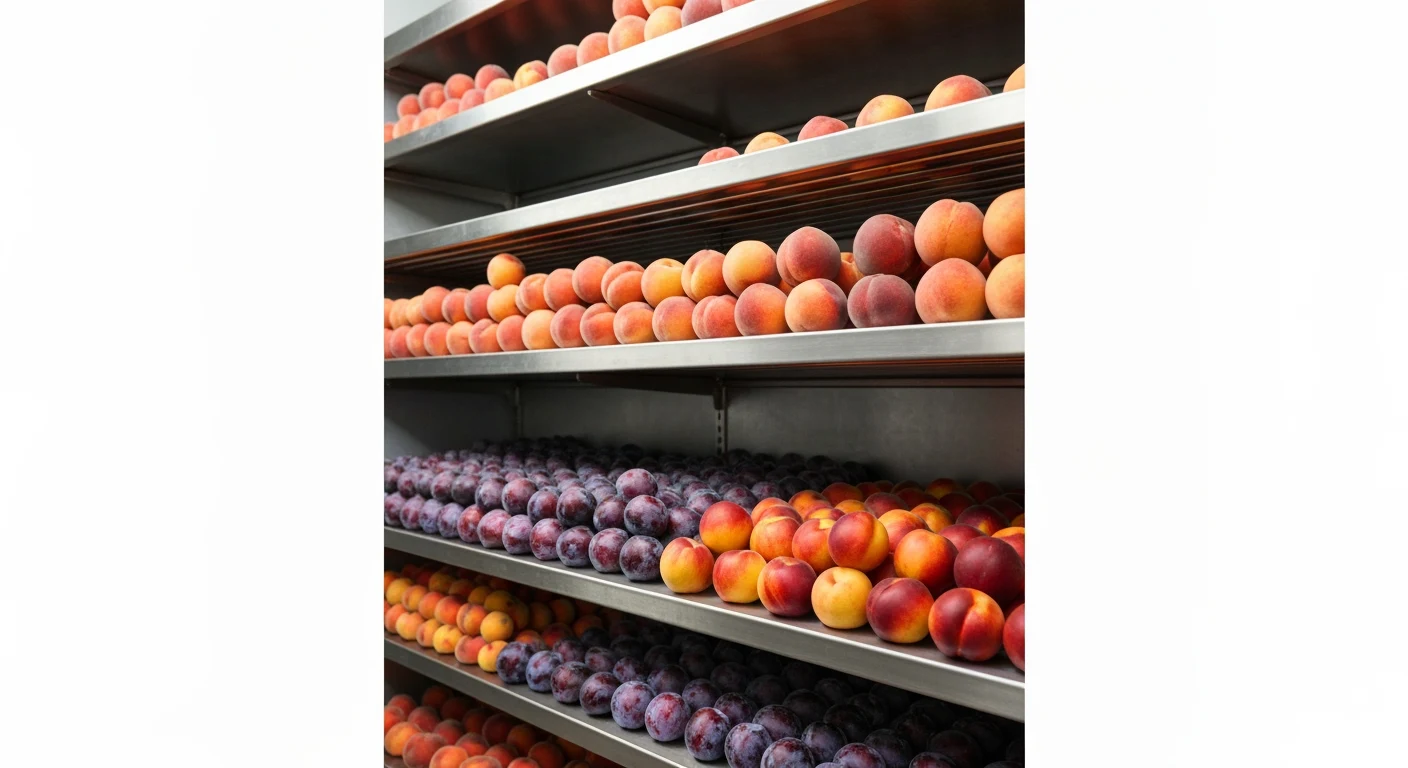
Most peach varieties exhibit chilling sensitivity below 40°F, with internal breakdown risk increasing significantly below 37°F. Central Valley operates peach storage at 35–40°F (typically 36–38°F setpoint) as a compromise: cold enough to suppress ethylene production and ripening 95%+, warm enough to avoid chilling injury for most commercial varieties. At 36°F, peaches maintain harvest firmness for 3–4 weeks, then gradually soften 0.5–1 lb per week. A peach starting at 12 lbs firmness remains 8–10 lbs (ripe-ready) at week 3–4, and 5–7 lbs (soft, fully ripe) at week 6–8. Beyond week 8, chilling injury and overripeness coincide, limiting commercial shelf life to 6–8 weeks. Some late-harvest peach varieties (like O’Henry) tolerate 33–34°F for extended periods; early-season varieties (like Red Haven) may show chilling injury at 38°F after 4 weeks. Varietal knowledge is critical for storage optimization.
Plums: 32–35°F for Extended Storage and Ripening Control
Plums are more chilling-tolerant than peaches; most commercial varieties tolerate 32–35°F for 8–12 weeks without significant chilling injury. At 32°F, ethylene production is suppressed >98%, and ripening essentially halts. Firmness decline is minimal (<0.2 lbs/week). This extended storage window is valuable for market timing: plums harvested in July can be held until October (12 weeks) for released during fall/early-winter fruit scarcity when prices are 30–50% higher than harvest. However, storage beyond 12 weeks increases breakdown risk and flavor degradation regardless of temperature. Central Valley operates a dedicated plum storage chamber at 32–33°F.
Nectarines: 35–40°F, Similar to Peaches
Nectarines are peach-like in physiology and have similar chilling sensitivity; storage at 35–40°F is standard. Nectarines also benefit from rapid market timing: held at 35–40°F for 4–6 weeks, then warmed for sale. Nectarines are more subject to wooliness than peaches in some varieties; understanding variety-specific disorder susceptibility is important for storage planning.
Cherries: 32–34°F for 6–8 Week Shelf Life Extension
Sweet cherries are chilling-tolerant and can be stored at 32°F for extended periods. However, cherries are thin-skinned and highly subject to mechanical damage, decay, and water loss. High humidity (95%+ RH) and minimal handling are essential. Cherries stored at 32°F for 6–8 weeks maintain firmness and quality; beyond 8 weeks, quality declines significantly. Cherries harvested in May–June can be held through July–August, capturing peak-summer pricing and reduced supply competition.
Humidity Management: 90–95% RH for Turgidity and Water-Loss Minimization
Transpiration in Stone Fruit: Thin Skins and High Water Loss Rates
Stone fruit skins are thin and have high transpiration rates. At 70°F and 50% RH, peaches lose 4–6% fresh weight per day; at 35°F and 50% RH, loss is still 1–2% per day. At 95% RH, loss drops to 0.1–0.3% per day. For premium fresh-market fruit, maintaining high water content (turgidity) is critical for consumer appeal; shriveled, wrinkled fruit is unmarketable. Central Valley maintains 92–95% RH in stone fruit storage chambers to minimize water loss and preserve visual quality.
Humidity, Ripening, and Firmness: Osmotic Effects
High humidity maintains cellular turgor pressure (the hydrostatic pressure within cells that contributes to fruit firmness). At <80% RH, cells lose water and turgor, contributing to premature softness independent of ripening progression. At 95% RH, osmotic potential is optimized, maintaining firmness longer and enabling slower, more controlled ripening trajectories.
Controlled Ripening: Warming Protocols for Market-Ready Quality
Ripening Initiation: Warming to 55–65°F and Ethylene Acceleration
When fruit is ready for market release, it’s warmed from storage temperature (35–40°F) to ripening temperature (55–65°F). At 55–65°F, ethylene production rapidly increases—reactivating after weeks of cold suppression. Fruit ripens within 24–72 hours, developing full color, flavor, and softness suitable for consumption. This controlled, rapid ripening is superior to ambient ripening: (1) timing is controllable (initiating ripening 2–3 days before sale ensures peak quality at consumption); (2) quality is predictable (fruit reaches specific firmness/color profile); (3) waste is minimized (avoiding overripeness and decay).
Ripening Room Design: Temperature, Humidity, and Ethylene Management
Ripening rooms are maintained at 60–65°F with 85–90% RH. Higher humidity is not necessary for ripening (respiration and water loss are acceptable during this short window); moderate humidity prevents fruit from becoming too soft from water loss + excessive firmness decline together. Ethylene is typically not supplemented (fruit’s natural ethylene production is sufficient); some facilities use ethylene scrubbers to prevent <5 ppm accumulation, keeping ripening steady rather than accelerated.
Central Valley Cold Storage: Stone Fruit-Optimized Facilities and Ripening Infrastructure
254,000 Sq Ft with Dedicated Pre-Cooling, Storage, and Ripening Zones
Central Valley’s stone fruit infrastructure includes: (1) forced-air pre-cooling facility achieving 35°F from 95°F in 1.5–2 hours, accommodating 200,000 lbs per batch; (2) dedicated storage chambers at variety-specific temperatures (32–40°F range) with 92–95% RH; (3) ripening rooms at 60–65°F for controlled ripening-initiation (48–72 hours); (4) separate handling areas to minimize mechanical damage. The facility’s location within 60 minutes of Central Valley’s primary stone fruit growing regions (Stanislaus, Merced, Fresno Counties) minimizes transport delays post-harvest.
Off-Grid 1200 kW Solar + Backup for Continuous Operations During Summer Peak
Stone fruit storage is particularly vulnerable to summer power disruptions. A 12-hour power outage during peak-ripening storage (60–65°F) without backup cooling can allow temperature to rise to 75–80°F, triggering rapid ethylene production, overripening, and quality collapse. Central Valley’s 1200 kW solar array plus dual backup generators ensure continuous operation throughout California’s summer peak-demand periods, protecting inventory (often 500,000–1,000,000 lbs at premium value).
CCOF Organic Certification and FSMA 204 Compliance
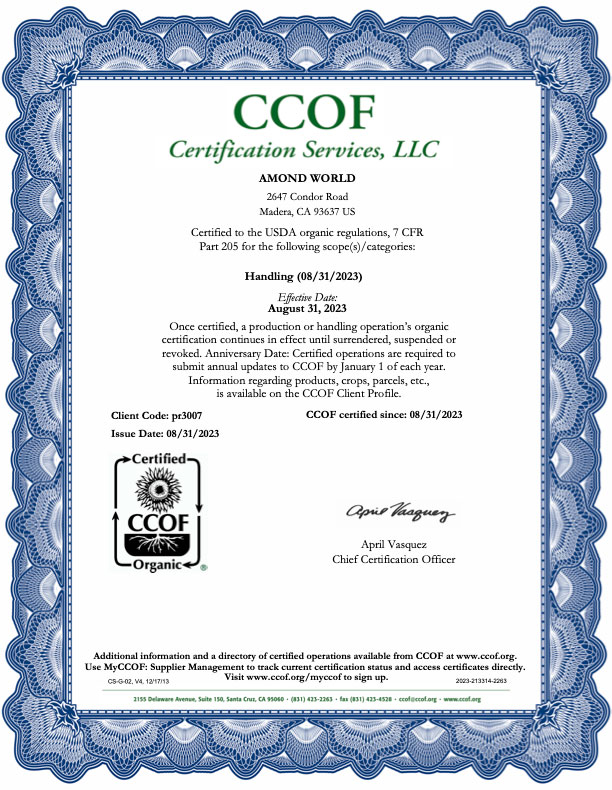
Central Valley’s CCOF certification enables organic stone fruit storage. FSMA 204 compliance includes temperature/humidity logging (documented every 15 minutes), pest management protocols (no pesticide residues), traceability (lot IDs linked to storage locations and dates), and quality assessment. These frameworks support regulated buyers and reduce audit burden for growers selling certified produce.
Quality Monitoring and Ripeness Prediction: Data-Driven Release Timing
Firmness Tracking Throughout Storage
At storage entry, Central Valley samples each lot for baseline firmness (penetrometry test, measured in lbs of penetration force). Every week during storage, repeat sampling tracks firmness decline. Based on temperature, initial firmness, and sample history, the system forecasts firmness at future dates. Growers query: “If I release this peach lot for ripening on August 15, what firmness will it have at consumption on August 18?” Answer: “Approximately 7 lbs (ripe-ready).” This forecasting enables precision release timing.
Brix and Flavor Development Monitoring
Sugar content (Brix, measured refractometrically) typically increases slightly during cold storage as residual respiration converts organic acids to sugars. Tracking Brix weekly alongside firmness enables flavor prediction. Fruit stored 8 weeks may show 12–14 Brix at release (vs. 11 Brix at storage entry), indicating enhanced sweetness.
Frequently Asked Questions About Stone Fruit Cold Storage and Ripening Management
Q1: Can I store all stone fruit varieties together in the same cooler?
No. Peaches and nectarines should be stored at 35–40°F (chilling-sensitive), while plums tolerate 32–35°F. Cherries require 32–34°F. Storing peaches at plum temperatures risks chilling injury. Central Valley maintains separate chambers optimized for each fruit type.
Q2: How quickly can I cool peaches after harvest?
Forced-air pre-cooling reaches 35°F from 95°F in 1.5–2 hours. This rapid cooling is essential to suppress respiration and ripening before ethylene production accelerates. Delayed cooling (>4 hours) causes significant quality loss.
Q3: What’s the maximum storage duration for peaches?
6–8 weeks at 35–40°F for most commercial varieties. Beyond 8 weeks, chilling injury and overripeness converge, limiting marketability. Some late-season varieties (O’Henry, etc.) tolerate 8–10 weeks.
Q4: How long does ripening take once I warm peaches to 60°F?
Typically 48–72 hours. Fruit harvested at 12 lbs firmness (firm, not ripe) warms to 60°F and reaches 7–8 lbs firmness (ripe, ready for consumption) within 72 hours. Timing varies with initial ripeness and variety.
Q5: Can I prevent internal breakdown and wooliness in cold-stored stone fruit?
Largely yes, with proper variety selection and storage protocols: (1) store at variety-specific optimal temperatures (avoiding excessive cold for chilling-sensitive varieties); (2) avoid temperature cycling (stable 36–38°F is better than fluctuating 34–42°F); (3) avoid extended storage beyond 8 weeks. Some varieties are genetically more susceptible; choose storage-tolerant varieties if possible.
Q6: What’s the cost of stone fruit cold storage, and what’s the market-timing ROI?
Typical rates are $0.02–$0.04 per pound per month. For 300,000 lbs stored 8 weeks (peak-season peaches), total cost is $4,800–$9,600. If market timing yields a $0.15–$0.25/lb premium (typical for July–August fruit released in September when prices peak), ROI is 470–1500%.
Next Steps: Optimize Stone Fruit Value with Strategic Cold Storage and Market Timing
California’s stone fruit industry is driven by harvest concentration and rapid ripening—creating both challenge and opportunity. Growers without cold storage are captive to harvest-time price lows and forced to release fruit at peak ripeness (short shelf life, high waste). Growers with reliable, compliant cold storage can suppress ripening, extend shelf life 3–5×, and time releases strategically to capture 30–100% price premiums during supply-limited windows.
Central Valley Cold Storage’s 254,000 sq ft Madera facility is purpose-designed for Central Valley stone fruit: forced-air pre-cooling (1.5–2 hour descent from 95°F to 35°F), variety-specific storage temperatures (32–40°F range), ripening rooms for controlled quality development, and continuous firmness/quality monitoring. Our off-grid solar + backup infrastructure ensures operational continuity during California’s summer peak-demand periods. CCOF certification and FSMA 204 compliance support certified organic and regulated buyer channels.
Request a free consultation to evaluate your stone fruit storage strategy. Discuss your expected harvest volume, fruit varieties, target market windows, and ripening timelines. Our team will model your market-timing ROI based on historical stone fruit pricing and your facility layout. For many growers, strategic cold storage transforms stone fruit operations—extending shelf life, enabling market-timing optimization, and capturing premiums that more than offset storage costs.
Schedule a facility tour to observe forced-air pre-cooling, variety-specific storage zones, and controlled ripening rooms in action. Discover how Central Valley Cold Storage enables peach, plum, nectarine, and cherry growers to maximize value through post-harvest ripening management and strategic market positioning.