SQF vs BRCGS vs PRIMUS: Which Food Safety Certification Does Your Cold Storage Operation Need?
Definition: Food safety certifications (SQF, BRCGS, PRIMUS) are third-party audit programs that establish comprehensive standards for facility design, operations, sanitation, pest management, and traceability. They serve as validation that a facility meets specified food safety controls and maintains operational discipline verified through independent auditors. Different retail customers and geographic markets have distinct certification preferences and requirements.
The Certification Landscape: Multiple Standards, Different Requirements
Cold storage facilities serving food supply chains operate under regulatory and customer requirements that extend beyond FDA minimum standards. Retail buyers (Costco, Albertsons, Walmart) require vendors to maintain third-party food safety certifications. Export markets have distinct requirements. Different customer segments prioritize different certification frameworks.
Three dominant certification schemes operate in North America: Safe Quality Food (SQF), British Retail Consortium Global Standard (BRCGS), and PRIMUS GFS (Global Food Standard). These schemes establish similar comprehensive operational standards but differ in audit procedures, certification scoring, and market recognition by specific retail channels.
Many facilities maintain multiple certifications to serve diverse customer segments. A facility serving Costco (SQF preference), international export markets (BRCGS preferred), and specialty processors (PRIMUS accepted) typically maintains all three certifications. This multi-certification approach requires operational discipline and substantial audit investment, but is increasingly necessary for facilities serving regional or national customer bases.
SQF Certification: The North American Retail Standard
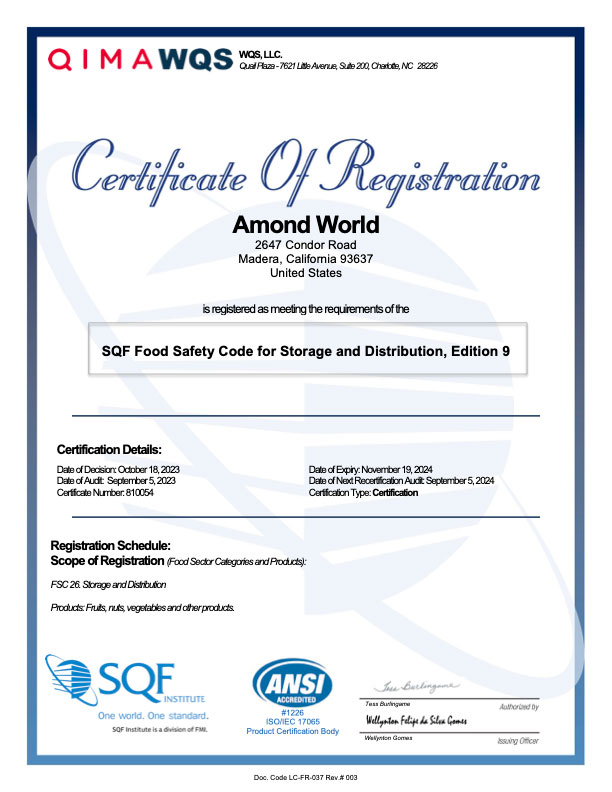
Safe Quality Food (SQF) certification is administered by the SQFI (Safe Quality Food Institute) and has become the de facto standard for facilities serving North American retail. Costco explicitly requires SQF certification for cold storage vendors. Albertsons and Walmart accept SQF as a primary certification. SQF is the most widely recognized certification scheme in the United States and Canada.
SQF Code and Version History: The SQF Code is currently in its 9th edition (as of 2024). The Code establishes comprehensive standards across multiple elements: facility design and maintenance, sanitation and environmental controls, pest management, personnel training, allergen controls, traceability, and management systems. Facilities are audited across all elements and receive a numerical score (0-100 scale).
SQF Audit and Certification Process: Independent third-party auditors conduct facility audits, typically lasting 2-5 days depending on facility size and complexity. Auditors review documentation (cleaning records, training logs, calibration records, corrective action logs), conduct physical facility inspections (checking for pest evidence, sanitation compliance, equipment maintenance), interview personnel, and test traceability controls. Facilities receive a numerical score: 0-60 (non-compliant, not certified), 60-85 (provisional certification, improvement required), 85-95 (full certification), 95-100 (exceptional compliance).
Market Requirements and Customer Expectations: Costco requires 85+ SQF rating for approved suppliers. Albertsons and Walmart typically accept 80+ ratings but prefer 85+. A facility with an SQF rating below 85 will struggle to secure or maintain supply agreements with major retailers. Conversely, a facility with 85+ rating passes Costco approval and positions competitively for broader retail relationships.
Cost and Audit Frequency: Initial SQF audit typically costs $3,000-$8,000 depending on facility size and location of auditor. Facilities must maintain certification through recurring audits conducted every 12-18 months (depending on audit category). Recurring audit costs are similar to initial audit costs. Over a 3-year period, a facility accumulates $12,000-$24,000 in SQF audit costs plus staff time preparing documentation and hosting audits.
SQF for Cold Storage Operations: SQF standards are particularly detailed for cold storage facilities. Standards address temperature monitoring and alarm systems, humidity control procedures, power interruption protocols, product segregation (organic vs. conventional, allergen management), cleaning procedures specific to cold storage, and pest management in refrigerated environments (which is more challenging than ambient temperature facilities). Cold storage operations face more rigorous SQF evaluation than ambient temperature warehouses.
BRCGS Certification: The International and European Standard
British Retail Consortium Global Standard (BRCGS) is administered by BRC and is the dominant food safety standard in Europe and increasingly used internationally. BRCGS certification is required by many European retailers and is necessary for facilities exporting to EU markets. BRCGS is also recognized in Asia-Pacific markets and is increasingly used by multinational supply chains.
BRCGS Code and Version History: BRCGS is currently in Issue 9 (as of 2024). Like SQF, BRCGS establishes comprehensive standards for facility design, operations, sanitation, pest management, and traceability. The framework is similar to SQF but with European regulatory emphasis and slightly different operational expectations.
BRCGS Audit and Certification Process: BRCGS certification involves audits by independent auditors accredited by BRC. Audits assess compliance across standardized elements and facilities receive numerical grades: Grade A (compliance), Grade B (non-compliance with minor findings), Grade C (non-compliance with major findings), Grade D (major non-compliances, not certified). For commercial purposes, only Grade A and Grade B certifications are recognized. Grade C and D designations indicate significant non-compliance.
Market Requirements and Customer Expectations: European retailers typically require Grade A BRCGS for approved suppliers. Some retailers accept Grade B with corrective action plans, but Grade A is the standard for maintained approval. For facilities exporting to EU markets or serving European-based multinational companies, BRCGS Grade A is essential. Facilities lacking BRCGS certification are unable to supply many European retailers.
Cost and Audit Frequency: BRCGS audit costs are comparable to SQF: $3,000-$8,000 for initial audit, $3,000-$7,000 for recurring audits. Certification must be maintained through recurring audits every 12-24 months depending on audit category.
BRCGS for Cold Storage Operations: BRCGS standards emphasize traceability rigor and environmental monitoring to a degree comparable to or exceeding SQF. Cold storage operations face detailed BRCGS evaluation of temperature monitoring, humidity control, and environmental controls. BRCGS emphasizes continuous improvement and risk management across operations, requiring facilities to demonstrate systematic approach to identifying and managing operational risks.
PRIMUS GFS Certification: The Specialty and Organic Focus
PRIMUS Global Food Standard (PRIMUS GFS) is administered by PRIMUS Labs and is recognized internationally but holds particular prominence in specialty food, organic, and identity-preserved supply chains. PRIMUS is particularly valued in markets emphasizing organic integrity, allergen management, and traceability precision. PRIMUS is also increasingly recognized by retailers seeking assurance of food safety combined with supply chain transparency.
PRIMUS Code and Standards: PRIMUS operates under a comprehensive standard (currently PRIMUS GFS Issue 3.2) covering facility design, operations, sanitation, pest management, allergen controls, and traceability with particular emphasis on segregation controls and identity preservation. PRIMUS is particularly valued for organic and specialty food operations because the standard explicitly addresses requirements for maintaining identity and preventing commingling across product categories.
PRIMUS Audit and Certification Process: PRIMUS audits are conducted by PRIMUS-certified auditors and assess compliance across the standard. Facilities receive certification status based on audit findings. The audit process emphasizes segregation controls and identity preservation more explicitly than SQF or BRCGS, making PRIMUS particularly relevant for organic and specialty operations.
Market Requirements and Customer Expectations: PRIMUS certification is not universally required by major retailers in the way that SQF is required for Costco. However, PRIMUS is increasingly requested in specialty food supply chains, organic networks, and identity-preserved product channels. Some retailers and processors specifically value PRIMUS because the standard’s emphasis on segregation and traceability aligns with specialty supply chain needs.
Cost and Audit Frequency: PRIMUS audit costs are comparable to SQF and BRCGS: $3,000-$8,000 for initial audit, similar costs for recurring audits. Certification must be maintained through audits every 12-24 months.
PRIMUS for Cold Storage Operations: PRIMUS standards are particularly detailed for cold storage facilities managing multiple product types or organic inventory. The emphasis on segregation controls, cleaning between products, and maintenance of separate handling equipment directly addresses cold storage operational challenges. For cold storage facilities managing both organic and conventional inventory, or managing multiple specialized product types, PRIMUS certification provides valuable assurance of segregation compliance.
Comparative Analysis: SQF, BRCGS, and PRIMUS Side-by-Side
| Criterion | SQF | BRCGS | PRIMUS |
|---|---|---|---|
| Primary Market | North America (US, Canada) | Europe, International, EU Export | Organic, Specialty, Identity-Preserved |
| Costco Acceptance | Required (85+ score) | Not standard requirement | Not standard requirement |
| EU/European Market | Not standard requirement | Required (Grade A) | Accepted but not primary |
| Organic Emphasis | Standard FSMA coverage | Standard FSMA coverage | Explicit organic segregation focus |
| Audit Frequency | 12-18 months | 12-24 months | 12-24 months |
| Audit Cost (Initial) | $3,000-$8,000 | $3,000-$8,000 | $3,000-$8,000 |
| Cold Storage Emphasis | Detailed temperature/humidity standards | Detailed environmental monitoring | Segregation and identity preservation |
Which Certification Should Your Facility Maintain?
Certification strategy depends on customer base and market positioning:
For Facilities Serving Major North American Retailers: SQF is essential. If your customer base includes Costco, SQF certification at 85+ rating is mandatory. Albertsons and Walmart accept SQF as primary certification. For facilities whose customer base is primarily North American retail, SQF is the priority certification.
For Facilities with European or International Customers: BRCGS Grade A is essential for EU export and European retailer relationships. If your facility exports to Europe or serves European-based multinational companies, BRCGS certification is necessary. A facility serving both North American and European customers maintains both SQF and BRCGS certifications.
For Facilities Serving Organic or Specialty Food Networks: PRIMUS certification is particularly valuable. The standard’s emphasis on segregation and identity preservation directly supports organic supply chain integrity. Organic processors and identity-preserved product networks increasingly require PRIMUS certification or accept it as equivalent to SQF/BRCGS. For facilities with significant organic/specialty customer segments, PRIMUS certification strengthens competitive positioning.
For Facilities Pursuing Multi-Market Positioning: Maintaining all three certifications (SQF, BRCGS, PRIMUS) ensures access to North American retail (SQF), European markets (BRCGS), and specialty/organic networks (PRIMUS). While the audit cost is substantial (approximately $15,000-$24,000 annually for all three), the revenue opportunity from accessing all market segments justifies the investment.
Cold Storage-Specific Certification Considerations
Cold storage facilities face certification challenges that ambient-temperature warehouses do not encounter:
Temperature Monitoring and Deviation Protocols: All three standards emphasize continuous temperature monitoring and protocols for responding to temperature deviations (excursions above or below target temperature). Cold storage facilities must demonstrate that they detect and respond to deviations within specified timeframes (typically within hours). A temperature excursion lasting 8-24 hours without documented investigation or corrective action is a significant audit finding.
Backup Power and Outage Resilience: All three standards address continuity of critical operations during power outages. Cold storage facilities must demonstrate that they maintain product temperature during grid outages through backup power systems (generators, battery systems, or renewable energy). Lack of backup power capability is a serious deficiency for any cold storage facility seeking food safety certification.
Humidity Control and Condensation Management: Cold storage operations create humidity challenges not present in ambient warehouses. Condensation accumulation, humidity control, and mold prevention are specific audit concerns. Facilities must demonstrate humidity monitoring procedures, cleaning protocols preventing mold growth, and corrective actions when humidity deviations occur.
Cross-Contamination and Product Segregation: Cold storage facilities often hold multiple product types (nuts, fruit, frozen products, organic vs. conventional) in the same facility. Preventing cross-contamination and maintaining product segregation is an explicit certification requirement. Auditors assess whether facilities have documented procedures preventing commingling, separate handling equipment for different product types, and cleaning protocols between products.
CVCS Certification Status and Strategy
CVCS is currently pursuing comprehensive certification aligned with our customer base and market positioning. Our certification strategy includes:
SQF Certification: CVCS is implementing SQF-compliant systems and procedures, targeting SQF audit and certification within 12 months. Target score is 85+, meeting Costco and major retail requirements. Our facility design, temperature monitoring systems, sanitation protocols, and staff training are aligned with SQF standards.
BRCGS Certification: CVCS is implementing BRCGS-compliant procedures with target for Grade A certification. This positions us for European export opportunities and supports customers with international supply chains.
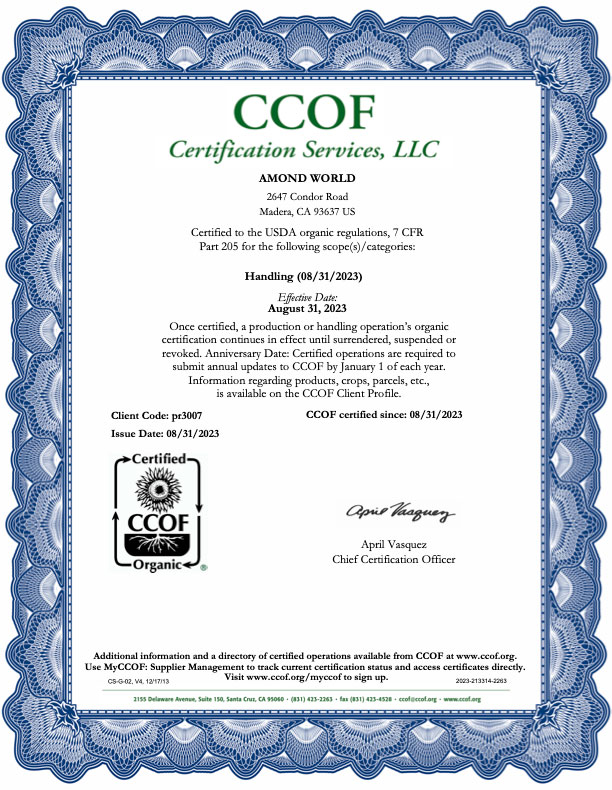
PRIMUS Certification: CVCS’s CCOF organic certification and segregation controls position us well for PRIMUS certification, particularly supporting organic processor customers and specialty food networks.
Our three-certification strategy ensures that CVCS can serve North American retail customers (SQF), European exporters (BRCGS), and organic/specialty networks (PRIMUS) with equal operational and certification credibility.
Call to Action: Certification-Ready Cold Storage Partner
Regardless of which certifications your supply chain requires—SQF for North American retail, BRCGS for European markets, or PRIMUS for organic networks—CVCS is building comprehensive certification capability to support your compliance requirements.
Contact our certification specialist to discuss your specific certification requirements and timeline for audit readiness.