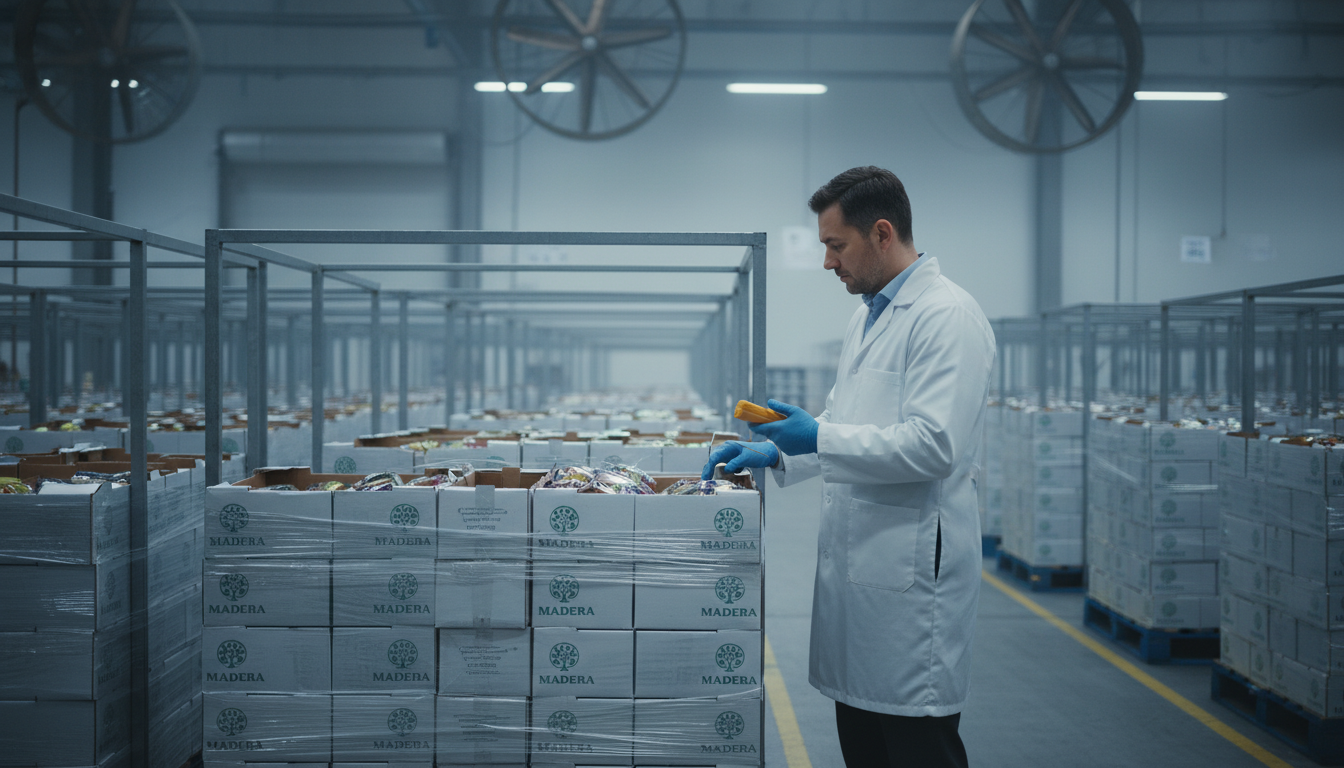
2026 Cold Storage Update. The Central Valley cold storage and 3PL market has continued its 2024–2026 expansion driven by California’s tree-nut, table-grape, and stone-fruit harvest growth and renewed export demand. Capacity has tightened in Fresno, Madera, and Tulare counties as the dairy and citrus channels rebuild. For Central Valley growers, packers, shippers, and food-service operators, the logistics dynamic for 2026 favors operators with multi-temp capacity, expedited cross-dock services, and integrated first-mile pickup programs. The remainder of this article — originally published in an earlier cycle and updated for the 2026 market — covers the underlying operational and service detail.
In the high-stakes arena of international agricultural trade, the margin for error is non-existent. For producers in California—a state whose agricultural exports reached a staggering $22.5 billion in 2022—the ability to move product from the orchards of the Central Valley to the ports of Rotterdam or Shanghai depends on a rigorous adherence to phytosanitary protocols Pistachio Cold Storage Near Me: Central Valley Ref….. As an Agricultural Commodity Specialist, I have observed that Export Readiness is no longer just about crop yield or aesthetic grading; it is defined by the technical precision of post-harvest treatments that ensure the complete eradication of quarantine pests without compromising the physiological integrity of the commodity.
Phytosanitary cold treatment (PCT) stands as the gold standard for non-chemical pest management. While methyl bromide fumigation was once the industry default, increasing environmental regulations and market preferences for residue-free produce have shifted the focus toward thermal stasis Mastering the Produce Cold Chain: From Harvest to ….. This article provides a technical deep dive into the mechanics of cold treatment, the documentation required by USDA APHIS, and how Madera-based facilities are becoming the nexus for compliant global exports.
The Mechanics of Cold Treatment: Biological Efficacy and Thermal Dynamics
At its core, phytosanitary cold treatment is a biological “war of attrition.” The objective is to achieve Probit 9 mortality—a statistical standard requiring 99.9968% mortality—of target pests such as the Mediterranean Fruit Fly (Ceratitis capitata) or the Queensland Fruit Fly. Unlike chemical interventions that target the nervous system of the insect, cold treatment targets the metabolic and cellular processes of the pest across all life stages: egg, larva, and pupa.
Metabolic Suppression and Enzymatic Inhibition
When a commodity is held at near-freezing temperatures, the metabolic rate of the infesting organism drops precipitously. At these critical thermal thresholds (typically between 32°F and 35.6°F, depending on the protocol), enzymatic activity within the insect ceases. Cell membranes lose their fluidity, and the lack of ATP production leads to irreversible cellular damage. Because this process is time-dependent, the duration of the treatment is as critical as the temperature itself. A single hour of “temperature excursion” above the threshold can reset the entire protocol, requiring the exporter to start the 12-to-22-day cycle from scratch.
The Physics of Heat Transfer in Bulk Commodities
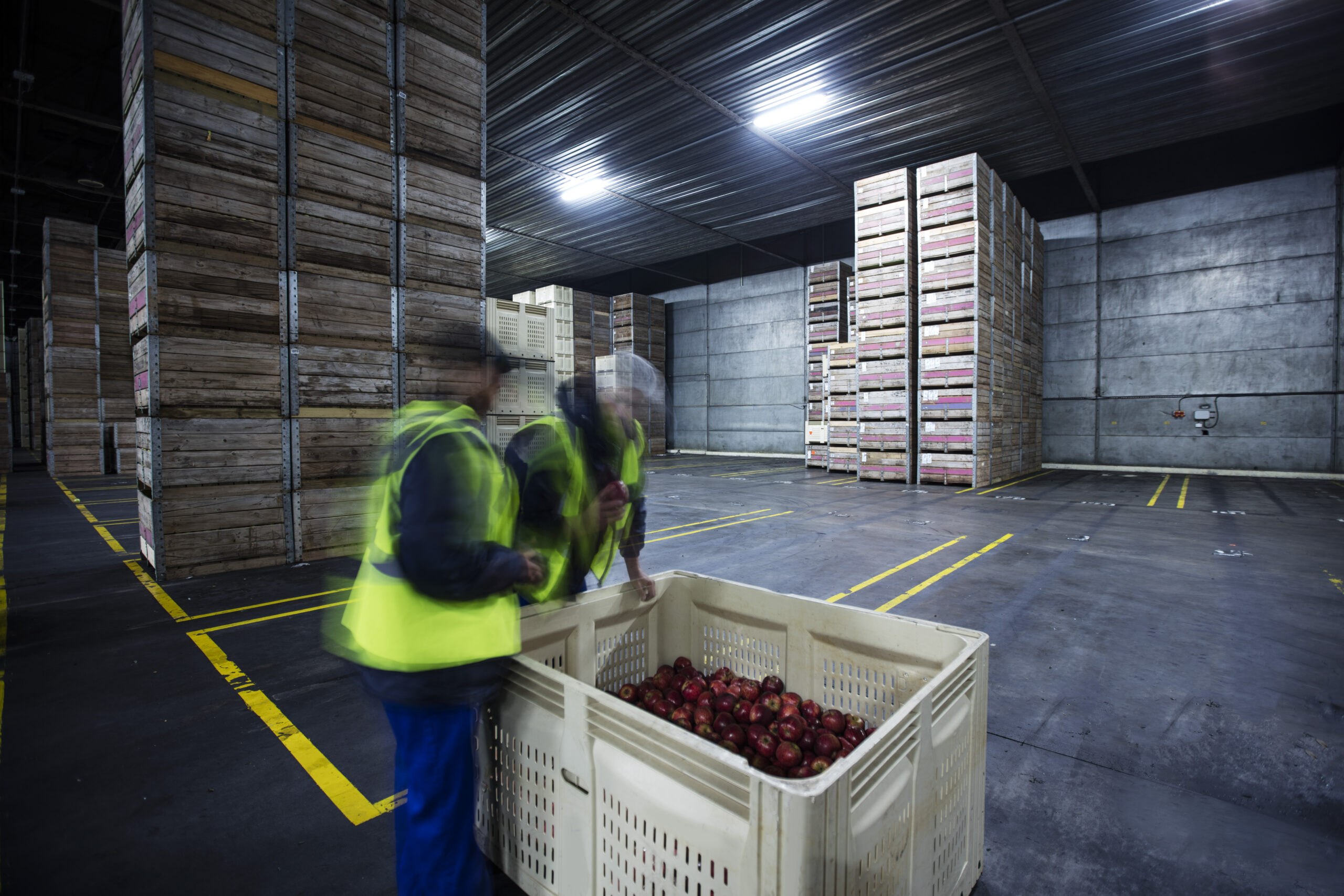
Achieving uniform cold treatment is a complex engineering challenge. In a Madera-based cold storage environment, we must account for the “heat of respiration.” Even after harvest, fruit is a living organism, consuming oxygen and releasing carbon dioxide and heat. Technical precision requires high-airflow environments that can strip this respiratory heat while maintaining a consistent pulp temperature. We distinguish between “air temperature” and “pulp temperature”; USDA APHIS standards require sensors to be embedded directly into the fruit pulp (the thermal center) to ensure the core of the commodity has reached the target stasis.
| Destination | Commodity | Protocol Duration | Required Temp |
|---|---|---|---|
| EU | Citrus | 14 Days | 34°F |
| Asia | Table Grapes | 12-18 Days | 32.5°F |
| Latin America | Stone Fruit | 15 Days | 33°F |
Documenting the Unbroken Cold Chain: The Path to Certification
The technical success of a cold treatment is irrelevant if it cannot be proven through immutable data. USDA APHIS (Animal and Plant Health Inspection Service) maintains strict oversight of the Export Readiness process. This begins with the calibration of sensors. Before a shipment is “set,” sensors must be calibrated in an ice-water bath to 32.0°F with a tolerance of only +/- 0.1°F. Any sensor falling outside this range is rejected.
Digital Recording and Data Integrity
Modern cold treatment facilities utilize advanced data loggers—often PT100 or PT1000 resistance temperature detectors (RTDs). These sensors provide a continuous stream of data points, usually recorded at 15-minute or 1-hour intervals. This data forms the “Thermal Record,” a document that is scrutinized by USDA officials before a Phytosanitary Certificate (PPQ Form 577) is issued.
One of the most significant risks in this process is a “protocol break”—a loss of temperature control due to equipment failure or power outages. In the Central Valley’s high-demand energy landscape, grid instability can be a catastrophic risk for exporters. This is where specialized infrastructure becomes a competitive advantage. CVCS facilities utilize off-grid power solutions, ensuring that even during regional grid failures, the thermal stasis remains unbroken. This redundancy is not just a safety feature; it is an insurance policy against the loss of hundreds of thousands of dollars in perishable inventory and the subsequent loss of market access.
The Role of the USDA Inspector
The USDA APHIS inspector’s role is to verify the integrity of the treatment. This includes “sealing” the container or the room. Once the treatment begins, the sensors cannot be moved, and the environment cannot be tampered with. Any deviation in the recorded data, even a slight spike caused by a defrost cycle, must be technically justified and within the narrow margins allowed by the specific country’s protocol. If the data shows an “upward excursion,” the clock stops, and the treatment is invalidated.
Global Standards and Madera’s Hub Role in Central Valley Logistics
Madera, California, serves as a strategic epicenter for the export of high-value agricultural commodities. Its proximity to both the San Joaquin Valley’s orchards and the logistics corridors leading to the Port of Oakland and Port of Long Beach makes it an ideal location for phytosanitary processing. However, being a hub requires more than just location; it requires a deep understanding of the divergent standards of international trading partners.
The Divergence of EU, Asian, and Latin American Standards
While the goal of cold treatment is the same globally, the specific protocols vary significantly. The European Union often requires 14 to 22 days of treatment for citrus to prevent the introduction of Thaumatotibia leucotreta (False Codling Moth). Conversely, many Asian markets focus on the Mediterranean Fruit Fly, requiring lower temperatures for shorter durations. Navigating these requirements is a core component of Export Readiness: Meeting EU and Asian Standards for Nut Quality and fruit quality alike.
For Madera exporters, the challenge is often “Pre-Clearance.” This is a program where the importing country’s inspectors work alongside USDA APHIS in the U.S. to clear the fruit before it ever leaves the shore. This drastically reduces the risk of rejection at the destination port. Facilities that can accommodate these inspectors and provide the necessary immutable thermal data records are essential for high-velocity trade.
The Non-Chemical Advantage
Beyond regulatory compliance, cold treatment offers a significant market advantage: the preservation of organic status and the elimination of chemical residues. Consumers in the EU and high-end Asian markets are increasingly sensitive to methyl bromide and other fumigants. By utilizing cold treatment, Madera exporters can label their products as “Sustainably Treated” or “Chemical-Free,” fetching a premium price. Furthermore, for commodities like table grapes or stone fruit, cold treatment avoids the potential “pitting” or “softening” sometimes associated with chemical exposure, though it requires precise control to avoid chilling injury (CI).
Technical Summary and Key Takeaways
Achieving Export Readiness through phytosanitary cold treatment is a rigorous process that combines biology, physics, and regulatory compliance. For the professional exporter, the priorities are clear:
- Eliminate Chemical Fumigation: Meet the “green” requirements of modern international markets and maintain fruit quality.
- Guaranteed Pest Mortality: Adhere to Probit 9 standards to ensure 100% acceptance by foreign plant protection organizations.
- Immutable Thermal Data Records: Utilize high-precision sensors and redundant power systems to provide the documented proof required for USDA APHIS certification.
The future of California’s $22.5 billion export economy rests on the ability to master these technical protocols. As global standards become more stringent, the role of specialized, off-grid, and technically advanced cold storage facilities in Madera will only become more vital.
Frequently Asked Questions
Q: What is a phytosanitary certificate?
A: It is an official document issued by an exporting country’s plant protection organization (such as USDA APHIS) to the importing country’s organization. It certifies that the shipment has been inspected and/or treated according to specific protocols and is free from quarantine pests.
Q: Can cold treatment damage the fruit?
A: While cold treatment is effective for pest control, certain commodities are susceptible to “chilling injury” if temperatures drop too low. This is why Agricultural Commodity Specialists must balance the treatment duration with the specific physiological limits of the fruit variety.
Q: Why is off-grid power important for cold treatment?
A: Most phytosanitary protocols require an “unbroken” cold chain. If a power outage causes temperatures to rise even slightly above the threshold, the entire 14-to-22-day treatment is voided. Off-grid power ensures zero protocol breaks, protecting the exporter’s investment.
Ready to secure your place in the global market? Discuss Export Readiness with our Team today to ensure your commodities meet the highest USDA and international standards.
Related Articles
- Pistachio Cold Storage Near Me: Central Valley Refrigerated Storage for Californias Dominant Nut Crop
- Mastering the Produce Cold Chain: From Harvest to Global Export
- Export Readiness: Meeting EU and Asian Standards for Nut Quality