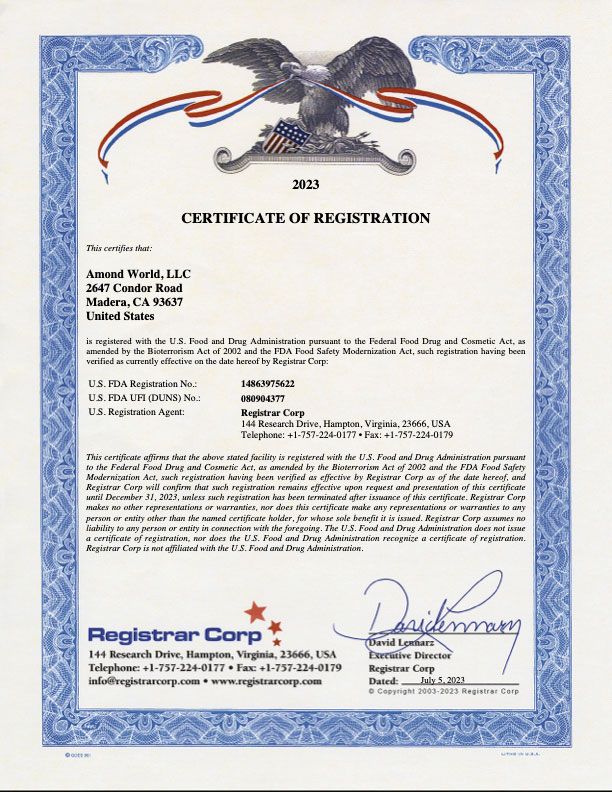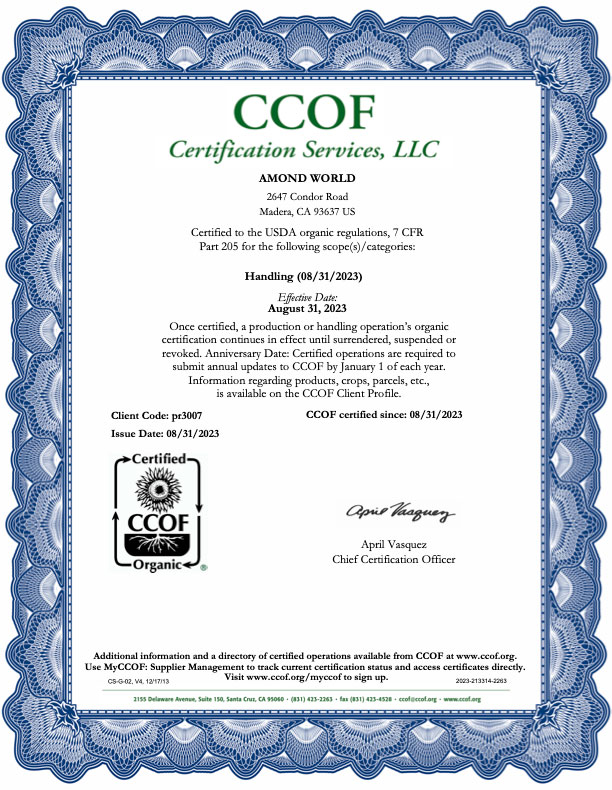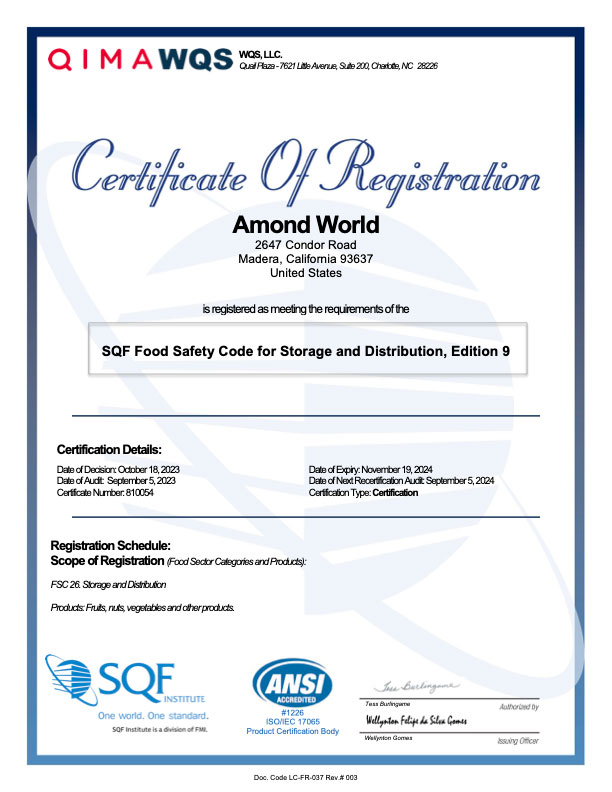
Central Valley Cold Storage (CVCS) has redefined the parameters of post-harvest handling by aligning technical engineering with the stringent mandates of the California Certified Organic Farmers (CCOF). By integrating off-grid energy independence with advanced CO2 refrigeration, CVCS offers a sanctuary for organic almonds, pistachios, and walnuts that meets the world’s highest phytosanitary and organic standards. The Complete Guide to Cold Storage Benefits for Ca….
The Organic Supply Chain Gap
Most conventional cold storage facilities are designed for efficiency at the expense of organic purity. They utilize centralized cooling systems where air is circulated between organic and conventional lots, and they rely on synthetic refrigerants that, while effective for cooling, pose environmental risks and potential contamination hazards. For an exporter targeting the European Union or the rigorous Japanese market, these “standard” facilities represent a liability. The risk of cross-contamination with non-organic residues or synthetic pesticides used in neighboring storage bays is a constant threat to CCOF status.
Closing this gap requires a departure from the “one-size-fits-all” warehousing model. It necessitates a facility engineered from the ground up to isolate organic commodities while employing cooling technologies that are themselves certified for organic use. This is where organic nut cold storage must evolve into a specialized discipline.
Why Refrigerant Choice Matters for Organics
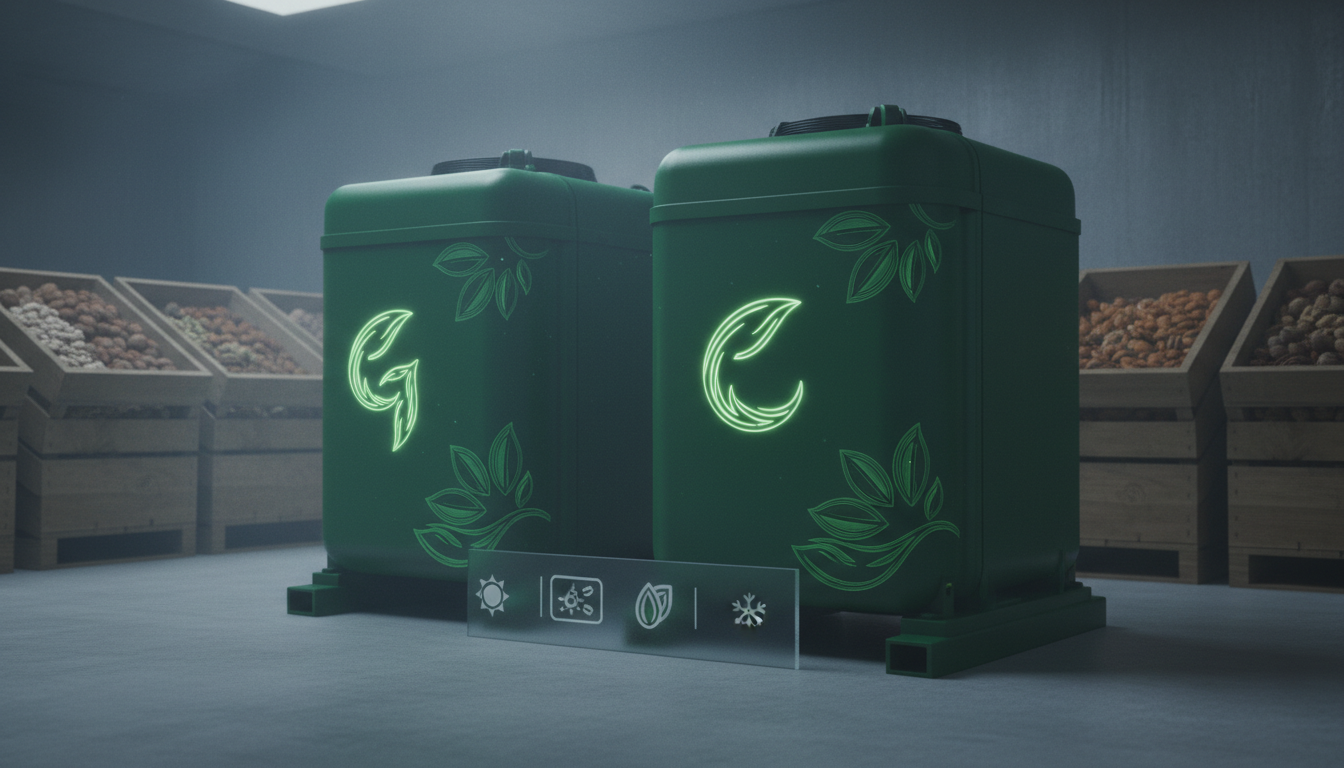
CVCS utilizes R744 (Carbon Dioxide) refrigeration. CO2 is a “natural refrigerant.” It is non-toxic, non-flammable, and possesses a Global Warming Potential (GWP) of exactly 1. In the context of why CO2 refrigeration is the gold standard for organic produce, the benefits are twofold: environmental stewardship and product safety. Because CO2 is a naturally occurring molecule in the atmosphere, its use in the cooling loop eliminates the risk of introducing synthetic “forever chemicals” into the storage environment.
| Refrigerant | Global Warming Potential (GWP) | Organic Suitability |
|---|---|---|
| HFCs (R404A) | 3,922 | Low (Synthetic) |
| CO2 (R744) | 1 | High (Natural) |
From a compliance perspective, using R744 aligns with the “natural inputs” philosophy of CCOF. If a system failure were to occur, the “leak” would consist of the same gas that the trees themselves breathe. This ensures that the organic integrity of the nuts remains uncompromised, even in worst-case mechanical scenarios. For international exporters, this provides a layer of “invisible” insurance that synthetic systems simply cannot match.
Segregated Bays for Zero Cross-Contamination
CVCS addresses this through the implementation of isolated storage bays. Each bay operates on its own localized micro-climate. This segregation ensures that:
- Airflow is Contained: There is no shared air exchange between organic and conventional products, preventing the transfer of dust or any prohibited substances.
- Sanitation Control: Each bay can be cleaned and sanitized using CCOF-approved methods without affecting the humidity or temperature of adjacent lots.
- Pest Management: Instead of facility-wide chemical fogging, CVCS utilizes physical barriers and CO2-based atmospheric controls to manage pests, staying well within the boundaries of organic handling regulations.
For an exporter, this means that your organic almond harvest is not just in a different part of the building; it is in a different ecosystem. This level of granular control is essential for maintaining the FSMA (Food Safety Modernization Act) requirements for preventive controls, as it significantly reduces the risk of biological and chemical hazards during the storage phase.
The Green Profile: Off-Grid Solar and Sustainability
CVCS’s move toward off-grid solar power creates a unique USP for exporters. By leveraging the intense solar radiation of the Central Valley, the facility can power its CO2 refrigeration racks with 100% sustainable energy. This “Green” profile adds a layer of value to the organic nut. When an exporter presents their product to a global retailer, they are not just offering organic nuts; they are offering carbon-neutral stored organic nuts.
The synergy between solar power and CO2 refrigeration is technically profound. CO2 systems can be highly efficient in the specific temperature ranges required for nut storage (typically 35°F to 45°F). When paired with a solar-plus-storage energy model, the facility maintains a flat energy cost curve, insulating exporters from the volatility of the California energy grid while bolstering their ESG (Environmental, Social, and Governance) credentials.
Compliance and Phytosanitary Excellence
CVCS maintains CCOF integrity by utilizing temperature-controlled “cold treatment.” By maintaining precise, low-temperature environments, we naturally arrest the life cycle of common pests. Our FSMA Compliance Officer ensures that every bay’s data log is a “living document,” providing the proof of cold chain maintenance required by international customs and organic certifiers alike.
This data-driven approach allows exporters to provide their clients with a complete transparency report. From the moment the nuts arrive at the CVCS gates to the moment they are loaded for transport, every degree of temperature and every kilowatt of solar energy is accounted for.
The Future of Organic Nut Storage
For the international agricultural exporter, the choice of a storage partner is a choice of risk management. By choosing a facility that views CCOF standards as the floor rather than the ceiling, you ensure that your organic almonds and pistachios reach the global stage in the exact condition the farmer intended: pure, safe, and truly organic.
Frequently Asked Questions
Q: Is CVCS CCOF certified?
A: Yes, our facility maintains active CCOF certification for handling organic agricultural commodities, ensuring that all storage and handling procedures meet the USDA National Organic Program (NOP) standards.
Q: How does CO2 refrigeration benefit my organic certification?
A: Unlike HFCs, CO2 (R744) is a natural substance. Its use eliminates the risk of synthetic chemical contamination in the event of a system leak, which is a critical consideration for maintaining the organic integrity of high-fat commodities like nuts.
Protect your brand and ensure total compliance with our CCOF-certified, CO2-powered cold storage solutions.