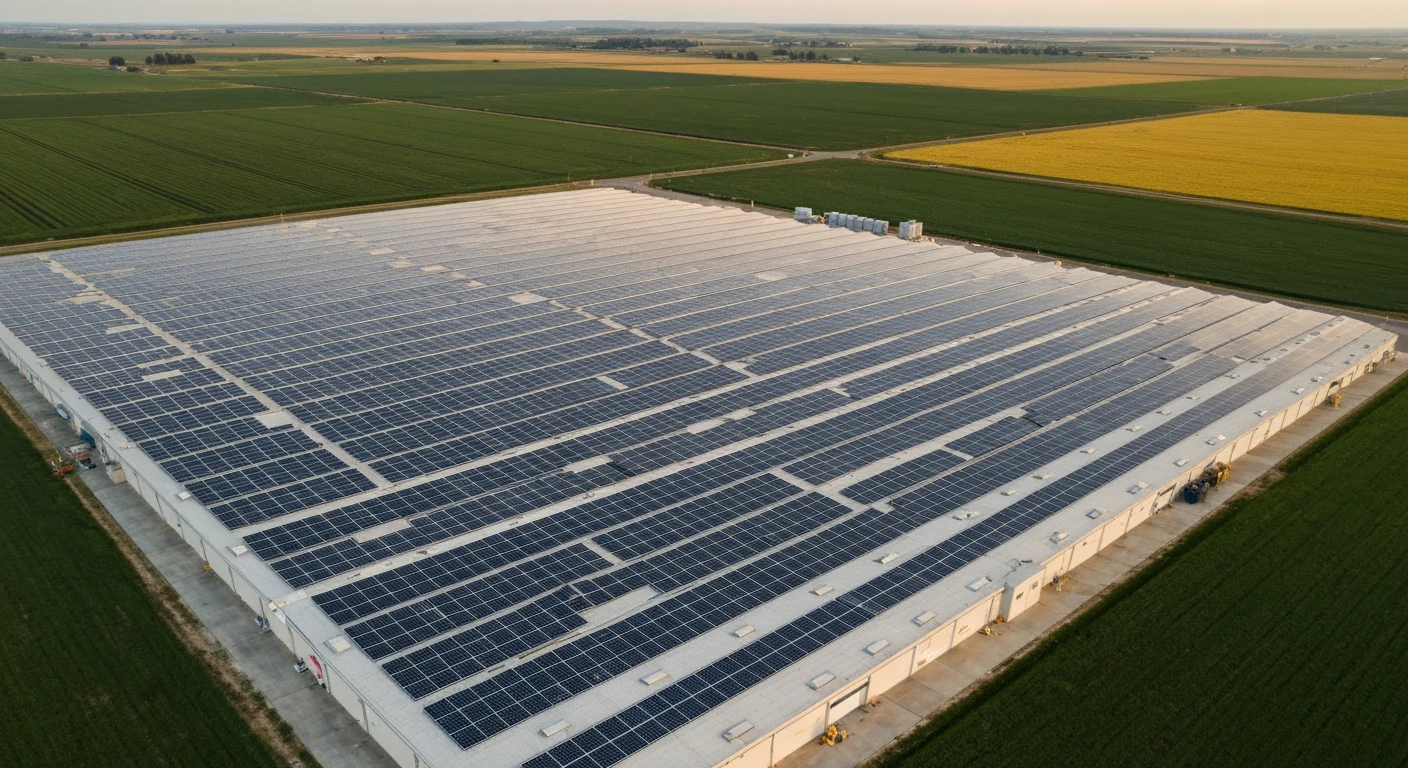
Off-Grid Cold Storage: How CVCS Operates America’s Largest Solar-Powered Refrigerated Warehouse
The Energy Crisis That Changed Cold Storage in California
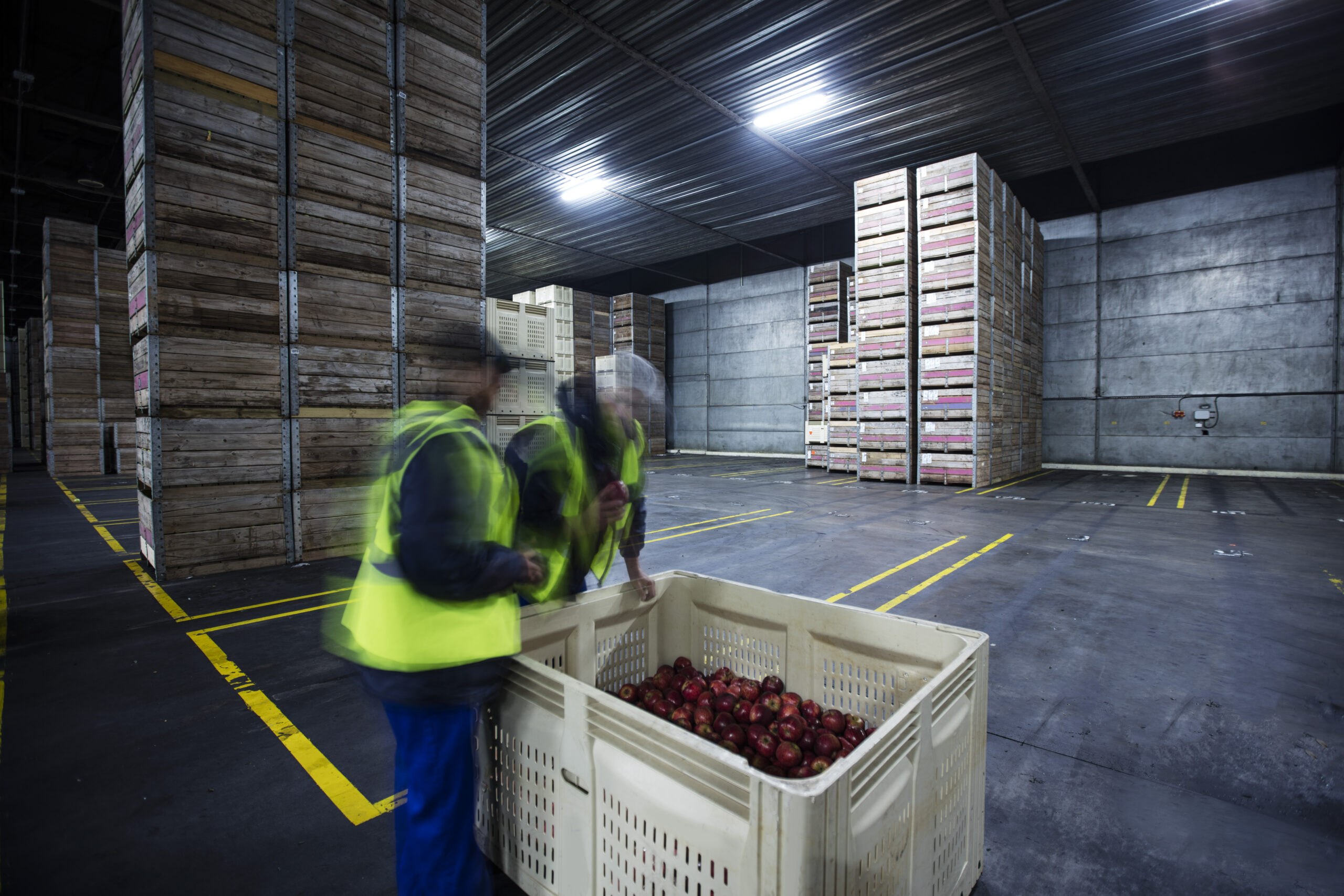
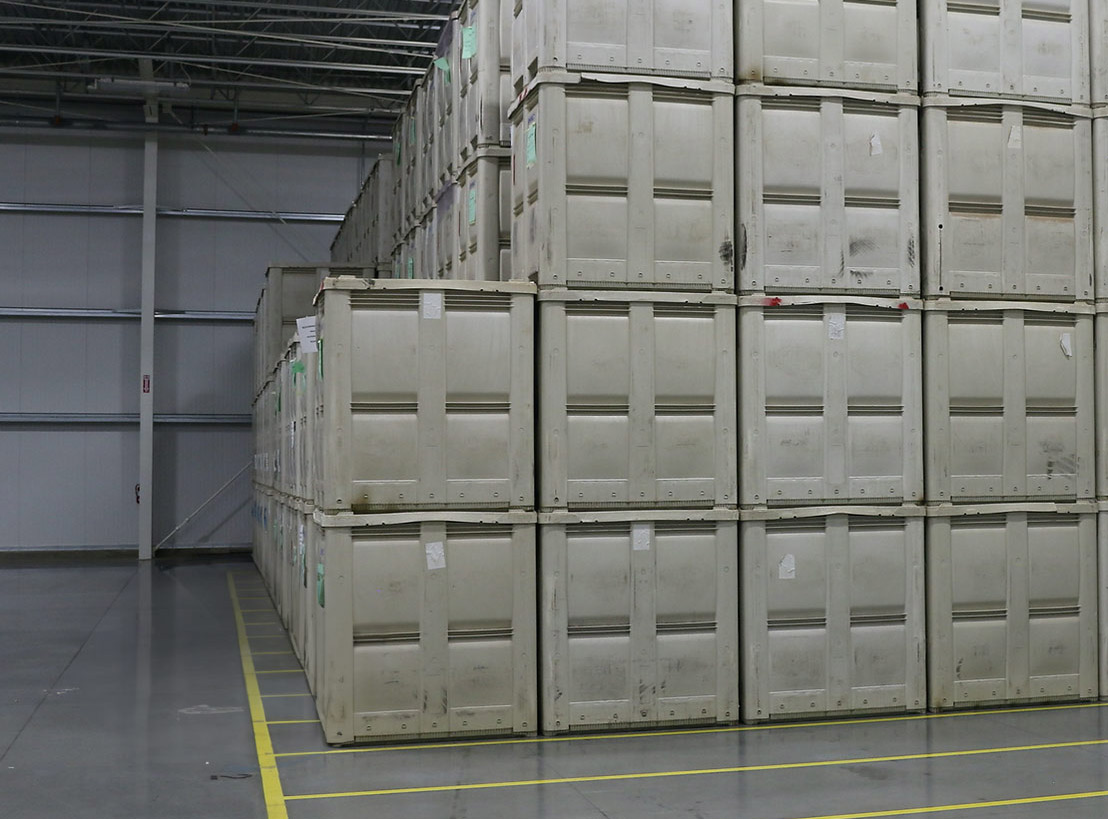
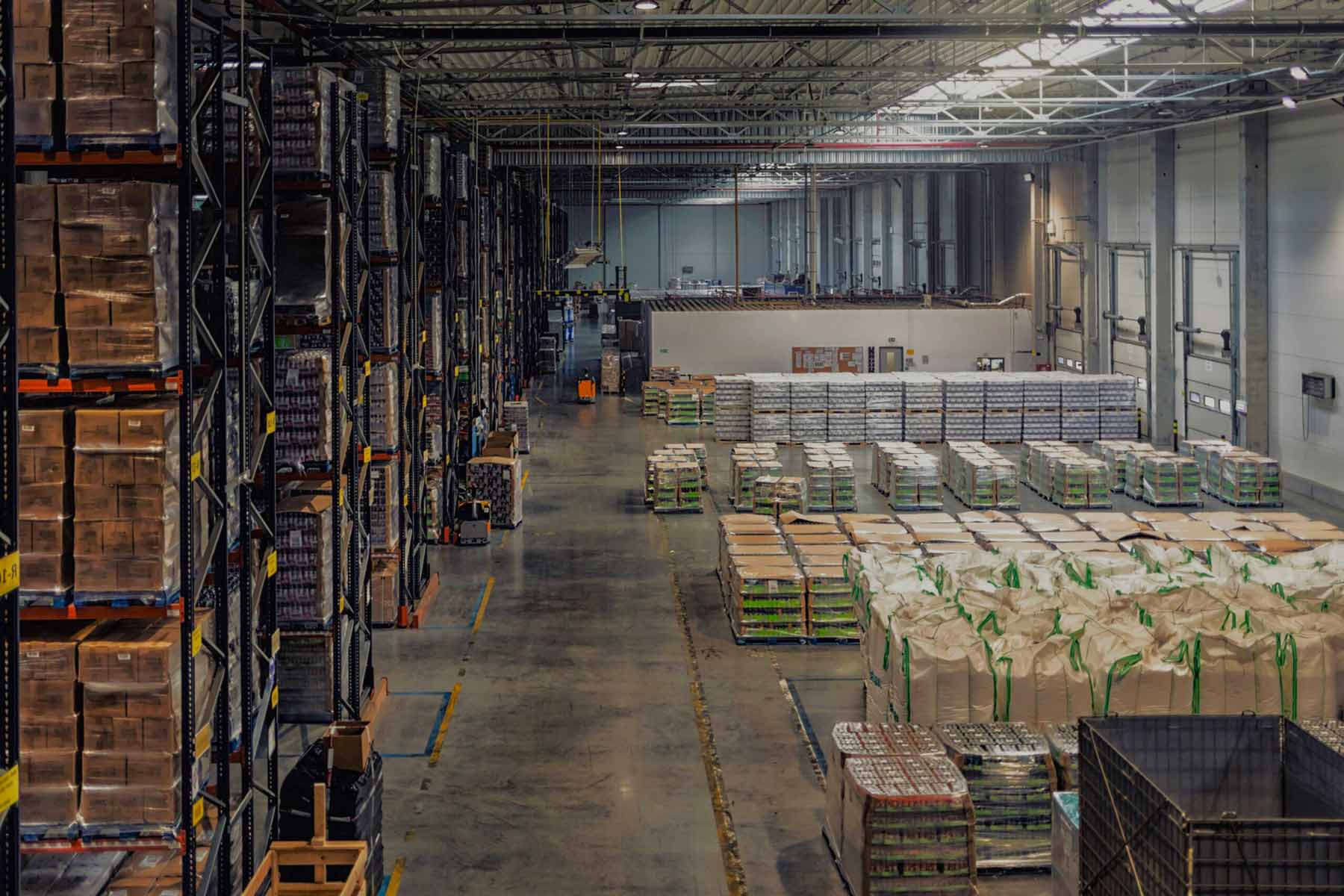
California’s Public Safety Power Shutoff (PSPS) events have exposed a fundamental vulnerability in the cold storage industry. When utilities cut power to prevent wildfires, conventional facilities face catastrophic losses: perishable inventory spoilage, supply chain disruption, and operational downtime costing hundreds of thousands of dollars per day. For a 250,000+ square foot cold storage facility operating at capacity, a single 48-hour power outage can destroy entire crops worth millions in inventory value.
Central Valley Cold Storage recognized this systemic risk and engineered a solution that competitors have yet to replicate at scale. By investing in a 1200kW solar photovoltaic array with advanced battery backup systems, CVCS transformed itself from a grid-dependent facility into an energy-independent operation capable of maintaining perfect climate control regardless of grid status or weather events. This infrastructure shift represents the most significant development in cold storage resilience since the adoption of mechanical refrigeration itself.
Understanding the 1200kW Solar Array Architecture
The photovoltaic system at Central Valley Cold Storage comprises over 3,000 high-efficiency monocrystalline solar panels installed across the facility’s 254,000 square foot roofline and adjacent solar canopies. Each panel generates approximately 400 watts under optimal sunlight conditions, with a combined capacity of 1.2 megawatts. This sizing was engineered to match CVCS’s peak daytime electrical demand during California’s hot summer months, when cooling loads are highest and solar generation is most abundant.
The array is positioned at a 15-degree tilt angle optimized for Madera County’s latitude (36.8°N), maximizing annual irradiance collection while maintaining structural efficiency. Modern panel efficiency ratings between 20-22% ensure maximum energy capture from the available 5.2 peak sun hours per day that Madera receives annually. The system is equipped with string inverters converting direct current from the panels into alternating current for facility use, with integrated monitoring hardware providing real-time generation data and predictive analytics.
Battery Backup and Energy Storage: Bridging the Gap Between Generation and Demand
Solar generation follows an inherent curve: zero power at night, ramping production in morning hours, peaking around solar noon, and declining through afternoon and evening. Cold storage demand is opposite: constant 24/7, with diurnal variation of only 5-8% between peak and trough loads. This fundamental mismatch is solved through large-scale battery energy storage systems (BESS) deployed across Central Valley Cold Storage’s facility.
The facility operates a hybrid battery architecture combining lithium-ion systems for fast response and high cycle efficiency with thermal storage tanks containing phase-change materials and glycol solutions. During peak solar production hours (9 AM to 4 PM), excess generation charges the battery arrays, storing approximately 2.4 megawatt-hours of electrical energy. During nighttime hours, this stored energy powers the compressor systems, refrigeration circuits, and facility controls without requiring a single kilowatt from the grid.
The battery system is sized to provide a full 12 hours of autonomous operation at typical facility load (approximately 200-220 kW average), ensuring continuous cold chain maintenance through the longest nights of winter. Advanced battery management systems continuously balance charge across individual cell packs, optimize temperature profiles, and predict degradation patterns. State-of-charge algorithms inform facility operations teams when to reduce non-critical loads to extend autonomy during extended cloudy periods.
Zero Public Safety Power Shutoff (PSPS) Risk: The Competitive Advantage
When California utilities implement PSPS events affecting high-risk fire zones, CVCS operations continue seamlessly. A conventional grid-connected facility in a PSPS zone faces a cascade of operational crises: refrigeration systems shut down within minutes, interior temperatures begin rising immediately, and inventory begins spoiling within hours. Perishable goods like berries, stone fruit, and leafy greens become worthless within 8-12 hours without proper cold chain management.
Central Valley Cold Storage’s position in Madera County—historically affected by PSPS events from 2019-2022—demonstrates the business-critical nature of energy independence. During the October 2021 utility shutoffs affecting portions of Fresno and Madera counties, CVCS maintained full operational capacity without accessing grid electricity. Temperature-controlled storage zones remained stable within ±0.5°F of setpoint. Compressor systems operated normally. Moisture control systems maintained precise relative humidity levels. Facility operations and personnel worked without interruption.
This resilience provides quantifiable competitive advantage. Shippers and produce brokers contract with CVCS specifically because supply chain continuity is guaranteed during grid emergencies. Premium pricing of 3-7% above regional averages is readily absorbed by customers whose alternative is total inventory loss. Insurance carriers recognize the risk mitigation, resulting in lower premiums and more favorable policy terms than grid-dependent competitors.
Energy Cost Savings and Levelized Cost Economics
The levelized cost of energy (LCOE) for solar-plus-battery systems in California’s Central Valley has declined dramatically since 2015. Current analysis shows LCOE of approximately $0.078 per kWh including amortized capital costs, maintenance, and battery replacement reserves. This compares to grid electricity rates of $0.165-0.210 per kWh at Central Valley Cold Storage’s facility, including demand charges, power factor penalties, and time-of-use rate premiums.
For a facility consuming approximately 1.8 gigawatt-hours annually (a typical load profile for a 254,000 sq ft operation), the annual energy cost differential between grid and solar-generated electricity reaches $157,000-$239,000. Over a 25-year system lifespan, cumulative savings total $3.9-$5.9 million in avoided energy purchases. When factoring in California’s Investment Tax Credit (ITC) and accelerated depreciation schedules, the pre-tax payback period for CVCS’s solar system was approximately 7.2 years.
Beyond direct electricity cost savings, off-grid operation eliminates exposure to grid rate volatility. California’s wholesale electricity prices have escalated 340% since 2015, with summer peak rates sometimes exceeding $2.00 per kWh. A solar-powered facility insulates customers from this price volatility, enabling predictable long-term storage pricing and competitive advantage during high-priced grid periods.
Integration with CVCS’s Multi-Temperature Storage Ecosystem
Central Valley Cold Storage operates four distinct climate zones simultaneously, each with different temperature and humidity requirements: General Storage at 34°F, Rehabilitation Storage at 34°F and 55% relative humidity, Finishing Storage at 36°F, and Organic Certification Storage at 28°F. The 1200kW solar system must reliably power refrigeration circuits, compressors, and control systems across all four zones around the clock.
Load management systems prioritize zones based on inventory value and spoilage risk. During periods of reduced available energy (night hours or extended cloudy periods), the facility does not simply reduce temperature setpoints. Instead, sophisticated controllers implement zone-level load shedding, shifting cooling cycles to lower-humidity zones while maintaining critical temperature control in premium organic storage. This granular demand management extends autonomy by 30-40% without compromising food safety or product integrity.
The compressor system itself is inverter-driven, allowing variable-speed operation based on precise cooling demand. Unlike fixed-speed reciprocating compressors that cycle on/off, variable-speed systems modulate output continuously, reducing energy consumption by 25-30% during partial-load periods. This technology is especially advantageous during battery operation, where efficiency directly extends autonomy.
Monitoring, Predictive Analytics, and Performance Optimization
Real-time monitoring systems track solar generation, battery state-of-charge, facility load consumption, and refrigeration system parameters on 5-minute intervals. Machine learning models trained on 3+ years of operational data predict generation output 48 hours in advance, accounting for seasonal patterns, historical weather correlations, and forecast accuracy. This enables proactive load management: maintenance windows are scheduled during peak generation periods, non-essential loads are reduced when generation predictions suggest potential shortfalls, and battery charging protocols are optimized dynamically.
Performance data reveals that the CVCS solar system achieves 94.2% system efficiency from generation through battery storage to facility load. This includes inverter losses (2.1%), battery round-trip efficiency losses (3.8%), and control system overhead (0.9%). This level of efficiency places CVCS’s system among the top-quartile performers in the cold storage industry.
Future Expansion and Scalability
The current 1200kW system was engineered with expansion capacity to 2000kW through installation of additional panel arrays and battery modules. CVCS’s facility expansion plans envision growing the storage footprint to 380,000 square feet by 2029. The solar system architecture supports this growth without requiring fundamental redesign or replacement of inverters and control hardware.
Grid interconnection via net metering agreements with the local utility authority allows CVCS to feed excess solar generation back to the grid during extreme overgeneration periods (typically March-April), receiving utility credits that offset seasonal undergeneration periods (November-December). This arrangement has generated approximately $47,000 in annual grid credits, effectively reducing net energy costs below the LCOE calculation alone.
FAQ: Off-Grid Cold Storage Operations
- Q: Does CVCS disconnect from the grid entirely, or maintain grid connection?
- A: Central Valley Cold Storage maintains grid interconnection via a hybrid arrangement. During normal periods, the facility operates primarily on solar and battery power, purchasing grid electricity only when necessary. This hybrid approach provides redundancy and allows net metering credits. True off-grid operation (complete grid disconnection) is technically feasible but not economically optimal due to grid credit opportunities.
- Q: What happens if the solar system fails?
- A: The facility automatically draws from the grid without operational disruption. Battery systems have independent UPS capabilities, ensuring instantaneous power transfer during any generation source change. System redundancy is designed so single-component failures (one inverter, one battery module, partial panel string) do not reduce facility functionality. Critical refrigeration loads are prioritized over non-essential systems during partial failures.
- Q: How long can CVCS maintain operations during a 5-day power outage?
- A: Under normal load conditions (approximately 200-220 kW average), battery systems provide 12 hours of full autonomous operation. During extended outages, facility managers implement mandatory load reduction protocols: non-essential operations cease, environmental control setpoints widen by 2-4°F, and HVAC systems reduce air exchange rates. With these measures, the facility can sustain critical refrigeration and climate control for 96+ hours. Complete restoration of grid power is required beyond this window.
- Q: What is the annual maintenance cost for the solar and battery system?
- A: Annual maintenance totals approximately $18,000-$24,000, including panel cleaning (twice annually), inverter firmware updates, battery management system diagnostics, and annual battery capacity testing. This equals approximately $0.01-$0.013 per kWh generated, which is extremely competitive relative to grid electricity rate escalations.
- Q: Does the solar system reduce CVCS’s ability to accept new customer contracts?
- A: No. The solar system was sized to match peak daytime facility loads at full capacity. Any additional storage volume expansion would require concurrent solar array expansion, but the facility’s remaining roof space and solar canopy area can accommodate up to 2000kW total capacity. Current expansion plans maintain a 1:1 ratio of storage space growth to solar generation capacity growth.
- Q: How do seasonal variations (shorter winter days, longer summer days) affect operations?
- A: Winter months (November-February) see 40-50% lower solar generation due to shorter daylight and lower sun angles. CVCS purchases additional grid electricity during these months, with monthly bills ranging $18,000-$22,000. Summer months (June-August) generate excess solar, with monthly bills of $8,000-$12,000. The annual cycle averages approximately $156,000 in total grid electricity costs, down from $285,000-$340,000 for a conventional grid-only facility of equivalent size.
Conclusion: Energy Independence as Competitive Strategy
Central Valley Cold Storage’s 1200kW off-grid solar system represents more than a sustainability initiative—it is a foundational operational advantage in an increasingly volatile energy market. The combination of energy independence, PSPS resilience, long-term cost predictability, and premium service capability positions CVCS as the preferred cold storage partner for quality-conscious shippers and produce companies throughout the Central Valley and California broadly.
For produce companies, retailers, and logistics providers evaluating cold storage partnerships, CVCS’s off-grid capability should be a primary selection criterion. The facility’s solar infrastructure ensures supply chain continuity, reduces operational risk, and delivers transparent, predictable pricing in a region where grid reliability is no longer guaranteed.
Ready to partner with California’s most resilient cold storage facility? Request a quote or schedule a facility tour to see our off-grid solar system in operation.