In the high-stakes world of food processing, the transition from raw agricultural commodity to a value-added product is where the real margin is captured. For Food Processing Operations Managers, the “harvest” is only the beginning of a complex supply chain Dairy Cold Storage in Californias San Joaquin Vall….. Once a crop is processed into pails of fruit purée, jars of premium nut butter, or frozen packaged vegetables, the priority shifts from immediate cooling to long-term preservation. This is where frozen cold storage becomes the most critical asset in the logistics chain.
At Central Valley Cold Storage (CVCS), we recognize that operational transparency is the foundation of a successful partnership. Managing value-added inventory requires more than just floor space; it requires a technical understanding of sub-zero thermodynamics, energy reliability, and the ability to scale storage to meet global demand cycles The Complete Guide to Cold Storage Benefits for Ca….. As the global frozen food market is projected to grow at a CAGR of 5.1% through 2030, the pressure on regional infrastructure to provide high-capacity, reliable frozen solutions has never been greater.
Expanding into Frozen Value-Added Storage
The shift toward value-added processing is a strategic move for growers looking to increase their ROI. By converting raw produce into frozen, shelf-stable, or market-ready ingredients, processors can bypass the volatility of the fresh market. However, this shift introduces a new set of operational challenges. Fresh storage typically involves maintaining temperatures just above freezing, but value-added products—specifically those destined for the frozen aisle or industrial food manufacturing—require deep-freeze environments to stop all enzymatic activity and prevent cellular breakdown.
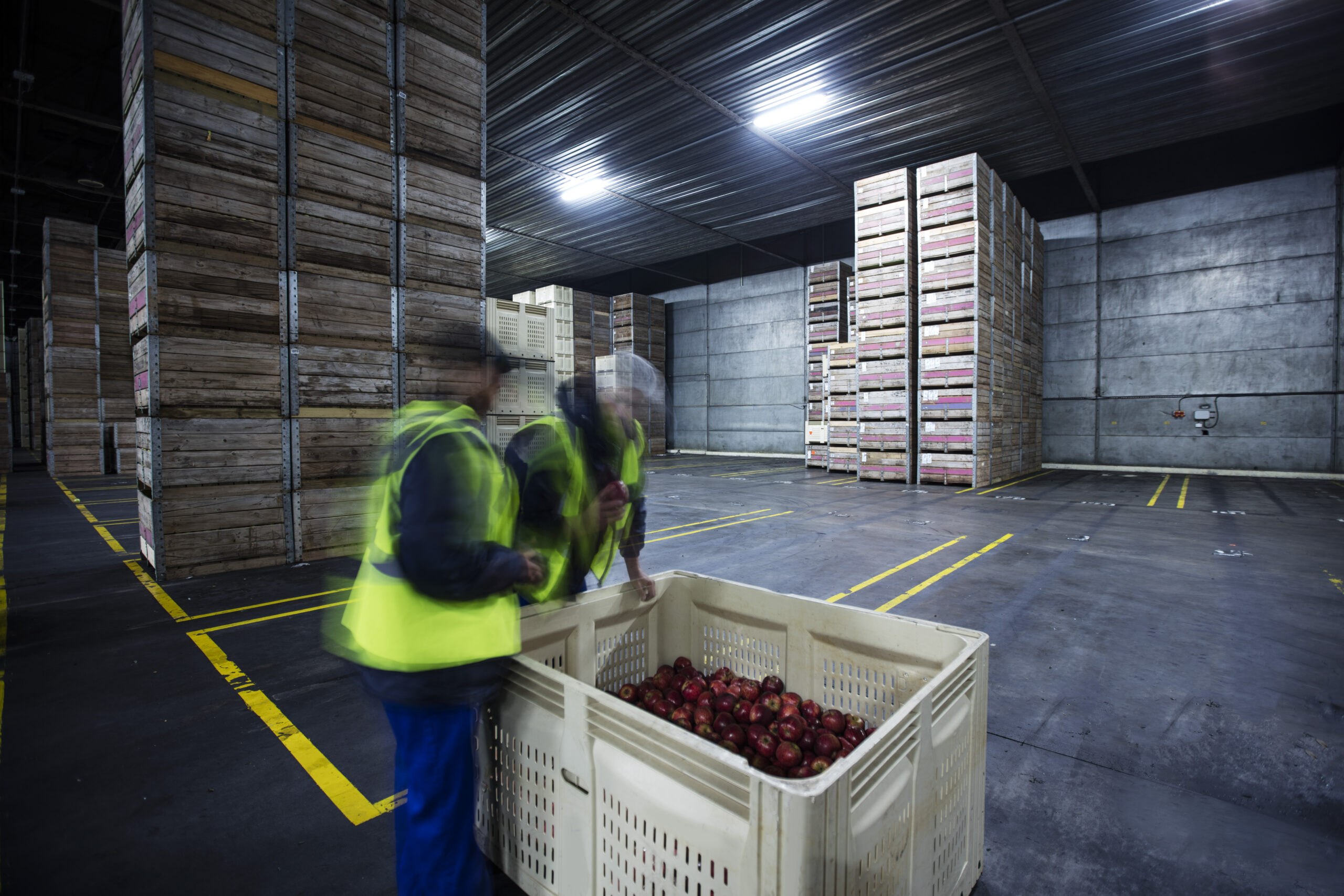
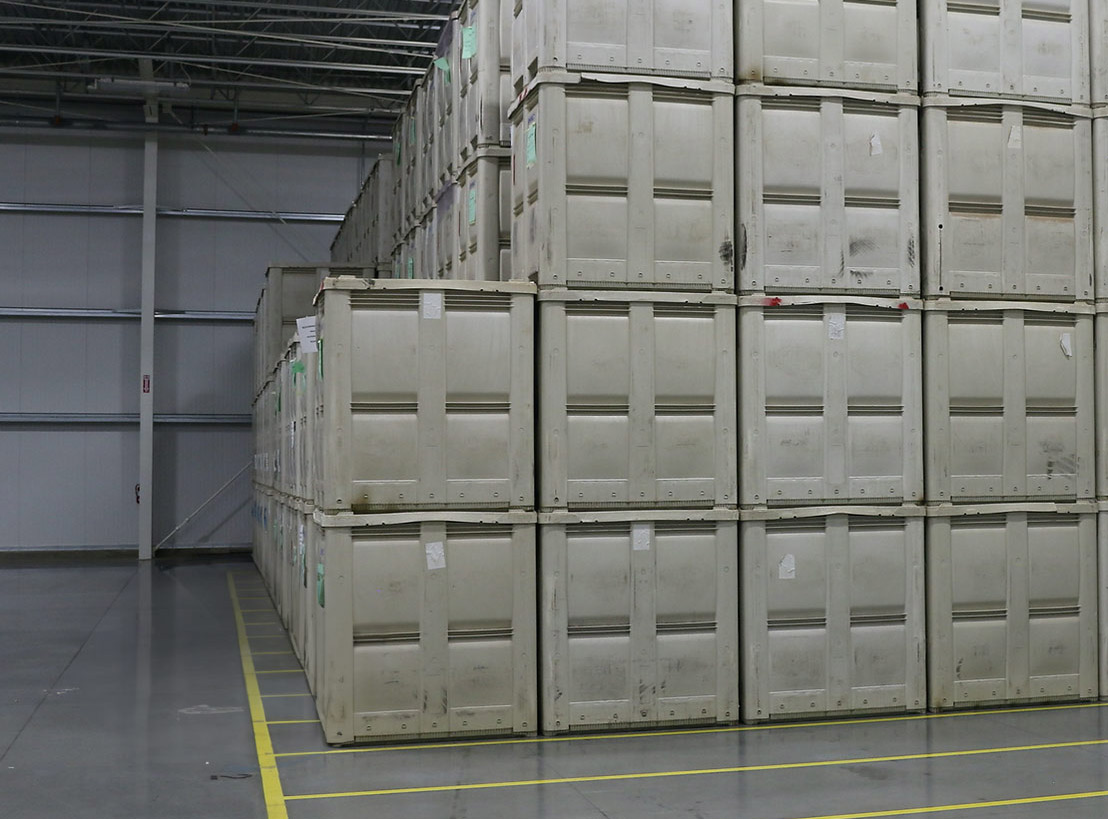
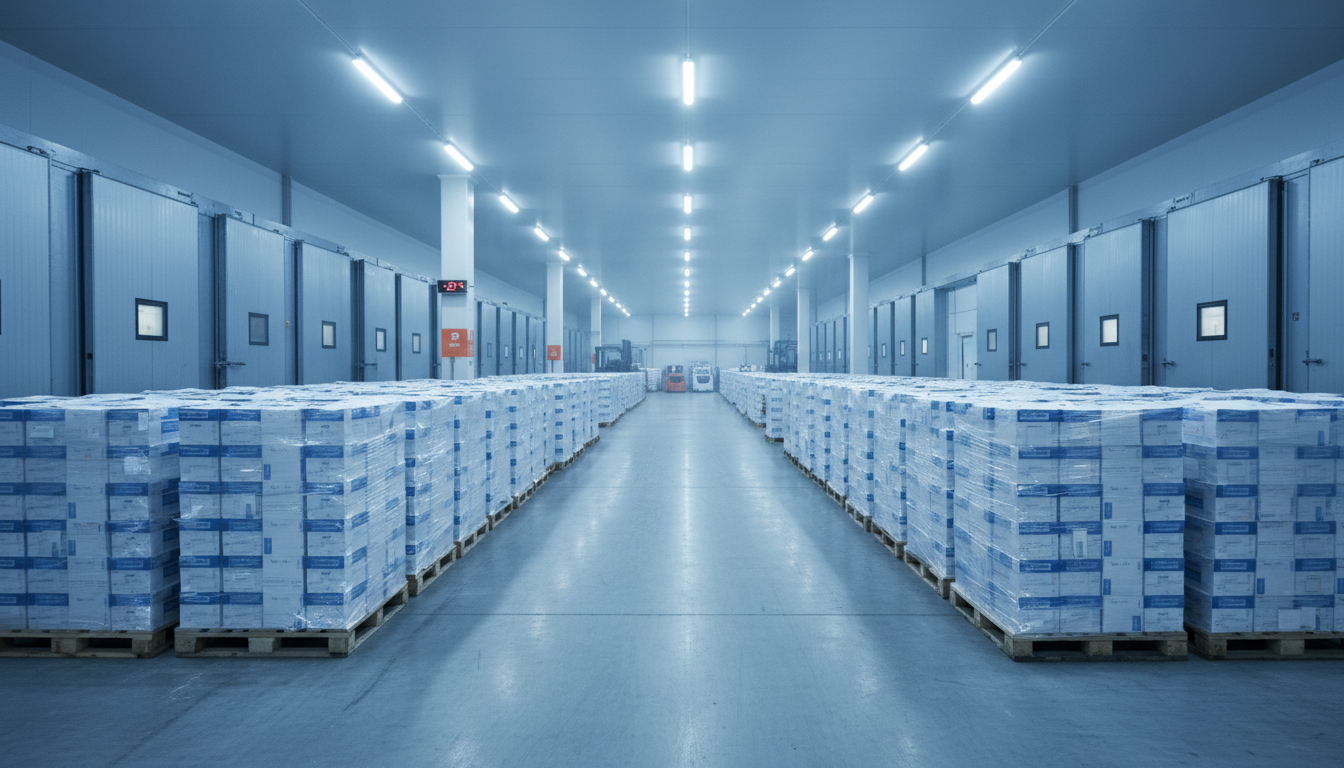
For operations managers, the choice of a frozen cold storage facility is a decision about risk mitigation. Traditional cold storage often struggles with the high thermal loads required to maintain temperatures between -10°F and 0°F. At CVCS, we have designed our facility to handle these extreme requirements across a massive 50 million pound capacity. This scale allows processors to consolidate their inventory in a single location, simplifying logistics and reducing the overhead associated with fragmented storage solutions.
The demand for these services is driven by the diversity of products coming out of the Central Valley. We are seeing a significant uptick in the need for storage of:
- Frozen Fruit Pails: High-sugar concentrates and purées that require consistent -10°F to maintain color and viscosity.
- Industrial Nut Butters: Processed almond and walnut butters that, while stable, benefit from frozen storage to prevent oil separation and rancidity over long periods.
- Retail-Ready Packaged Goods: Finished products that are ready for distribution to national grocery chains.
By offering specialized environments for these goods, we enable processors to maintain a “market-ready” status for 12 to 24 months, allowing them to sell when market prices are most favorable, rather than being forced to sell immediately post-harvest.
Maintaining the Deep Freeze: Microgrid Reliability
From an operational standpoint, the greatest threat to frozen inventory is power instability. In California’s Central Valley, the grid can be unpredictable during peak summer months—exactly when harvest and processing activities are at their zenith. A single “defrost cycle” caused by a grid outage can compromise the structural integrity of frozen goods, leading to ice crystallization in fruits or texture changes in processed nut products.
To provide our partners with absolute operational transparency, CVCS operates on a high-capacity, off-grid microgrid. This isn’t just a backup generator system; it is a fundamental part of our infrastructure designed to insulate our clients from the vulnerabilities of the public utility grid. When the grid fails or enters a “Public Safety Power Shutoff” (PSPS), our facility continues to operate at full capacity.
This reliability is essential for maintaining the “Deep Freeze.” For frozen cold storage, maintaining a flat temperature line is non-negotiable. Our five individually settable bays allow us to isolate different product types and maintain their specific temperature requirements without cross-contamination of thermal loads. If a client needs a specific bay held at a constant -10°F for high-acid frozen fruit pails, while another requires 0°F for nut butters, our system manages these demands independently and with precision.
Technical Storage Specifications
Understanding the storage lifecycle of value-added products is key to inventory management. The following table outlines the ideal conditions for the primary categories handled at our Madera facility:
| Product Type | Ideal Frozen Temp | Max Storage Duration |
|---|---|---|
| Frozen Fruit Pails | -10°F | 18 Months |
| Nut Butters | 0°F | 12 Months |
| Packaged Veg | -10°F | 24 Months |
From Processing to Sub-Zero Storage
Efficiency in food processing is often measured by the “distance to freeze.” The longer a processed product sits in transit or on a loading dock, the more its quality degrades. Central Valley Cold Storage is strategically located in Madera, providing a critical link in the regional logistics chain. By keeping processed goods close to the processing plants, we significantly reduce transit costs and the “thermal shock” that can occur during long-haul transport to distant metropolitan warehouses.
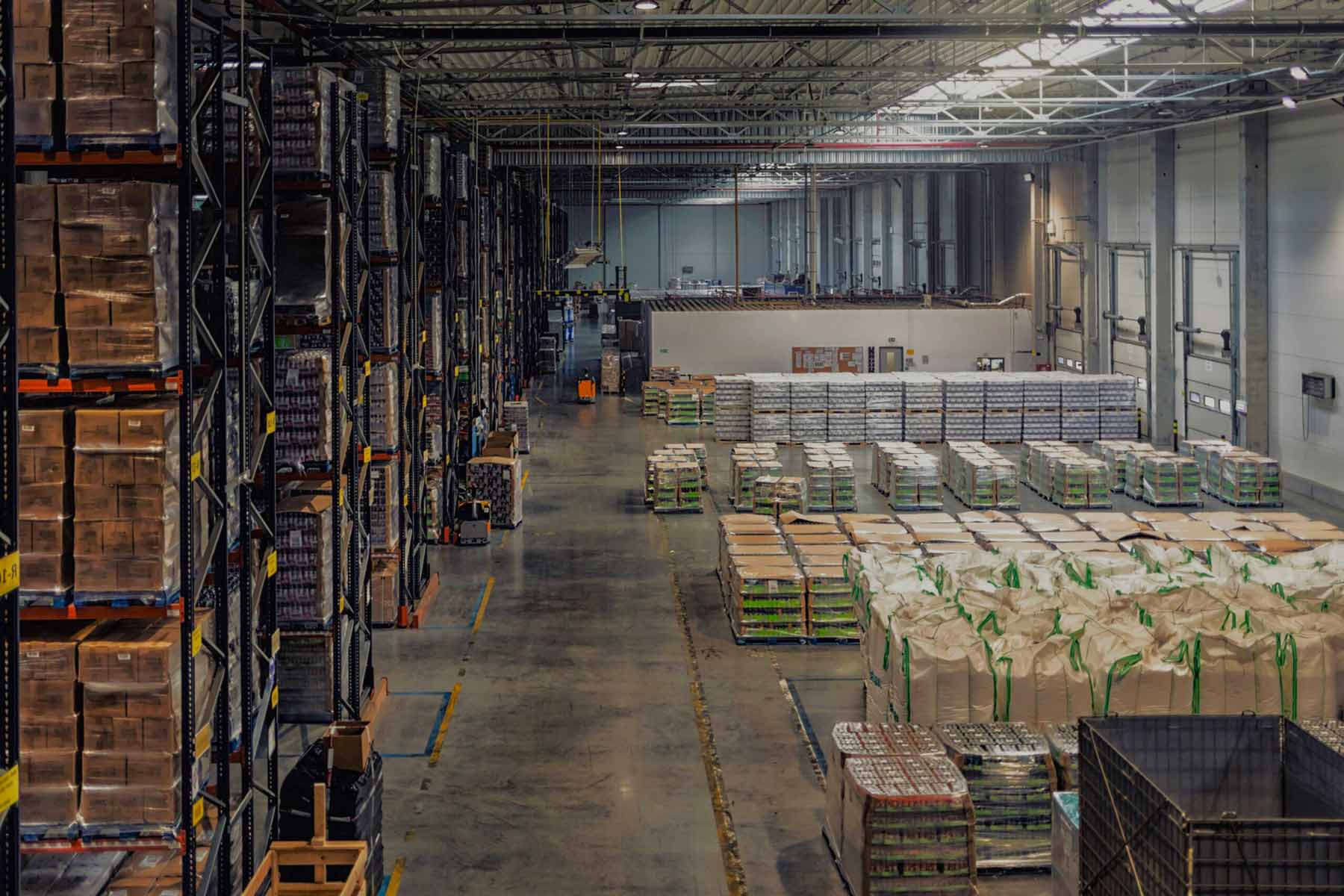
Our operational flow is designed for high-volume intake. For the Operations Manager, this means faster turn-around times for trucks and more accurate real-time inventory tracking. We view our 50 million pound capacity not just as a static warehouse, but as a dynamic engine for the Central Valley’s agricultural economy. Our facility acts as a pressure-release valve for processing plants that have limited on-site storage. When production lines are running 24/7, the ability to move finished pallets into a reliable frozen cold storage environment immediately is what keeps the entire operation from grinding to a halt.
Furthermore, our facility’s design emphasizes accessibility. With five individually settable bays, we can accommodate various pallet configurations and specialized handling requirements. Whether it is industrial-sized pails or retail-ready cartons, our infrastructure is built to handle the physical diversity of value-added goods. This flexibility is a core component of our Our Services, ensuring that as your product line evolves, your storage solution remains constant.
Future-Proofing with Madera Logistics
The global shift toward frozen foods is not a temporary trend. Consumers are increasingly seeking out frozen fruits and vegetables for their nutritional density and convenience, while industrial food manufacturers rely on frozen ingredients to maintain year-round production schedules. For Madera-based processors, this represents a massive opportunity to reach international markets. However, global distribution cycles are long. A product might sit in storage for six months before being shipped to a port for export.
Future-proofing your operations means choosing a storage partner that can support these long-duration cycles. At CVCS, we provide the stability required for such long-term planning. Our off-grid capabilities and high-capacity storage ensure that your product is just as fresh when it leaves our facility as it was the day it was processed. This consistency is what allows brands to scale with confidence, knowing that their supply chain is anchored by a facility that prioritizes operational transparency and technical excellence.
In addition to the physical storage, the data transparency we provide allows Operations Managers to track their inventory with precision. In the modern era, knowing exactly where your product is and the exact temperature history it has maintained is a requirement for compliance and food safety audits. CVCS provides that peace of mind, acting as a true extension of your production facility.
Frequently Asked Questions
Q: Does CVCS offer blast freezing?
A: Contact us for specific value-added processing and freezing capabilities. We work closely with our partners to ensure their products reach the required internal temperatures efficiently before long-term storage.
Q: What is the benefit of frozen storage in Madera?
A: Storing in Madera keeps processed goods in close proximity to the major processing plants in the Central Valley. This reduces transit costs, minimizes the time products spend in an unrefrigerated state during transport, and allows for faster response times to market demands.
Q: How does the microgrid benefit me as a client?
A: The microgrid ensures that your product stays frozen regardless of the state of the public power grid. This eliminates the risk of product loss due to power outages or rolling blackouts, which are common during the hot California summers.
Secure Your Capacity Today
As the demand for frozen value-added products continues to rise, securing high-quality frozen cold storage is a strategic imperative. Don’t leave your ROI to chance by relying on an unstable grid or insufficient storage capacity. Partner with a facility that understands the technical demands of sub-zero logistics and offers the transparency you need to manage your operations effectively.
Ready to optimize your frozen supply chain?
Get a Quote for Frozen Storage