The Labor Problem Driving Cold Storage Automation
Cold storage labor is among the most physically demanding and costly in the warehousing sector. Working in 34°F refrigerated environments or -10°F freezer conditions requires specialized protective equipment, limits shift duration, and creates worker health and safety challenges that make recruitment and retention difficult. California’s minimum wage (now above $16/hour with regional variations higher) and tight labor markets in the Central Valley have pushed cold storage operators to evaluate automation as a competitive necessity rather than a luxury.
The labor cost structure of a typical mid-size California cold storage facility — 20–30 full-time employees — represents $2–3M in annual labor expense at current California wages and benefits. Even partial automation that reduces headcount by 30% can produce $600,000–900,000 in annual savings that justifies significant capital investment.
Automated Storage and Retrieval Systems (AS/RS)
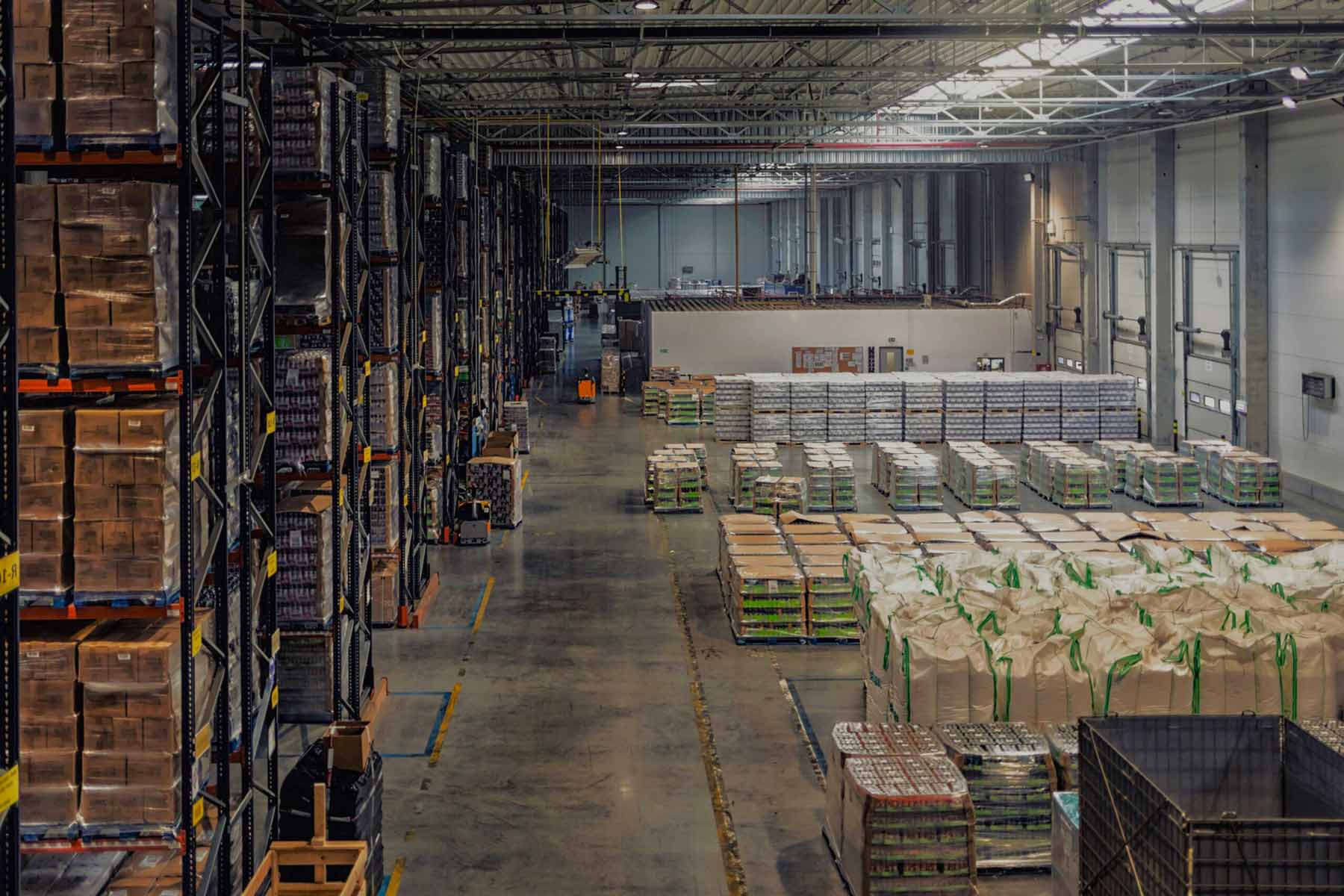
High-density automated storage and retrieval systems use computer-controlled cranes or shuttle systems to store and retrieve pallets within dense racking configurations. AS/RS systems can operate continuously in extreme cold without the worker health and safety constraints of manned operations, enabling higher density storage (vertical utilization approaching the full building height), 24/7 operation without shift constraints, and inventory accuracy that typically exceeds 99.9% versus 97–99% for manual systems.
The capital cost of AS/RS is substantial — $15–40 per cubic foot of storage volume for a fully automated system versus $3–8 for conventional racking. The business case depends on land cost (where high land prices justify high-density vertical storage), labor cost (California’s high wages favor automation), and throughput requirements (AS/RS systems have defined maximum throughput rates that may not suit highly variable agricultural volumes).
Automated Guided Vehicles (AGVs) and AMRs
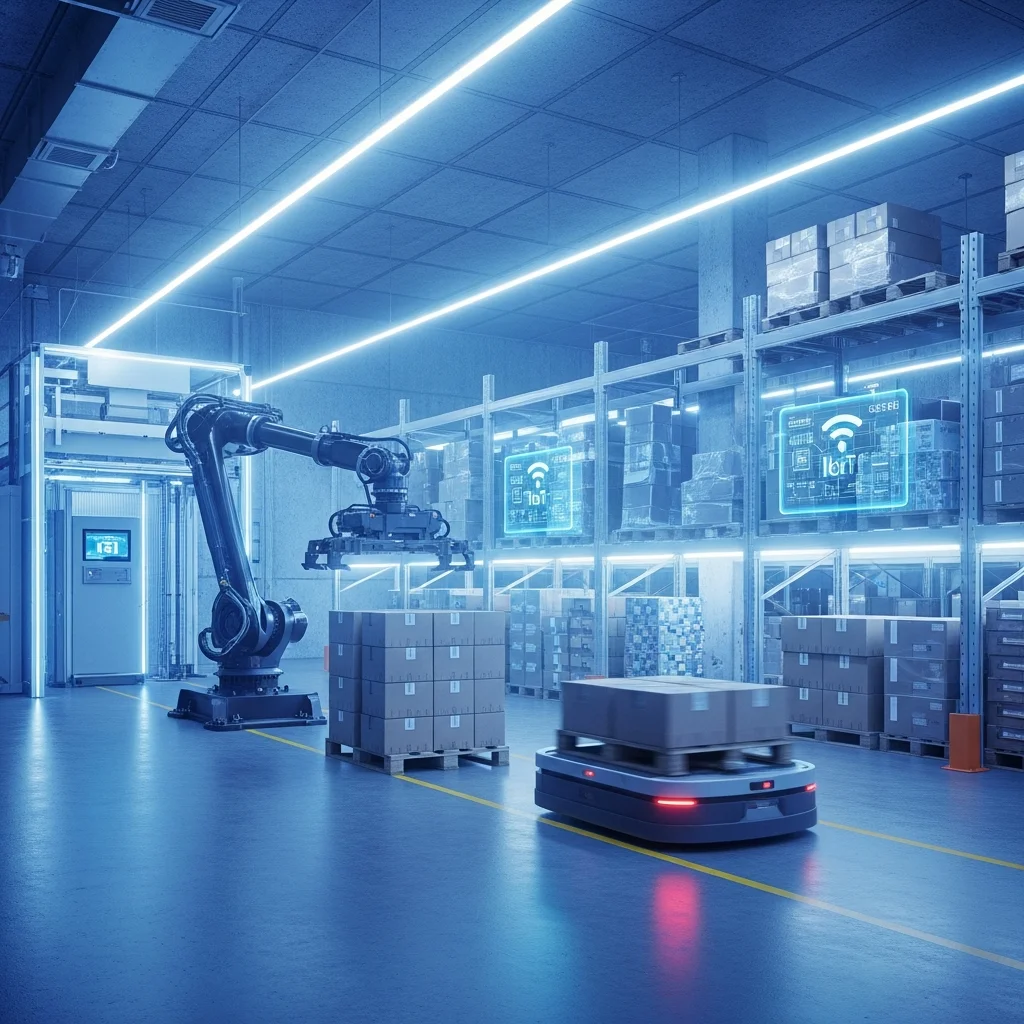
Autonomous Mobile Robots (AMRs) and Automated Guided Vehicles (AGVs) are increasingly deployed in cold storage for pallet transport — moving product between receiving docks, storage areas, and staging zones without human-operated forklifts. Modern AMRs use LiDAR navigation rather than fixed floor infrastructure, making them more flexible and easier to redeploy as facility layouts change.
In cold storage applications, AMRs are modified for low-temperature operation — lithium battery management systems, sealed electronics, and materials suitable for condensation cycling. Several manufacturers now offer AMR platforms specifically rated for -4°F to 32°F operation, covering most refrigerated storage applications.
AI-Driven Inventory Optimization
Artificial intelligence is being applied to cold storage inventory management in several practical ways. Machine learning models trained on temperature sensor data can predict equipment failures 24–72 hours before they occur — enabling proactive maintenance that prevents costly emergency repairs and product loss. AI-driven demand forecasting, integrated with upstream grower harvest schedules and downstream distributor orders, can optimize pallet placement to minimize handling cost and maximize throughput efficiency during peak periods.
For California agricultural cold storage specifically, AI models that incorporate weather forecast data (affecting harvest timing and volume), commodity price data (affecting hold-vs-sell decisions), and transportation availability (affecting outbound logistics planning) can provide handlers with actionable intelligence that improves both operational efficiency and commodity market returns.