Citrus Cold Storage in California: Degreening, Humidity Control, and Year-Round Quality
Citrus Cold Storage Defined
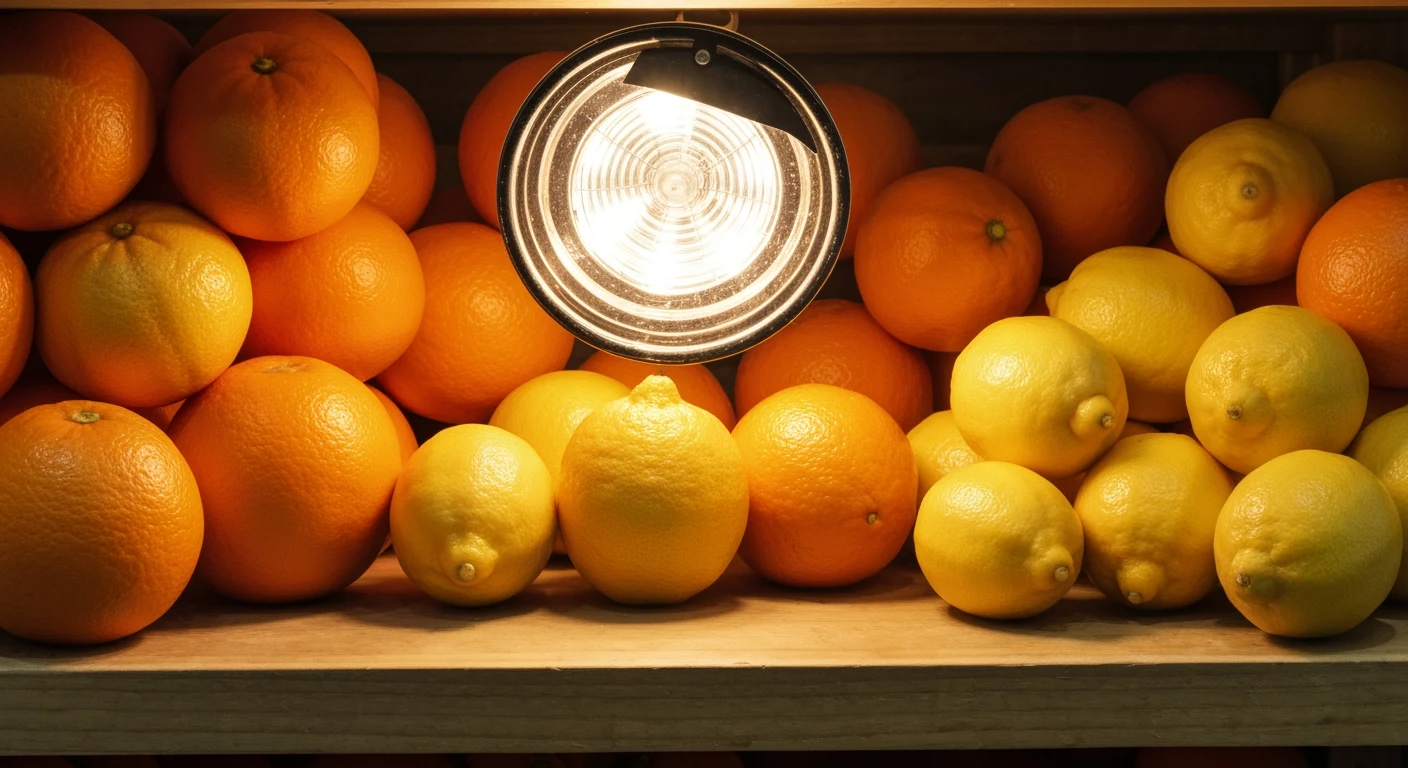
Citrus cold storage is a specialized post-harvest system maintaining fresh whole fruit at 40–50°F (depending on variety) with 85–95% relative humidity to control ripening kinetics, facilitate degreening (chlorophyll breakdown), manage ethylene concentration, preserve rind integrity, and extend market-window availability for oranges, lemons, grapefruits, mandarins, and specialty citrus. Strategic cold storage enables California citrus growers to time releases during peak-price windows, protecting crop value and ensuring year-round market presence.
California Citrus Industry: Market Dynamics, Quality Challenges, and Cold Storage Economics
California’s Citrus Production: 3.8M Tons Annually, Multiple Growing Seasons
California produces 3.8+ million tons of citrus annually across 600,000+ acres, including: oranges (Valencia and Navel), lemons, mandarins (Clementine, Satsuma, Tangerine), grapefruits, and specialty varieties. Unlike deciduous crops with compressed harvest windows, citrus harvests extend across 8–12 months: early-season Navels (October–December), peak-season Valencias (December–June), year-round lemon picking, and off-season specialty citrus (January–April). This extended harvest season creates both opportunity and challenge: proper storage manages fruit quality across a long supply chain and captures premium pricing during limited-supply windows.
Maturity vs. Color: The Degreening Challenge and Market-Timing Opportunity
Citrus fruit matures internally (sugar content, acid balance, juice development) several weeks before the rind achieves full market color. Navels and Valencias harvested in October may be internally mature (target Brix 11.5+, acid <1%) but chlorophyll-green on the surface, making them unmarketable without degreening. Growers face a choice: (1) leave fruit on tree longer to achieve natural color, risking overmaturity, sugar loss, and rind degradation; (2) harvest at maturity and use post-harvest degreening to develop market color within 5–10 days. Cold storage + controlled ethylene exposure enables rapid, controlled degreening—transforming a liability into a value-driver. Fruit degreened at 45°F maintains superior firmness and acid balance compared to warm-temperature degreening, resulting in 10–15% premium pricing for early-season Navel supply.
Citrus Physiology and Post-Harvest Ripening: Temperature, Ethylene, and Rind Stress
Citrus Maturation Index and Color Development Standards
Citrus maturity is assessed via the Maturation Index (MI): the ratio of Brix (soluble solids) to acid. California regulations require MI >5 for Navels and >6 for Valencias before harvest. Internally mature fruit may have MI 6–8, indicating optimal sugar-acid balance. However, rind color—determined by chlorophyll degradation (degreening) and carotenoid accumulation (color development)—lags internal maturity. At harvest, early-season Navels may be 30–50% “green” (high chlorophyll, minimal carotenoids), requiring days or weeks of ethylene exposure + warm temperatures to achieve full color. Cold storage (40–50°F) slows chlorophyll degradation by ~30% compared to room-temperature degreening, allowing controlled, gradual color development without accelerating fruit senescence.
Ethylene Production and Degreening Protocols
Citrus fruits produce ethylene at rates 1–3 ppm per kg per hour (depending on variety and temperature). Ethylene triggers chlorophyll breakdown and carotenoid synthesis, driving color development. Degreening at 45–50°F with ethylene supplementation (5–10 ppm for 24–72 hours) accelerates chlorophyll loss while minimizing metabolic stress. In contrast, warm-temperature degreening (70–75°F) without ethylene supplementation is slower and more stressful—fruit loses firmness, acid decays faster, and rind quality deteriorates. Cold + controlled ethylene = premium quality and superior storage life.
Rind Integrity and Chilling Injury Prevention
Citrus rind thickness and integrity determine water loss rates and pathogen susceptibility. Storage below 40°F (and below 35°F for sensitive varieties like Valencias) can trigger chilling injury: waxy coating breakdown, increased transpiration, surface pitting, and increased decay-pathogen susceptibility. Central Valley Cold Storage operates separate storage modes: 40–45°F for Navels and lemons (chilling-tolerant varieties), 48–50°F for Valencias and mandarins (chilling-sensitive). Precise temperature management is critical for rind integrity and market quality maintenance throughout storage.
Degreening Process: Science, Timing, and Integration with Cold Storage
Controlled Degreening at 45°F: The Superior Alternative
Traditional warm-temperature degreening (65–75°F, 90–95% RH, 5–10 ppm ethylene) for 3–7 days is effective but accelerates respiration, water loss, and acid decline. In contrast, cold-temperature degreening (45°F, 90–95% RH, 5–10 ppm ethylene) for 5–10 days achieves full color development with 40–50% less physiological stress. Post-degreening fruit from cold storage maintains: 0.3–0.5% higher acid, 0.5–1 Brix higher sugar retention, superior firmness (measured via Magness-Taylor texture analysis), and extended storage life (additional 2–4 weeks of shelf-stable quality). These quality metrics translate to 10–15% higher wholesale and retail pricing.
Timing Degreening to Harvest and Market Windows
Early-season Navels (October harvest) destined for November-December holiday markets must degreen rapidly: 5-day cold degreening at 45°F achieves target color by late October, enabling November shipment at peak holiday pricing. Mid-season Valencias (January harvest) may be stored undegrined at 48°F for 4–8 weeks, then degreened on-demand as market windows open—allowing growers to hold fruit and release strategically. This flexibility—degreening on a set schedule vs. degreening on-demand based on market conditions—is a major value-driver. Cold storage enables reactive market timing; warm-temperature degreening locks in a fixed timeline that may not align with optimal market prices.
Humidity Control and Rind Water Loss: 85–95% RH as the Standard
Transpiration and Water Loss Mechanisms in Citrus
Citrus rind has natural waxy coating (cuticle) that minimizes water loss; even so, at 45°F and 70% RH, fruit loses 1–2% of fresh weight per month to transpiration. At 95% RH, water loss drops to 0.3–0.5% per month. For premium citrus destined for fresh-market export or retail (where appearance and juice content are critical), maintaining 85–95% RH is essential. Lower humidity (60–70% RH) is acceptable for processing-destined fruit (juice manufacture, sauce production) where minor water loss does not impact value. Central Valley Cold Storage’s Citrus-specific storage modes maintain 90% ±3% RH, using continuous humidity monitoring and fogging systems to maintain setpoint.
Humidity, Ethylene, and Degreening Rate Interaction
Ethylene-induced chlorophyll degradation is sensitive to humidity: at <80% RH, the process slows due to stomatal closure and reduced ethylene uptake into fruit tissues. At 90–95% RH with stomata open, ethylene penetration is maximized and degreening accelerates. This is why cold-storage degreening protocols specify 90–95% RH: the humid environment maintains fruit turgor, reduces water-loss stress, and optimizes ethylene effectiveness for color development.
Ethylene Management and Cross-Contamination Prevention in Mixed Storage
Ethylene Concentration Control: Supplementing and Stripping
Citrus fruits are ethylene producers (1–3 ppm/kg/hr, depending on temperature and ripeness). In closed storage, ethylene accumulates rapidly; by 48 hours, concentration may exceed 50 ppm, causing excessive ripening acceleration and off-flavor development. Degreening protocols require ethylene supplementation initially (5–10 ppm for 24–72 hours to trigger color development), then ethylene stripping or scrubbing to prevent over-concentration. Central Valley’s degreening chambers include: (1) ethylene-injection capacity for controlled supplementation; (2) ethylene scrubbers (catalytic oxidation systems) to remove excess ethylene post-degreening, maintaining <2 ppm for subsequent storage. This dual control prevents both under-degreening (insufficient ethylene) and over-ripening (excess ethylene).
Ethylene Sensitivity of Co-Stored Produce and Segregation Requirements
Some commodities are hypersensitive to ethylene: leafy greens, berries, and cucurbits (if co-stored) are damaged by ethylene exposure. Conversely, citrus itself is a heavy ethylene producer and will accelerate ripening of ethylene-sensitive crops. Many industrial cold stores maintain strict segregation: citrus in isolated zones with dedicated ethylene scrubbing, and sensitive produce in separate chambers with ethylene-free ventilation. Central Valley’s design reflects this: dedicated citrus degreening rooms with independent HVAC and ethylene control, plus separate chambers for non-ethylene-exposed storage of tree nuts and other crops.
Storage Temperature by Citrus Variety: Balancing Chilling Tolerance and Quality Outcomes
Navel Oranges: 40–42°F for Extended Storage and Harvest-Spread Optimization
Navels are chilling-tolerant; storage at 40–42°F for 8–12 weeks maintains quality without chilling injury. At this temperature, respiration is suppressed ~70% compared to 70°F, extending storage life from 4–6 weeks (room temperature) to 10–14 weeks (cold storage). This extended window enables growers to hold early-season Navels (October harvest) through January, releasing during peak winter fruit scarcity and securing 20–30% price premiums. Navel storage at 40°F is cost-effective due to high temperature tolerance; energy costs are lower than for chilling-sensitive varieties.
Valencia Oranges: 48–50°F to Prevent Chilling Injury
Valencias are chilling-sensitive; exposure to <45°F for extended periods triggers rind pitting, increased water loss, and decay-pathogen susceptibility. Central Valley Cold Storage maintains 48–50°F for Valencia storage, a temperature that suppresses respiration ~60% compared to room temperature while avoiding chilling injury. This temperature balance enables 6–8 week storage (vs. 3–4 weeks at room temperature), allowing mid-season and late-season Valencias (February–June harvest) to be stored and released during higher-price windows (March–April, when supplies tighten).
Lemons: 45–48°F for Extended Acid Retention
Lemons are acid-rich (4–6% citric acid) and less sugar-dependent for quality than oranges. Cold storage at 45–48°F suppresses acid breakdown (the primary quality driver for lemons), enabling 12–16 week storage. Lemons stored at 45°F maintain 3.5–4% acid through week 16; at room temperature, acid drops below 2% within 4 weeks. This extended acid-stable window is critical for lemon market dynamics: lemons harvested year-round (unlike seasonal oranges) require constant supply throughout the year, and cold storage enables growers to spread supplies and maintain market presence during low-supply windows (typically May–August).
Mandarins and Tangerines: 40–45°F with Humidity Optimization
Mandarins (Clementines, Satsumas, Tangerines) are chilling-tolerant at 40–45°F; this range suppresses respiration while preventing waxy-coating breakdown. Mandarins are more sensitive to low humidity than oranges; they develop “stickiness” (waxy coating liquefaction) at high temperatures combined with low humidity. Cold storage at 40–45°F and 90–95% RH minimizes this defect. Mandarins stored under these conditions maintain crispness and market appeal for 6–10 weeks, enabling growers to hold early-season supplies (September–October harvest) for November–December holiday markets at premium pricing.
Central Valley Cold Storage: Citrus-Optimized Infrastructure and Degreening Capabilities
254,000 Sq Ft Facility with Dedicated Degreening and Storage Zones
Central Valley Cold Storage includes specialized citrus zones: (1) degreening rooms at 45°F with ethylene injection and scrubbing capability, accommodating 250,000–400,000 lbs per room; (2) separate storage chambers at variety-specific temperatures (40–50°F range) with 90–95% RH; (3) pre-cooling facility bringing fruit from field temperature (60–70°F) to storage temperature within 12–24 hours, halting respiration acceleration and field-heat-related quality loss. The facility is located in Madera County, within 90 minutes of California’s primary citrus-growing regions (San Joaquin Valley, Kern County, Tulare County), minimizing transport delays.
Off-Grid 1200 kW Solar + Redundant Backup for Continuous Thermal Control
Citrus is highly sensitive to temperature excursions: a 24-hour power outage can raise storage temperature from 45°F to 65°F+ within 12–16 hours, triggering rapid ethylene production and quality degradation. Off-grid solar + backup generators ensure continuous cooling, protecting inventory during California’s increasingly frequent summer rolling blackouts. This operational resilience is critical for high-value citrus shipments (premium early-season Navels worth $15,000–$25,000 per storage room).
CCOF Certification and FSMA 204 Compliance for Regulated Markets
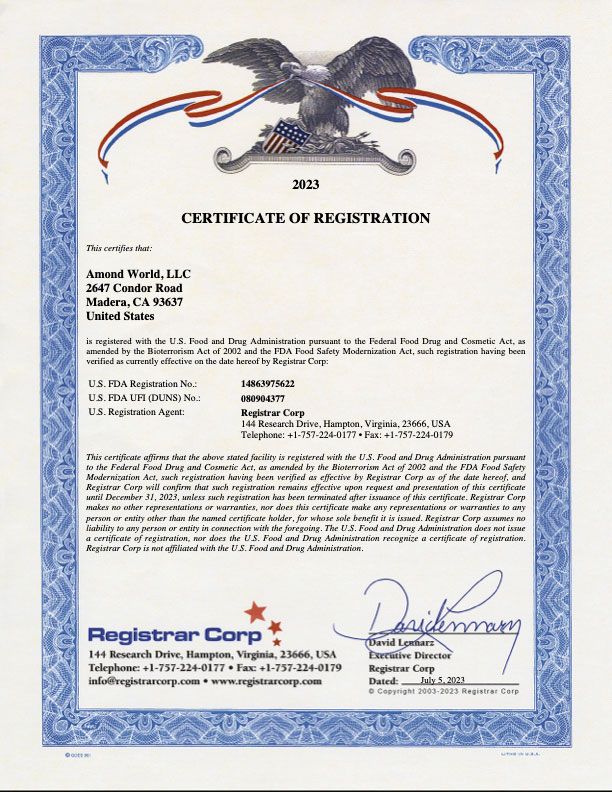
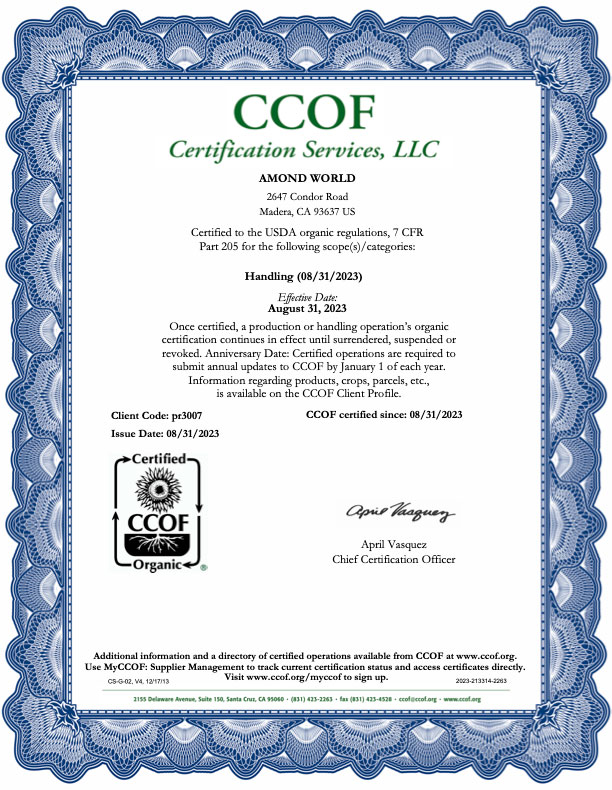
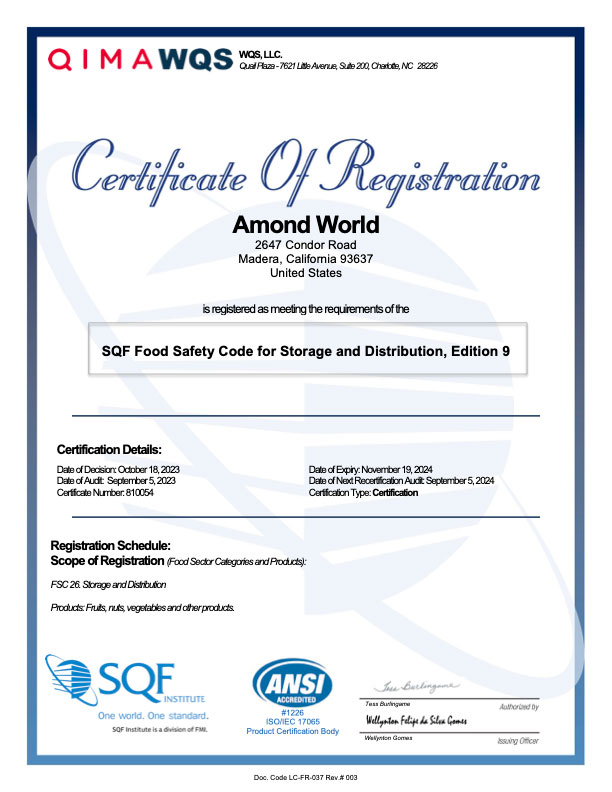
Central Valley’s CCOF certification enables organic citrus storage; FSMA 204 compliance (traceability, temperature logging, pest management) supports audit-ready documentation for regulated buyers (supermarkets, food-service, export channels). These credentials streamline sales processes and reduce buyer-auditing burden for citrus growers selling to controlled channels.
Quality Monitoring and Predictive Ripeness: Data-Driven Market Release Timing
Real-Time Quality Tracking Throughout Storage
At storage entry, Central Valley samples each citrus lot for: Brix, acid, color index (hunter color score), and firmness (shore hardness). Every week during degreening and every 2 weeks during storage, repeat sampling tracks quality evolution. Growers access dashboards showing: current sugar and acid levels, color development progression, and projected quality at future release dates. For example, a grower can query: “If I release this Valencia lot on March 15, what will acid be?” and receive a data-driven forecast: “3.8% acid, suitable for fresh market; if released May 1, acid will be 3.2%, better for processing.” This forecasting enables optimal market-timing decisions.
Temperature and Humidity Historical Logs as Quality Insurance
Detailed logs of storage temperature (±0.5°F precision every 15 minutes) and humidity (±2% RH every 15 minutes) provide objective evidence of storage compliance and support quality warranties. If a buyer disputes quality upon receipt, temperature/humidity logs demonstrate that storage conditions were maintained to specification, protecting grower liability.
Frequently Asked Questions About Citrus Cold Storage and Degreening
Q1: How long does cold degreening take, and is it worth the time investment?
Cold degreening at 45°F with 5–10 ppm ethylene takes 5–10 days to achieve market color, vs. 3–5 days for warm degreening at 70°F. The 2–5 extra days are offset by superior fruit quality (better firmness, higher acid retention, extended shelf life, 10–15% higher pricing), making cold degreening economically superior for premium market positioning.
Q2: What humidity should I maintain during degreening?
90–95% RH is optimal. Lower humidity (<80% RH) slows degreening and increases water loss; higher humidity (>98%) risks condensation and mold. Central Valley maintains 90% ±3% RH throughout degreening.
Q3: Can I degreen all citrus varieties in the same room?
Yes, if temperature/humidity protocols are compatible. Navels, Valencias, lemons, and mandarins can be degreened together at 45°F with ethylene supplementation. However, early harvest of one variety may complete degreening before another; staggered removal is necessary to avoid over-ripening late finishers.
Q4: What’s the maximum storage duration for citrus at cold temperature?
Navels: 10–14 weeks at 40–42°F. Valencias: 6–8 weeks at 48–50°F. Lemons: 12–16 weeks at 45–48°F. Beyond these windows, quality declines significantly (acid loss for lemons, rind pitting for Valencias, off-flavor development for all varieties).
Q5: How do I prevent chilling injury in cold-sensitive varieties?
Store at variety-specific temperatures: Navels/Lemons at 40–45°F (chilling-tolerant); Valencias/Mandarins at 48–50°F (chilling-sensitive). Maintain ±2°F stability to prevent temperature fluctuations that trigger injury. Rapid pre-cooling post-harvest (reaching storage temperature within 12–24 hours) reduces chilling-injury risk.
Q6: What’s the cost of cold storage and degreening for citrus?
Typical rates are $0.02–$0.04 per pound per month for standard storage, and $300–$500 per room for degreening (variable cost based on ethylene and energy). For a 200,000-lb lot degreened and stored 6 weeks, total cost is $1,500–$3,000. If market timing yields a $0.10/lb premium ($20,000 gain), ROI is 600–1300%.
Next Steps: Optimize Your Citrus Supply Chain with Strategic Cold Storage
California’s citrus growers operate in a commodity market where timing is everything. Fruit harvested during peak-supply windows (January–February for Valencias) faces depressed pricing; releasing identical fruit during supply-limited windows (March–April) commands 20–30% premiums. Cold storage enables this timing optimization: holding fruit at precise 40–50°F, controlling degreening on-demand, and releasing strategically to capture price peaks.
Central Valley Cold Storage’s 254,000 sq ft Madera facility is purpose-built for California citrus: dedicated degreening chambers with ethylene control, variety-specific storage temperatures, 90–95% humidity precision, and off-grid solar backup for operational resilience. Our team has deep expertise in post-harvest physiology, degreening protocols, and market timing strategies—backed by real-time quality dashboards and predictive ripeness forecasting.
Request a consultation to evaluate your citrus storage strategy. Whether you’re managing early-season Navels, mid-season Valencias, year-round lemons, or specialty mandarins, our facility can accommodate your supply chain. We’ll model your market-timing ROI, discuss degreening protocols optimized for your target markets, and document quality parameters supporting premium pricing.
Schedule a facility tour to see cold-storage degreening in action. Observe color development protocols, review real-time quality dashboards, and discuss how strategic cold storage can transform your citrus operation into a year-round market competitor with premium-price capturing capability.