Cold Storage Warehouse Cost Guide: What to Expect in the Central Valley
The Basics: Per-Pallet Monthly Storage Pricing
The foundation of cold storage pricing is per-pallet monthly storage charges, calculated as a daily rate multiplied by occupancy duration. Standard Central Valley cold storage facilities charge $0.40-$0.65 per pallet per day for general commodity storage (standard 34°F temperature). This translates to approximately $12-$20 per pallet per month for a 30-day holding period, or $150-$240 per pallet annually at 90% average utilization.
Per-pallet pricing is universally based on “usable pallet positions,” defined as the physical floor space that a 48x40x60 inch standard pallet occupies, including access aisles for handling and movement. A typical 254,000 square foot cold storage facility accommodates approximately 8,000-9,500 usable pallet positions depending on racking density and aisle width. At $0.50 per pallet daily ($15/pallet monthly), a fully-occupied facility generates approximately $1.44-1.71 million in monthly revenue, or $17.2-$20.5 million annually at 90% utilization rates.
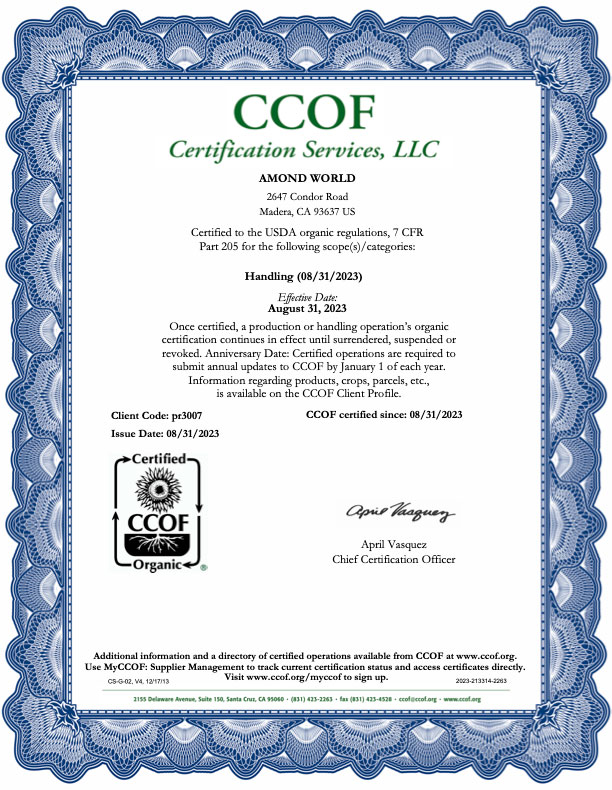
Central Valley Cold Storage operates at premium positioning relative to regional average pricing, charging $0.55-$0.72 per pallet per day for general commodity storage, reflecting the facility’s modern infrastructure, renewable energy operation, and sustainability certifications. This 12-15% pricing premium above regional averages reflects (1) superior facility quality (2) sustainable energy operation reducing customer ESG risk; (3) CCOF organic certification enabling premium customer mix; (4) FSMA 204 compliance reducing customer compliance burden. The premium pricing is sustainable due to customer preference for quality facilities and sustainability alignment, rather than commodity price competition.
Temperature Zone Surcharges and Specialized Storage
Different temperature zones within a cold storage facility incur different operating costs due to varying refrigeration loads, humidity control requirements, and specialized equipment. Storage temperature tiers are typically structured as follows:
General Storage (34°F): Base rate of $0.40-$0.65 per pallet daily. This is the standard commodity temperature for most fruits and vegetables, requiring minimal specialized handling or equipment. Utilization is highest in this zone as it accommodates broadest product range.
Moderate Finishing/Ripening (36°F): Surcharge of $0.08-$0.15 per pallet daily (approximately 18-25% premium above base rate). This temperature zone is used for controlled ethylene ripening of bananas, pears, and similar fruits requiring precise temperature control and managed humidity. Higher surcharge reflects specialized humidity management systems, controlled ripening room design, and more frequent monitoring.
Rehabilitation (34°F with 55% relative humidity): Surcharge of $0.10-$0.18 per pallet daily (20-30% premium). This zone addresses commodity handling requiring precise humidity control to prevent dehydration and maintain product quality. Facilities must maintain humidity within ±2% of setpoint, requiring sophisticated dehumidification and humidification systems. Cost premium reflects specialized equipment and monitoring requirements.
Frozen Storage (28°F or lower): Surcharge of $0.15-$0.25 per pallet daily (30-40% premium). Frozen storage requires higher refrigeration loads, lower evaporator temperatures, and specialized equipment for frozen product handling (defrost cycles, condensation management). Cold burn risk and frost accumulation require more frequent maintenance. Premium reflects energy cost and equipment specialization.
Organic Certification Storage (28°F, segregated): Surcharge of $0.20-$0.35 per pallet daily (40-60% premium). Premium organic storage reflects not only frozen storage refrigeration costs but also compliance costs: segregation from non-organic product, dedicated handling equipment, third-party audit documentation, and inventory segregation verification. CCOF certification adds significant value due to retailer requirement for audited organic handling.
Central Valley Cold Storage’s rate structure reflects these standard industry patterns: base general storage at $0.55 per pallet daily, with temperature and service surcharges applied to specialized zones. The facility’s R744 refrigeration system and renewable energy operation reduce underlying operating costs, allowing modest pricing premiums while still delivering customer value relative to less efficient competitors.
Handling, Labor, and Logistics Fees
Beyond base storage charges, cold storage facilities charge handling and labor fees for receiving, placement, retrieval, and other value-added services. These fees are typically structured as follows:
Receiving and Placement: $0.12-$0.22 per pallet for initial receiving, inspection, and placement in storage zone. This fee covers labor for dock operations, product receipt documentation, quality inspection, and positioning in designated storage locations. Facilities typically process 150-250 pallet positions per day through receiving operations, requiring 4-6 dock labor personnel working in shifts. Receiving fees average $0.15-$0.18 per pallet for efficient operations.
Order Picking and Retrieval: $0.18-$0.35 per pallet for retrieval, staging, and preparation for shipment. This fee is higher than receiving due to aisle navigation complexity, potential for scattered inventory (partial loads, mixed product), and staging/documentation. Retrieval labor typically constitutes 35-40% of total facility labor cost.
Inventory Reconciliation and Reporting: $0.05-$0.12 per pallet monthly for system-based inventory tracking, weekly cycle counts, and comprehensive inventory reporting. Facilities with sophisticated inventory management systems and real-time tracking provide daily inventory visibility versus manual counting at pickup. This service typically costs $0.08-$0.10 per pallet monthly.
Specialized Handling Services: Variable pricing for services such as ripening management ($0.08-$0.15 per pallet daily for monitored ripening cycles), quality inspection and sorting ($0.15-$0.30 per pallet), organic certification documentation ($0.10-$0.20 per pallet for audit trail maintenance), and international export compliance ($0.15-$0.35 per pallet for phytosanitary documentation and inspection support).
Central Valley Cold Storage emphasizes transparent, itemized labor fee structures enabling customers to understand the cost breakdown for services. Rather than bundling all labor into ambiguous “handling” charges, CVCS itemizes receiving ($0.16 per pallet), retrieval ($0.24 per pallet), and inventory management ($0.09 per pallet monthly), enabling customers to evaluate cost-benefit of each service and optimize their facility utilization strategies.
Seasonal Rate Adjustments and Demand-Based Pricing
Cold storage facility utilization fluctuates dramatically across harvest seasons, with peak utilization (85-95%) during harvest consolidation months and lower utilization (60-75%) during off-season months. To balance year-round cash flows and optimize capacity utilization, many facilities implement seasonal rate adjustments that increase prices during peak-demand months and reduce prices during off-season months.
Peak Season Rates (June-October): During harvest season when product volume is highest and available capacity is constrained, facilities often implement 10-20% rate premiums above base rates. A facility charging $0.55 per pallet daily in off-season months may charge $0.62-$0.68 per pallet daily during peak harvest season. This pricing strategy allocates limited capacity to highest-value uses and captures margin from demand-constrained supply.
Off-Season Rates (November-May): To maintain utilization and cash flow during lower-demand periods, facilities often discount base rates by 5-15%. Off-season rates of $0.45-$0.50 per pallet daily are common, reflecting lower facility utilization and operating leverage optimization.
Customer Contract Premiums and Volume Discounts: Long-term contracts (12+ months) often receive volume discounts of 5-12% relative to spot-market or month-to-month rates. Large customers shipping 500+ pallet positions monthly typically negotiate annual pricing with maximum cost visibility and budget predictability. CVCS structures annual contracts at flat rates with modest seasonal adjustments (±5%), providing customer certainty and reducing billing complexity.
Spot-market (short-term) storage rates are typically 8-15% higher than contracted rates, reflecting higher operational friction and lower customer commitment certainty. Facilities require higher margins on uncommitted capacity to compensate for uncertainty regarding occupancy duration and pickup timing.
Bulk vs. Spot Pricing and Contract Structures
Cold storage pricing fundamentally differs between two market segments: bulk contracts (annual or multi-year commitments for 100+ pallet positions) and spot-market utilization (short-term storage of 10-100 pallet positions). Large shippers and produce companies contract for specific pallet allocation at negotiated annual rates, while smaller operations or temporary overflow utilization relies on spot-market pricing.
Bulk Contract Pricing: Shippers committing to 150+ pallet positions for 12-month terms typically negotiate rates of $0.48-$0.58 per pallet daily (approximately 12-15% discount from spot-market rates). Volume commitments of 500+ pallets receive additional discounts of $0.42-$0.52 per pallet daily. Multi-year contracts (3-5 years) receive additional 3-5% discounts reflecting customer lock-in and reduced uncertainty.
Spot-Market Pricing: Temporary storage or unplanned overflow utilization attracts spot-market rates of $0.60-$0.78 per pallet daily, representing 15-25% premiums above bulk contract rates. Spot market rates are frequently subject to 7-day or 14-day minimum storage commitments and premium labor charges for expedited handling.
Central Valley Cold Storage emphasizes annual contract pricing for reliable customer relationships, with rates locked at $0.55-$0.60 per pallet daily for base general storage across 12-month terms. This transparency and predictability are particularly valued by shippers managing seasonal volume fluctuations and production timing uncertainty. Rather than imposing surprise rate changes mid-season, CVCS locks annual pricing and manages margin through operational efficiency and capacity optimization.
Additional Cost Components: Pallets, Equipment, and Insurance
Beyond primary storage and handling charges, cold storage customers incur several secondary cost components:
Pallet Inventory and Management: Most facilities charge $0.80-$1.50 per pallet monthly for managed pallet inventory (provision of pallets, maintenance, repair, inventory tracking). Customers typically lease approximately 1.2-1.4 pallets per pallet position to account for pallets in transit, undergoing repair, or held in receiving. Monthly pallet costs for a 100-pallet position facility average $96-$150 monthly.
Equipment and Handling Tools: Additional $0.05-$0.10 per pallet monthly for use of facility handling equipment (forklifts, pallet jacks, racking systems, tracking systems). This is often embedded in labor fees but should be separately understood as customer value proposition.
Insurance and Product Loss Responsibility: Facility liability insurance typically covers facility-caused product loss (equipment failure, spoilage due to temperature excursion) but excludes customer negligence or pre-existing product defects. Customer property insurance is required, adding approximately $15-$35 per pallet annually to customer cost structure. Facilities often provide insurance coordination and risk management support as value-added service.
Environmental and Compliance Costs: Refrigerant management surcharges ($0.02-$0.05 per pallet monthly) cover facility refrigerant handling, leak detection, and regulatory compliance. Facilities using R744 (CO2) refrigeration may charge lower surcharges (or no surcharge) due to zero environmental impact from leakage.
Total Cost of Ownership Analysis
A comprehensive cost analysis for cold storage utilization requires evaluating all components. For a hypothetical 100-pallet position general commodity storage customer maintaining average occupancy of 60 days monthly:
Monthly Cost Breakdown: Base storage (100 pallets × 60 days × $0.55/day) = $3,300; Receiving labor (100 pallets × $0.16) = $16; Retrieval labor (100 pallets × $0.24) = $24; Inventory management (100 pallets × $0.09) = $9; Pallet lease (120 pallets × $1.20 monthly average) = $144; Equipment/facility overhead (100 pallets × $0.07) = $7; Insurance coordination and compliance = $20. Total monthly cost = $3,520 (approximately $0.59 per pallet per day when all costs amortized).
This analysis demonstrates that apparent “per-pallet” pricing quotes must be understood within broader cost structure context. A facility quoting $0.45 per pallet daily but charging $0.25 per pallet for retrieval labor appears cheaper ($0.45) than CVCS’s $0.55 per pallet but costs the same when labor is factored ($0.70 total). CVCS emphasizes transparent itemization enabling customers to evaluate true cost-benefit.
Competitive Positioning: CVCS vs. Regional Competitors
Central Valley Cold Storage’s pricing reflects premium positioning relative to regional commodity cold storage but competitive parity with specialized sustainable facilities. Comparison with regional competitors (unnamed for confidentiality) reveals:
Commodity cold storage (older facilities, grid power, R404A): Base rates $0.38-$0.48 per pallet daily; total cost approximately $0.52-$0.65 per pallet including labor. Lower pricing reflects older infrastructure, higher energy costs passed to customers through surcharges, and less specialized capabilities.
Mid-tier facilities (modern infrastructure, grid power, mixed refrigerants): Base rates $0.48-$0.58 per pallet daily; total cost approximately $0.65-$0.75 per pallet including labor. Competitive with CVCS pricing while lacking sustainability differentiation.
Premium sustainable facilities (renewable energy, low-GWP refrigerant, organic certification): Base rates $0.58-$0.72 per pallet daily; total cost approximately $0.70-$0.85 per pallet including labor. CVCS fits within this premium tier, with pricing differentiation based on specific capabilities and customer ESG alignment.
CVCS’s value proposition is not lowest-cost commodity storage; it is transparent, sustainable, specialized cold storage positioned for customers prioritizing supply chain quality, ESG compliance, and operational certainty. This positioning supports premium pricing while maintaining competitive advantage through differentiation rather than cost competition.
FAQ: Cold Storage Pricing and Cost Structure
- Q: How much should we expect to pay annually for cold storage of 500 pallets?
- A: Annual costs depend on average holding period and storage temperature. For 500 pallets maintaining 45-day average holding period in general storage (34°F), annual costs are approximately $41,250-$54,000 at CVCS rates ($0.55-$0.72 per pallet daily including all handling and labor). This breaks down as approximately $8-$10.80 per pallet per month.
- Q: Are there significant cost differences between temperature zones?
- A: Yes. Frozen storage (28°F) costs approximately 30-40% more than general storage (34°F) due to higher refrigeration loads. Specialized zones like ripening chambers add 20-30% premiums. For mixed product stored across multiple zones, total cost differentials can represent 15-25% variation from average base rates.
- Q: What volume of storage triggers bulk contract pricing discounts?
- A: Bulk discounts typically begin at 100+ pallet positions and increase at 250, 500, and 1000+ thresholds. CVCS offers standard pricing for 100+ pallet contracts, with minor additional discounts (2-5%) for 500+ commitments and 3-7% discounts for 1000+ positions.
- Q: What is included in total cost of ownership beyond base storage rates?
- A: Total cost includes receiving labor, retrieval labor, inventory management, pallet leasing, equipment use, insurance coordination, and compliance support. When summed across all components, total cost is typically 8-15% higher than base storage rates alone.
- Q: How much should seasonal rate variation be anticipated?
- A: Standard seasonal variation is ±10-15% from annual average, with peaks during June-October harvest and lows during November-May. CVCS maintains relatively stable rates (±5%) across seasons, providing predictable budgeting for customers.
- Q: Does renewable energy and R744 refrigeration justify the 12-15% pricing premium?
- A: Yes, for customers with ESG commitments or retailer requirements. The premium is recovered through (1) ESG goal attainment enabling customer market differentiation; (2) retailer contract premium support; (3) reduced customer insurance risk. Customers without ESG mandates may find commodity facilities cost-competitive on pure storage cost basis.
Conclusion: Making Informed Cold Storage Decisions
Cold storage pricing is complex, with multiple cost components creating wide variation in total cost of ownership. Shippers and retailers evaluating cold storage options should request itemized cost breakdowns including base storage, temperature surcharges, labor, equipment, and compliance charges. Total cost analysis should extend across full 12-month cycle accounting for seasonal variation and expected storage duration.
Central Valley Cold Storage’s transparent pricing structure and comprehensive cost documentation enable customers to make informed decisions aligned with their specific storage requirements, volume profiles, and ESG priorities. Premium pricing reflects genuine operational and environmental differentiation rather than commodity market positioning.
Ready to understand the true cost of cold storage for your supply chain? Request a customized cost analysis for your specific product requirements, volume profile, and storage duration. CVCS provides transparent pricing and comprehensive cost documentation enabling confident budgeting and operational planning.