The Complete Guide to Almond Cold Storage: Temperature, Humidity, and Shelf Life Optimization
Almond Cold Storage Defined
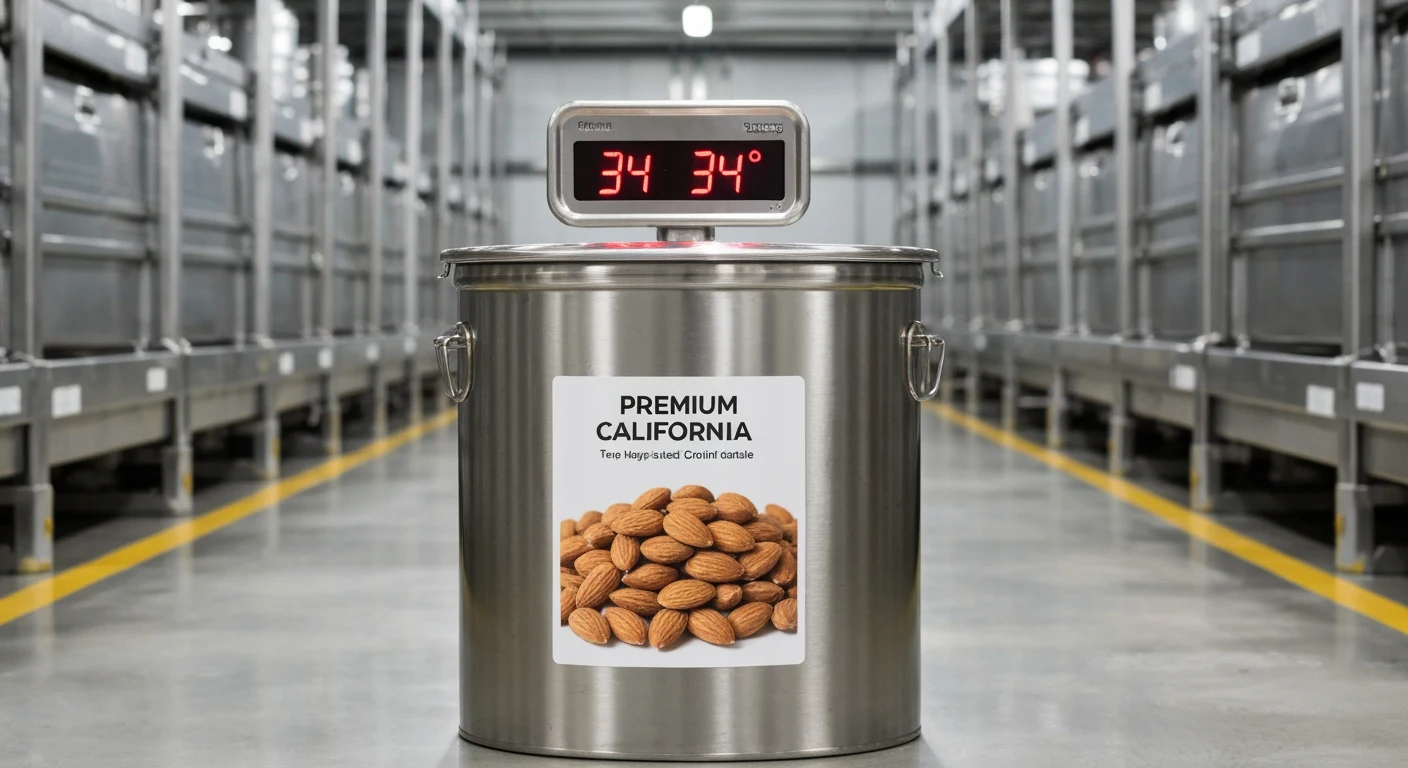
Almond cold storage is a controlled-environment preservation system maintaining kernels at 34–36°F with 55–65% relative humidity to extend shelf life to 24+ months, prevent rancidity and mold, and protect against aflatoxin contamination. This industrial-grade process is essential for California’s almond industry, which produces over 80% of the world’s commercial almonds.
California’s Almond Industry: Scale, Economics, and Cold Storage Demand
The Global Almonds Leader
California produces 80% of the world’s almond supply, generating over $5.6 billion annually across 1.6 million acres in the San Joaquin Valley. The Central Valley’s Mediterranean climate—hot, dry summers and mild winters—creates ideal growing conditions but presents post-harvest challenges. Once kernels are mechanically separated from shells and hulls, moisture loss and oxidation begin immediately. Without proper cold storage, almonds degrade rapidly: rancid flavors emerge within weeks, moisture loss compromises texture, and aflatoxin risks escalate in warm, humid conditions.
Why Industrial Cold Storage is Non-Negotiable
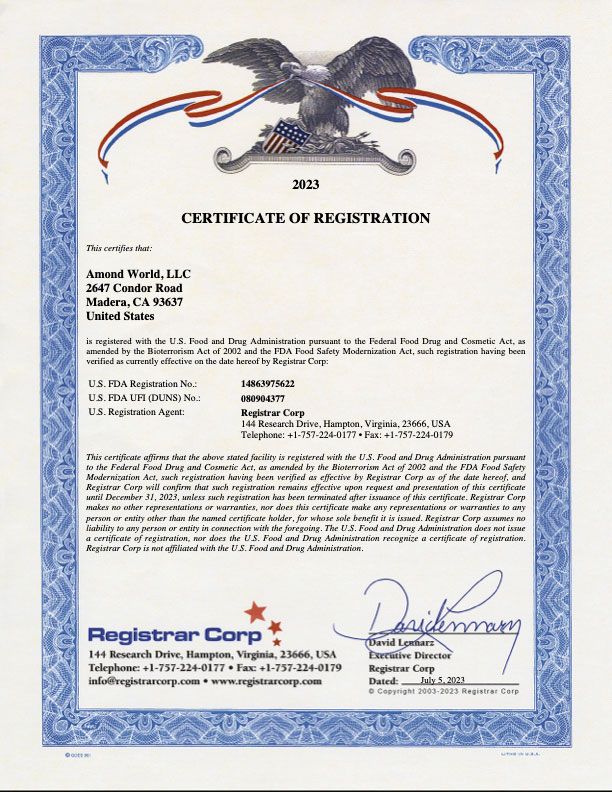
The almond supply chain involves months-long storage before processing, value-added processing, and international export. A grower harvesting in August may not sell inventory until January or later. Temperature and humidity fluctuations during this period trigger physiological and microbiological changes that devalue the crop. Central Valley Cold Storage operates a 254,000 sq ft FSMA 204-ready facility in Madera, CA—the heart of almond country—with four specialized storage modes, including a dedicated Rehab storage mode at 34°F with 55% humidity for managing over-dried almond lots.
Almond Variety Physiology: Nonpareil vs. Monterey Storage Requirements
Nonpareil Almonds: The Market Standard
Nonpareil is California’s dominant variety, accounting for ~50% of total acreage. Nonparels are prized for large kernel size, high oil content (52–54% by weight), and superior flavor. However, higher oil content accelerates rancidity onset if stored improperly. Nonpareil kernels are more sensitive to temperature swings and humidity spikes; even brief excursions above 50°F can trigger dormancy-breaking metabolic activity, accelerating respiration and water loss. Optimal storage for Nonpariels: 34–36°F, 55–60% RH.
Monterey Almonds: Differential Respiration Rates
Monterey varieties feature slightly lower oil content and thinner shells, making them more resistant to some post-harvest stresses but more prone to stem-end rot if humidity drops below 50%. Monterey kernels exhibit differential respiration rates compared to Nonpariels—they consume oxygen at a 12–15% slower rate in the 32–36°F range. This difference means Monterey lots can tolerate slightly lower humidity (54–62% RH) without compromising quality, though temperature precision remains critical. Both varieties require continuous monitoring to prevent condensation-induced mold proliferation.
Optimal Almond Storage Conditions: Temperature, Humidity, and Air Quality
Temperature Precision: The 34°F Standard
Research from UC Davis and the Almond Board of California consistently validates 34°F as the gold standard for long-term almond storage. At this temperature, enzymatic activity slows by ~50% for every 10°F decrease (following Q10 metabolic principles). Respiration rates plummet, halting rancidity initiation. Importantly, 34°F is cold enough to suppress mold germination (most Aspergillus species stall below 35°F) while remaining above the freezing point of kernel oils. Excursions to 40°F+ for even 48 hours can trigger dormancy-breaking and increase respiration 3–4 fold. Central Valley Cold Storage maintains ±1°F precision using redundant compressor systems and 24/7 monitoring.
Humidity Equilibrium: 55–65% RH Window
Almond kernel moisture content at harvest is typically 5–6% (wet basis). Cold storage humidity must maintain this level—neither dehydrating nor adding moisture. At 55–65% RH, the relative vapor pressure deficit keeps kernels in equilibrium: moisture loss halts, and mold-supporting condensation is prevented. Below 50% RH, kernel moisture drops below 4%, leading to texture deterioration, increased brittleness, and potential aflatoxin-producing mold stress responses. Above 70% RH, condensation risk rises sharply; Aspergillus flavus and A. parasiticus germinate rapidly when surface moisture is present. Specialty storage modes matter: Central Valley’s Rehab storage operates at 34°F/55% to rehydrate over-dried kernels without spoilage risk.
Ethylene and CO2 Management
Almonds do not produce significant ethylene, but cross-contamination from co-stored stone fruits or apples can trigger accelerated aging. Proper air exchange—typically 2–4 complete room air changes per day—prevents CO2 accumulation (which, above 8%, accelerates anaerobic respiration and off-flavor development). Industrial cold stores employ HEPA-filtered ventilation and ethylene scrubbers in shared facility zones.
Aflatoxin Prevention: Thermal Stasis and Moisture Control as First Lines of Defense
Aflatoxin Risk Drivers in Almonds
Aspergillus flavus colonization in almonds occurs pre-harvest and post-harvest. Pre-harvest contamination is driven by drought stress, insect damage, and temperatures >86°F during the 4-week pre-harvest window (late July–August). Post-harvest, warm, humid conditions (75°F+, >70% RH) create ideal germination environments. Aflatoxin B1 is the primary mycotoxin of concern; California regulations enforce a 5 ppb maximum residue limit. A single infected kernel batch can render an entire lot unmarketable.
Thermal Stasis: The Primary Defense
Thermal stasis—maintaining almonds below 35°F—halts Aspergillus growth and aflatoxin synthesis entirely. At 34°F, A. flavus cannot produce viable spores or toxins even if present. This is why rapid cooling post-harvest is critical: almonds should reach 34°F within 12–24 hours of harvest. Delayed cooling allows any existing fungal spores to germinate and begin toxin production. Once in thermal stasis, almonds remain safe indefinitely (within the 24–36 month commercial window). Central Valley Cold Storage’s FSMA 204-ready facility includes pre-cooling rooms reaching 34°F in <6 hours, documenting temperature descent logs as part of food safety compliance.
Moisture Control and Preventive Chemistry
Secondary prevention involves moisture management: kernels stored above 5% moisture (wet basis) at any temperature above 45°F are at increased risk. Propionic acid treatments (applied pre-storage) inhibit Aspergillus growth by acidifying kernel surfaces. Some growers employ CO2-enriched storage (8–10% CO2 for 7–10 days) to further suppress fungal respiration, though this is less common in California than in international markets. Documentation of temperature logs, moisture testing, and pre-harvest field assessments is essential for food safety audits and buyer certification.
Shelf Life Extension: From 6 Months to 24+ Months in Proper Storage
Rancidity Development and Oil Oxidation
Almond kernel rancidity—driven by free fatty acid (FFA) oxidation—is the primary quality-limiting factor. At ambient temperature (72°F), FFA levels rise 0.5–1% per month; at 34°F, this rate drops to 0.05–0.08% per month. Industry standards target <0.75% FFA for premium fresh-market almonds and <1.2% for processed/ingredient almonds. Without cold storage, a lot harvested in August reaches rancid levels (>1.5% FFA) by November. In proper 34°F storage, the same lot remains <0.5% FFA through month 24. This 4× shelf life extension drives Central Valley's revenue model: growers store inventory and time releases to maximize market prices, often achieving 15–25% premiums by releasing during price peaks (typically November–January).
Flavor and Aroma Stability
Almond flavor compounds—including 2,5-dimethyl-4-hydroxy-3(2H)-furanone (key aroma volatile) and various aldehydes—are volatile and degrade rapidly at warm temperatures. Cold storage preserves these compounds, maintaining the characteristic sweet, nutty flavor profile. Growers often report that cold-stored almonds maintain “just-harvested” flavor for 18–20 months, compared to 3–4 months in ambient storage.
Market Timing and Value Maximization: Strategic Cold Storage for Grower Economics
Seasonal Price Volatility and the Storage Premium
Almond prices fluctuate 40–60% seasonally. At harvest (August–September), prices are depressed due to oversupply; by December–January, prices often spike 20–30% as inventory depletes. A grower storing 500,000 lbs of almonds for 4 months could realize an additional $150,000–$250,000 in gross margin by timing release strategically. This requires cold storage as a competitive advantage: inventory locked in warm storage degrades and cannot capture peak prices.
Contract Sales and Processing Demand
Processors—chocolate coating, nut butter, flour mills—plan production 3–6 months ahead and contract almond supplies at forward prices. Growers with reliable, long-term cold storage can negotiate premium multi-year contracts, locking in better pricing. Without storage, growers must sell at harvest when market prices are lowest.
Central Valley Cold Storage: Almond-Specific Capabilities and Compliance
254,000 Sq Ft Madera Facility with Rehab Storage Mode
Central Valley Cold Storage operates directly in Madera County, reducing transport time from harvest to storage from 2–4 hours (typical regional competitors) to <30 minutes for most San Joaquin Valley growers. The facility's Rehab storage mode—34°F, 55% humidity—is purpose-built for rehydrating over-dried almond lots, a critical capability during drought years when kernel moisture sometimes drops to 4% or below. This specialized capability adds 2–5% value to otherwise unsaleable over-dried inventory.
Off-Grid 1200 kW Solar + Backup Systems
The facility’s 1200 kW solar installation reduces operating costs and ensures energy resilience. Power outages—increasingly common during California’s summer peak demand—can catastrophically damage cold storage inventory if backup systems fail. Central Valley’s dual-redundancy architecture (solar + grid + on-site generator backup) protects against thermal excursions, a critical competitive advantage for growers storing high-value Nonpareil lots.
CCOF Organic Certification and FSMA 204 Readiness
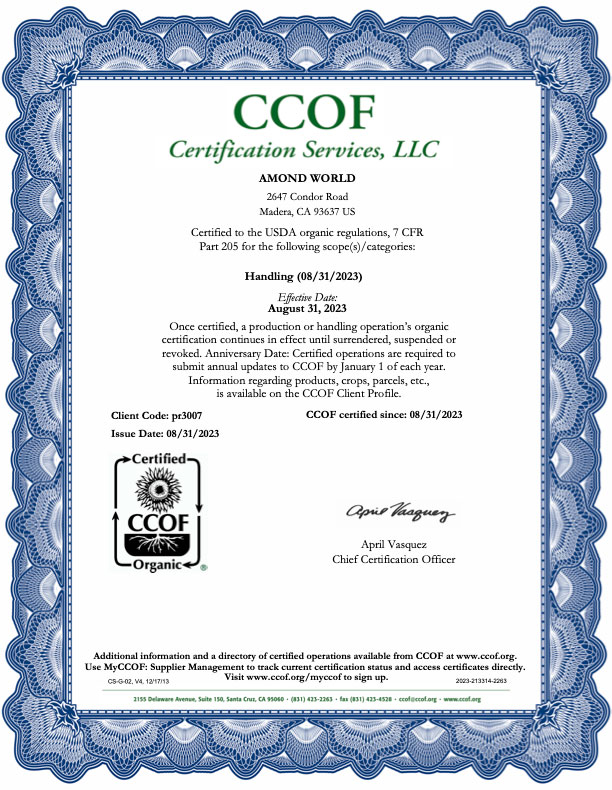
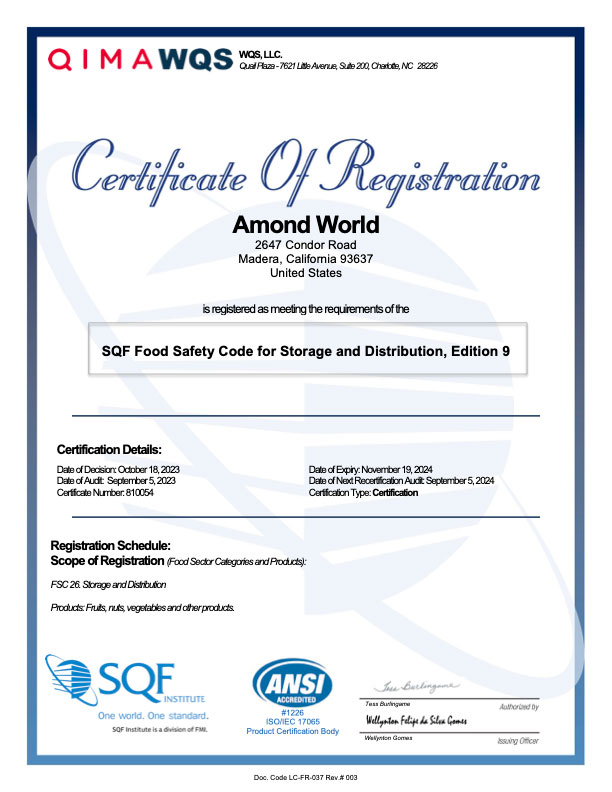
Central Valley Cold Storage holds CCOF (California Certified Organic Farmers) certification, enabling certified organic almond storage with full traceability. FSMA 204 (Subpart F: Produce Safety) compliance is built into operations: temperature monitoring, humidity logging, pest management documentation, and allergen segregation protocols are standardized. This compliance streamlines buyer audits and reduces risk for growers selling to regulated channels.
Technology and Monitoring: Real-Time Insights for Grower Peace of Mind
Continuous Temperature and Humidity Logging
Each storage zone maintains independent wireless sensors (±0.5°F, ±2% RH accuracy) logging data every 15 minutes. Growers access real-time dashboards showing their lot’s conditions, with automated alerts if temperature drifts >2°F or humidity exceeds thresholds. This transparency reduces worry and enables rapid corrective action (typically re-equilibration within 30 minutes via HVAC adjustment).
Predictive Degradation Modeling
Central Valley uses UC Davis-validated shelf life prediction models: based on stored temperature, humidity, and initial FFA/moisture, the system forecasts quality at future dates. A grower can query: “If I release on January 15, what will FFA be?” enabling data-driven market timing decisions.
Frequently Asked Questions About Almond Cold Storage
Q1: Can I store almonds at 40°F instead of 34°F to save energy costs?
No. At 40°F, rancidity onset accelerates ~3× compared to 34°F, shortening shelf life to 8–10 months instead of 24 months. Over a multi-year storage strategy, energy savings are erased by degraded product value. Storage at temperatures above 40°F increases aflatoxin risk if any fungal spores are present. Central Valley’s energy-efficient systems (solar + advanced compressors) minimize cost premiums of 34°F storage.
Q2: What humidity is best—55% or 65% RH?
Both are acceptable, depending on variety and intended market. Nonparels typically prefer 55–60% RH to minimize condensation risk. Montereys tolerate 60–65% RH well. The key is consistency: swings >10% RH in short timeframes cause kernel moisture fluctuations, compromising texture. Central Valley maintains ±3% RH band to prevent cycling.
Q3: How long can almonds stay in cold storage—what’s the maximum shelf life?
Commercial shelf life is 24–36 months at 34°F/55–65% RH, depending on initial quality. FFA remains <1.5% through month 24 for premium lots; flavor and aroma remain acceptable through month 20. Beyond 36 months, even properly stored almonds begin showing oxidative off-notes. Most commercial buyers contract for 18–24 month windows.
Q4: Do almonds need ethylene scrubbers?
Almonds themselves produce minimal ethylene. However, if your cold store co-stores stone fruits, apples, or other ethylene-producing crops, ethylene scrubbing is critical to prevent accelerated aging. Central Valley’s design separates ethylene-sensitive crops (almonds) from ethylene producers, with HEPA + carbon filtration on shared ventilation lines.
Q5: How do I prevent aflatoxin in stored almonds?
Primary: rapid cooling to 34°F within 12–24 hours post-harvest halts all fungal growth and aflatoxin synthesis. Secondary: maintain 34°F + controlled humidity throughout storage. Tertiary: pre-storage testing and documentation of field conditions (drought stress, insect damage) to identify at-risk lots. Central Valley’s FSMA 204-ready protocols include traceability documentation for audits.
Q6: What’s the cost of cold storage per pound per month?
Typical rates for premium cold storage are $0.03–$0.05 per pound per month (or $3–$5 per cwt/month), depending on storage mode and facility location. For a grower storing 500,000 lbs for 6 months, this equates to $9,000–$15,000—easily justified if market timing yields even a $0.05/lb premium ($25,000–$50,000 gross margin gain). Request a quote from Central Valley Cold Storage for facility-specific pricing and volume discounts.
Next Steps: Schedule a Facility Tour and Discuss Your Cold Storage Strategy
Central Valley Cold Storage’s Madera location is purpose-built for almond growers. Whether you’re storing Nonpariels, Montereys, or specialty lots requiring rehab treatment, our 34°F + 55% humidity precision storage, CCOF certification, and FSMA 204 readiness ensure your inventory maintains premium quality for 24+ months. Real-time temperature/humidity monitoring gives you peace of mind; predictive quality modeling supports data-driven market timing.
Request a free consultation and facility tour. Discuss your harvest volume, intended market window, and storage duration. Our team will model your potential value lift based on historical price data and your lot characteristics. For many growers, strategic cold storage adds $0.10–$0.20 per pound in realized value—far outweighing storage costs.
Contact Central Valley Cold Storage today to maximize your almond crop’s shelf life and market value.