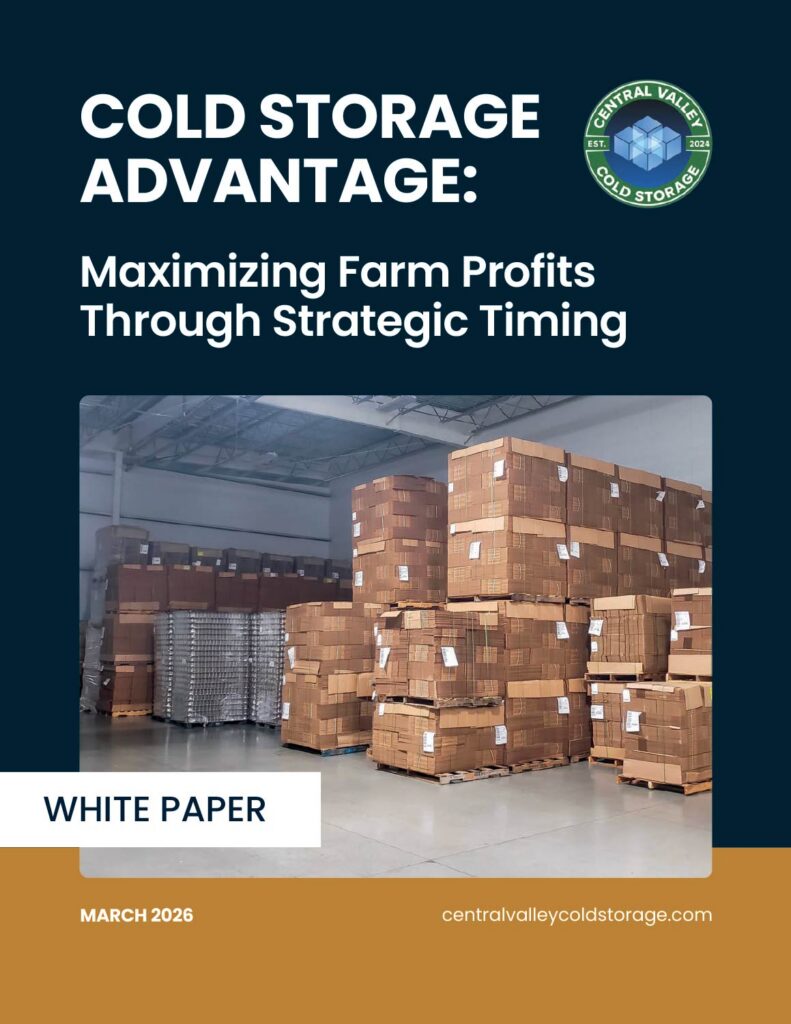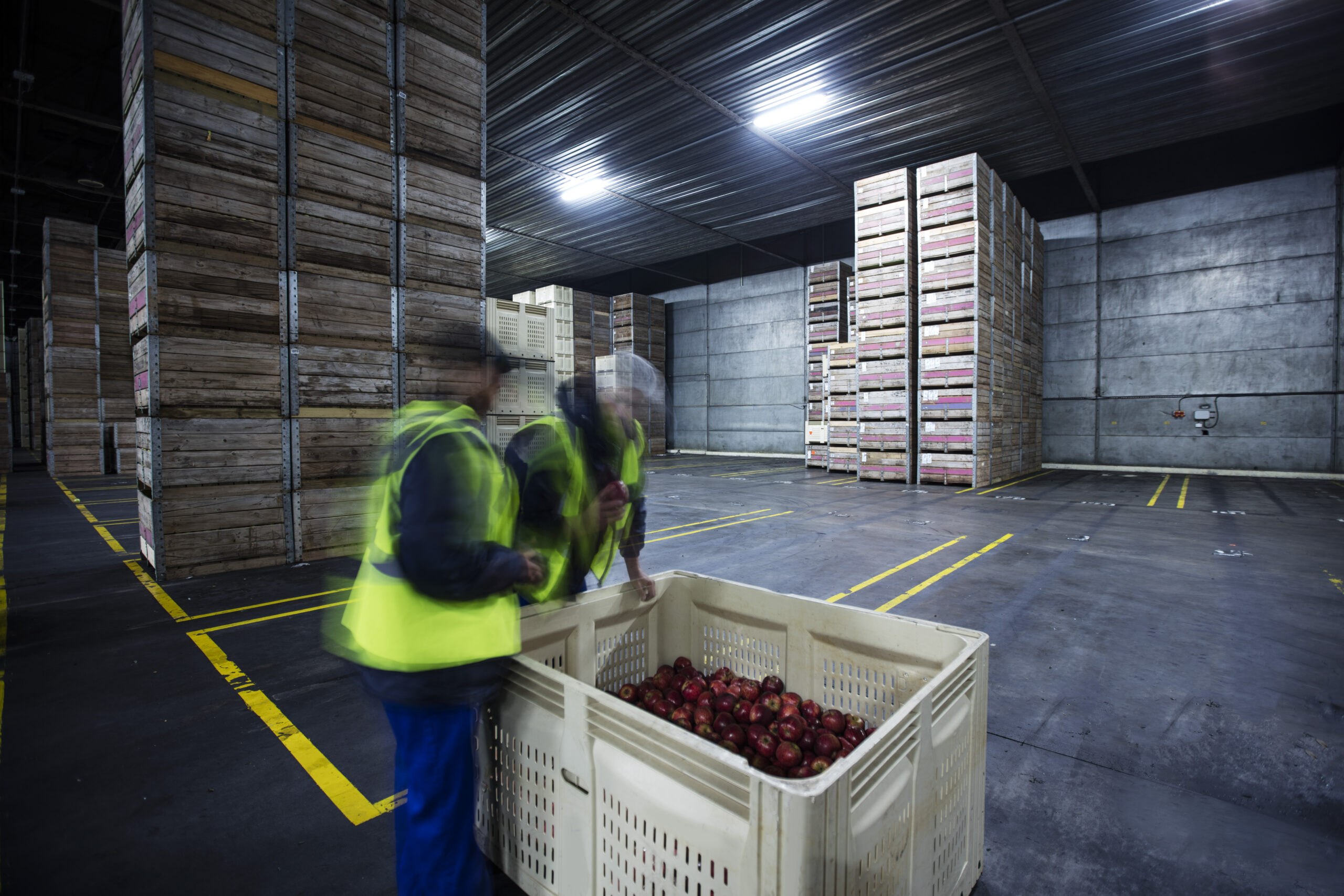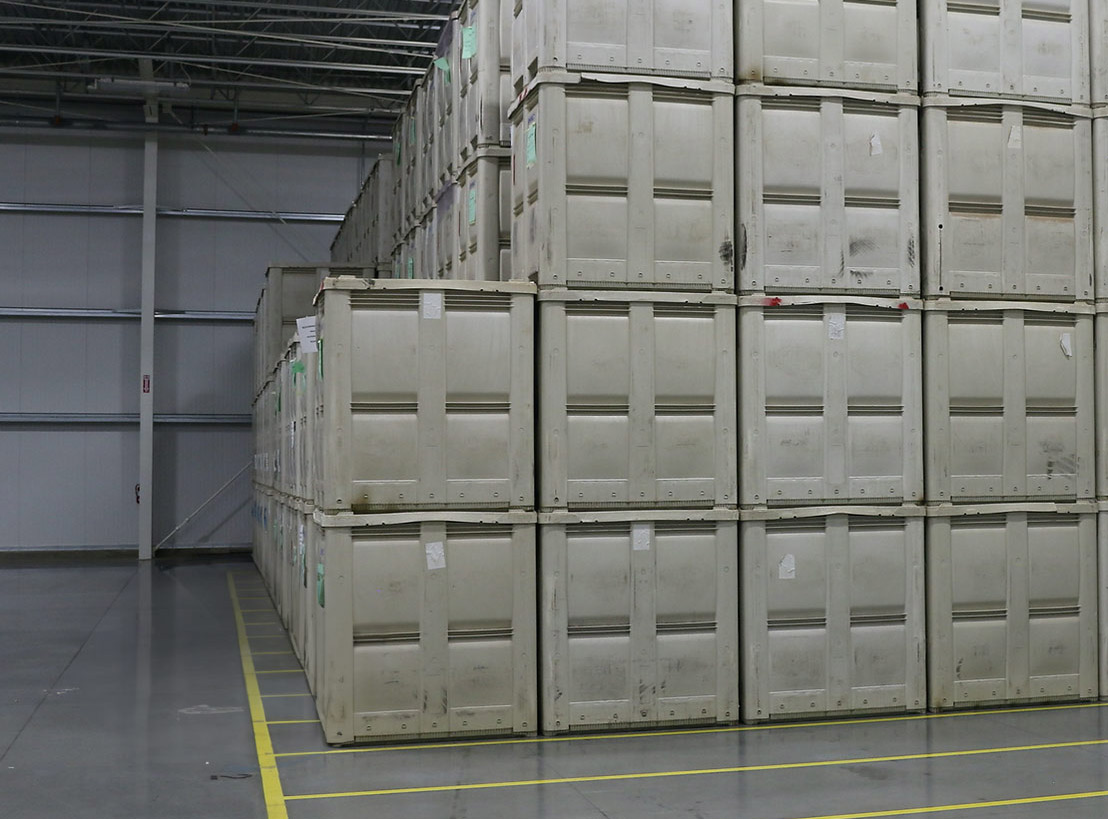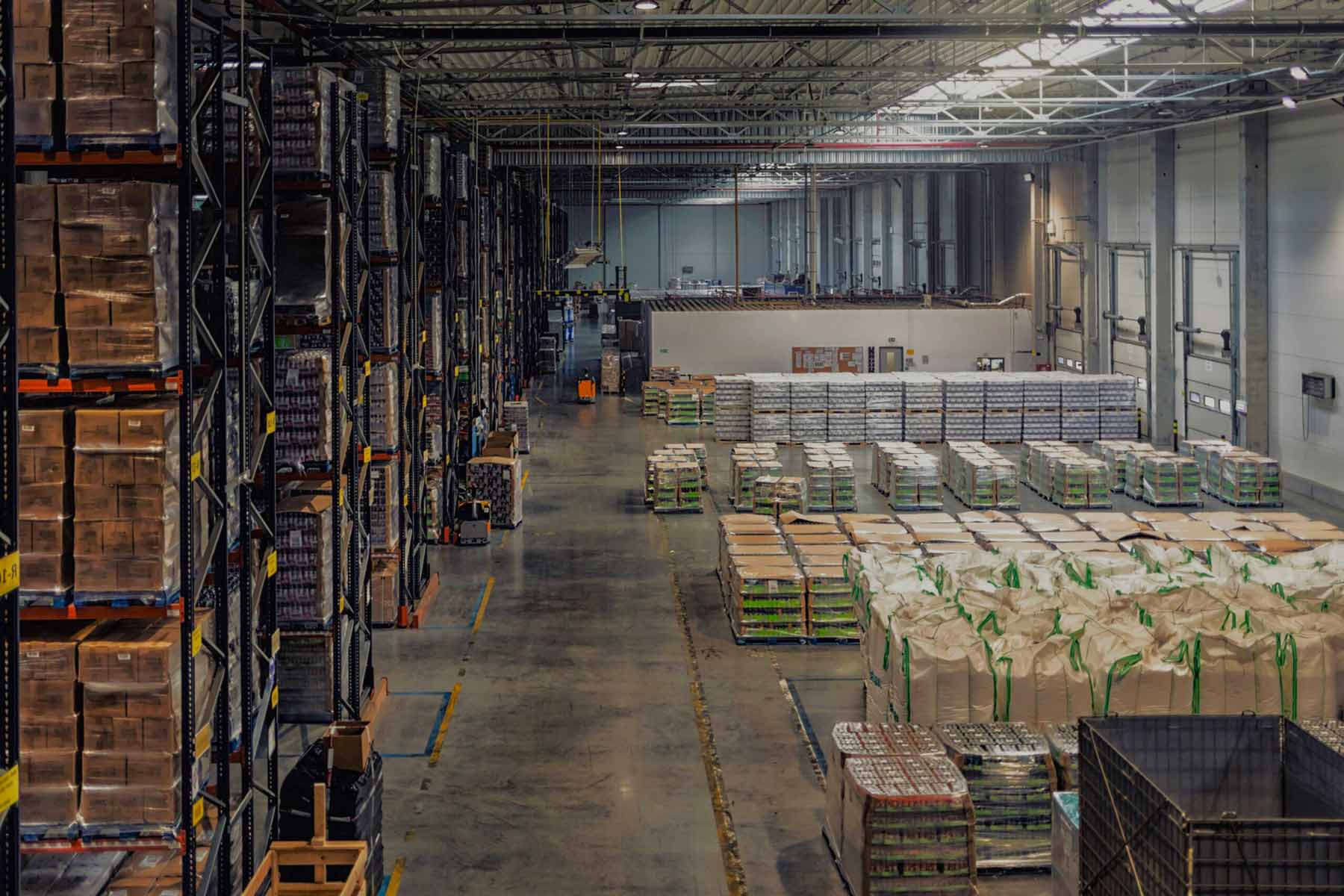
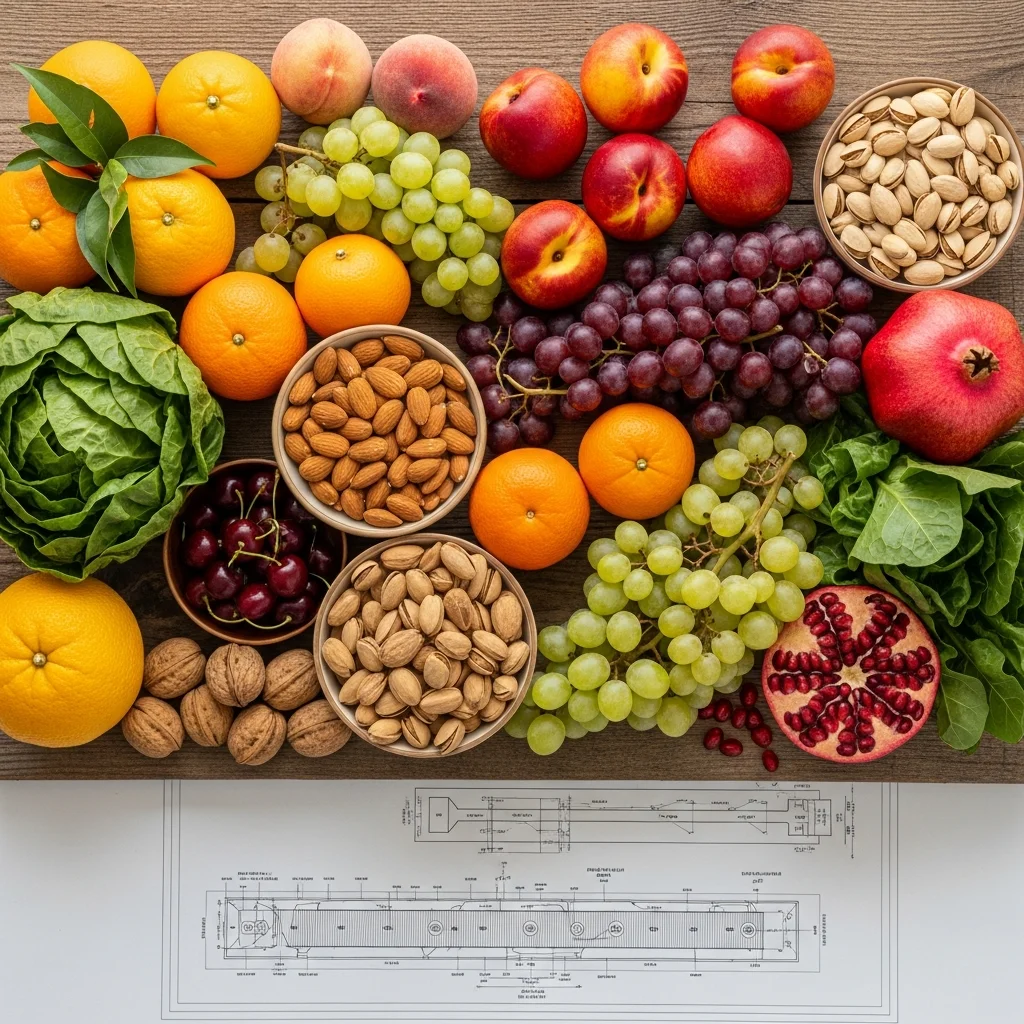
The Central Valley of California stands as one of the most agriculturally productive regions globally, yielding over 250 different crops that contribute significantly to both national and international food supplies. This remarkable output is sustained by a year-round harvest cycle, presenting both immense opportunity and complex logistical challenges for growers and processors. Central Valley Cold Storage (CVCS), located strategically in Madera, California, understands that mastering this dynamic calendar is paramount to preserving crop quality, extending market windows, and ultimately, enhancing profitability. This pillar page serves as your comprehensive guide to the Central Valley harvest calendar, meticulously mapping crop cycles to critical cold storage capacity planning, temperature zone requirements, and proactive booking strategies.
What is Controlled Atmosphere Storage (CAS)?
Controlled Atmosphere Storage (CAS) is an advanced post-harvest technique that precisely regulates temperature, humidity, and the concentrations of oxygen (O2) and carbon dioxide (CO2) within a sealed environment. By reducing O2 levels and increasing CO2, CAS significantly slows respiration and ripening processes, extending the shelf life and maintaining the quality of perishable fruits and vegetables far beyond conventional cold storage.
The Central Valley’s Agricultural Engine
Stretching over 450 miles, the Central Valley is an agricultural powerhouse, benefiting from fertile soils, abundant sunshine, and sophisticated irrigation systems. This unique combination allows for an unparalleled diversity of crops, from delicate stone fruits and leafy greens to robust tree nuts and citrus. The sheer volume and variety mean that at any given time, multiple commodities are either being harvested, pre-cooled, stored, or prepared for distribution. This continuous agricultural activity underscores the indispensable role of advanced cold storage infrastructure, particularly for high-value and perishable goods.
Central Valley Harvest Calendar & Cold Storage Demand – A Month-by-Month Analysis
Understanding the ebb and flow of the Central Valley's harvest is the first step in optimizing cold storage utilization. Each month brings distinct crops, each with its own specific temperature, humidity, and atmospheric requirements. CVCS's multi-zone, state-of-the-art facilities are designed to accommodate this complexity, ensuring optimal conditions for every product.
January-February: Citrus Dominance & Dormancy Preparation
- Crops: Navel oranges, mandarins (e.g., Satsuma, Clementine), lemons, and grapefruit continue their winter harvest. Minimal tree nut activity.
- Cold Storage Implications: This period sees sustained demand for citrus storage, typically requiring temperatures between 34-45°F (1-7°C) and 90-95% relative humidity to prevent desiccation and maintain freshness. While new nut harvests are dormant, residual inventory from the previous season's nut processing (almonds, walnuts) may still occupy significant space, often requiring temperatures around 34°F (1°C) with 50% humidity to maintain quality for up to two years.
- CVCS Insight: This 'off-peak' for some crops allows for routine maintenance, deep cleaning, and strategic upgrades of cold storage infrastructure, ensuring readiness for the intense spring and summer seasons.
March-April: Citrus Transition & Early Stone Fruit Emergence
- Crops: Late-season citrus varieties continue, overlapping with the emergence of early stone fruit like apricots and some varieties of peaches. Leafy greens (e.g., lettuce, spinach) also reach peak harvest in this window.
- Cold Storage Implications: As citrus winds down, space begins to shift towards pre-cooling and short-term storage for early stone fruit. Apricots and peaches generally require rapid pre-cooling to near 32°F (0°C) and high humidity (90-95%) to slow ripening and reduce moisture loss. Leafy greens, highly perishable, demand immediate cooling to 32-36°F (0-2°C) with high humidity.
- CVCS Insight: This period highlights the need for flexible multi-zone storage capabilities, accommodating both long-term citrus holdings and the immediate, high-turnover needs of fresh produce.
May-June: High-Value, Time-Sensitive Crops
- Crops: Cherry harvest is very time-critical, typically starting in May. Early varieties of apricots and peaches, along with blueberries, also become prominent.
- Cold Storage Implications: Cherries are extremely perishable and require rapid hydro-cooling or forced-air cooling immediately after harvest to 31-32°F (-0.5 to 0°C) with 90-95% RH to maintain firmness and prevent decay. Blueberries also need rapid cooling to 32°F (0°C) and high humidity (90-95%). This intense, short-window demand stresses pre-cooling and short-term storage capacity.
- CVCS Insight: The critical nature of these crops emphasizes the importance of efficient inbound logistics, swift temperature pulldown, and specialized cold rooms capable of maintaining precise, near-freezing conditions.
July-August: Stone Fruit Zenith & Grape Initiation
- Crops: Peak season for many stone fruits, including peaches, nectarines, and plums. Table grapes begin their harvest in the Central Valley, typically between July 1 and July 10, following Coachella Valley. Early figs may also appear.
- Cold Storage Implications: This represents a major surge in demand for cold storage. Peaches, nectarines, and plums require temperatures of 31-32°F (-0.5 to 0°C) and 90-95% RH. Table grapes are also sensitive, requiring 31-32°F (-0.5 to 0°C) and 90-95% RH, often with sulfur dioxide (SO2) pads to control decay. The sheer volume of incoming fruit requires significant space and high-throughput cooling systems.
- CVCS Insight: August marks the beginning of the most intense period for cold storage, necessitating maximum operational efficiency and robust capacity.
August-September: The Overlap – Grapes, Pistachios, Almonds, Pomegranates
- Crops: Table grapes continue to peak, pistachio harvest commences, almond harvest is in full swing (following drying), and pomegranates begin.
- Cold Storage Implications: This is arguably the most demanding period for Central Valley cold storage. Grapes require continuous cold chain management. Pistachios and almonds, while less temperature-sensitive than fresh fruit, still benefit greatly from refrigerated storage (e.g., 34°F (1°C) at 50% RH for general storage, or 28°F (-2°C) for organic nuts to kill insects) to prevent rancidity, insect infestation, and maintain quality, especially for long-term holding. Pomegranates store well at 41-45°F (5-7°C) with 90-95% RH. The simultaneous influx of high-volume commodities demands flexible temperature zoning and substantial square footage.
- CVCS Insight: Precise inventory management, segregated storage for different commodities, and capabilities like organic-certified cold storage (e.g., 28°F (-2°C) for organic nuts) become critical.
September-October: Autumn’s Bounty – Nuts, Persimmons, Kiwifruit
- Crops: Pistachio harvest peaks, walnut harvest is intensive, persimmons become available, late-season table grapes continue, and kiwifruit harvest begins.
- Cold Storage Implications: Sustained high demand for nut storage (pistachios, walnuts), often requiring ambient or refrigerated conditions depending on processing and intended storage duration. Walnuts, similar to almonds, benefit from 34°F (1°C) and 50% RH for extended shelf life. Persimmons require 31-32°F (-0.5 to 0°C) and 90-95% RH, while kiwifruit can be stored long-term in CAS at 32°F (0°C) and high humidity. This period transitions from immediate harvest demand to more prolonged storage needs.
- CVCS Insight: Efficient transfer from field/processing to storage is key, alongside the ability to manage diverse temperature and humidity profiles within the same facility.
November-December: Winter Citrus & Extended Storage
- Crops: Citrus (navels, mandarins, lemons) ramps up for the winter season, kiwifruit harvest continues, and nut processing/storage for long-term markets persists. Pomegranate storage also extends into this period.
- Cold Storage Implications: The cycle returns to a focus on robust citrus storage capacity. Long-term storage of nuts and kiwifruit often utilizes Controlled Atmosphere Storage (CAS) to extend market availability for many months. This requires precise control over not just temperature and humidity but also gas composition.
- CVCS Insight: The emphasis shifts towards maximizing storage duration and maintaining peak quality to capitalize on off-season market prices, a core offering that can increase grower profits by 30-40%.
Strategic Cold Storage Capacity Planning for the Central Valley
Effective cold storage isn't merely about having space; it's about having the right space at the right time, optimized for each specific crop. Central Valley Cold Storage approaches capacity planning with a strategic, data-driven methodology.
Peak Demand Windows: Forecasting and Flexibility
The harvest calendar clearly illustrates that peak demand for cold storage in the Central Valley typically spans August through October. This critical window sees the simultaneous overlap of high-volume commodities such as tree nuts (almonds, pistachios, walnuts), table grapes, and late-season stone fruit. The sheer scale of product requiring immediate post-harvest handling and storage during these months necessitates significant advanced planning.
- Demand Surge: CVCS estimates a 200-300% increase in storage requests during peak months compared to off-peak, driven by the need for rapid pre-cooling, short-term holding, and long-term bulk storage for processed nuts.
- Consequence of Under-planning: Inadequate capacity can lead to bottlenecks, product degradation, lost market opportunities, and forced distress sales at lower prices.
Off-Peak Opportunities: Maintenance and Alternative Uses
The January through April period, characterized by the winding down of citrus and early stone fruit, presents a valuable off-peak window. This time is crucial for:
- Preventative Maintenance: Conducting comprehensive overhauls of refrigeration systems, cleaning storage rooms, and performing energy efficiency audits ensures optimal performance and reliability during peak seasons.
- Technological Upgrades: Implementing new advancements like improved air circulation systems, advanced humidity controls, or expanding Controlled Atmosphere Storage capabilities.
- Alternative Uses: While primarily focused on fresh produce, off-peak capacity can sometimes be utilized for cross-docking operations for non-produce goods or short-term storage for other compatible chilled products, optimizing facility utilization.
Temperature Zone Optimization: Precision for Preservation
The diverse requirements of Central Valley crops demand highly flexible and precisely controlled temperature zones within a single facility. CVCS operates multi-commodity cold storage facilities divided into specific temperature zones.
- Sub-32°F (0°C) Zones: Essential for sensitive fresh fruits like cherries, stone fruit, and grapes, maintained at 31-32°F (-0.5 to 0°C) with high humidity (90-95%).
- Mid-Range Zones: For citrus, often 34-45°F (1-7°C) depending on variety and duration.
- Nut-Specific Zones: General nut storage at 34°F (1°C) with 50% humidity to retain quality for up to two years. Specialized organic nut storage at 28°F (-2°C) is critical for insect control without fumigation.
- Humidity Control: Beyond temperature, precise humidity (e.g., 90-95% for most fresh produce, 50% for nuts) is vital to prevent weight loss and maintain texture.
Advanced Technologies for Extended Shelf Life
CVCS leverages cutting-edge technologies to enhance preservation:
- Controlled Atmosphere Storage (CAS): Extends the shelf life of commodities like apples, pears, and kiwifruit by 2-4 times by modifying oxygen and carbon dioxide levels, allowing for year-round market access.
- Rapid Pre-Cooling: Essential for highly perishable items to quickly remove field heat, slowing metabolic processes and extending post-harvest life.
- Ethylene Management: For mixed storage, monitoring and scrubbing ethylene, a natural ripening hormone, is critical to prevent premature ripening of sensitive crops.
CVCS’s Proactive Booking Strategy: Secure Your Space
Given the immense agricultural output and the concentrated peak harvest periods in the Central Valley, securing cold storage space requires foresight. CVCS strongly advises growers and processors to implement a proactive booking strategy:
- Advance Reservations: During peak demand periods (August-October), reserving space 60-90 days in advance is highly recommended to guarantee availability.
- Forecasting Partnership: Collaborating with CVCS on harvest projections allows for tailored capacity allocation and optimized logistics, including scheduling inbound and outbound deliveries through our customer portal.
- Dedicated Account Management: CVCS offers personalized service to understand specific crop needs, ensuring the right temperature and humidity environments are prepared.
The Pillar of Agricultural Logistics
This detailed harvest calendar and its cold storage implications form the backbone of agricultural logistics in the Central Valley. This page serves as a central hub, providing foundational knowledge for growers, packers, and distributors. From here, you can delve deeper into specific crop requirements, explore the nuances of long-term storage strategies for California almonds and pistachios, understand the benefits of our solar-plus-battery microgrid power system, or learn about ethylene management in mixed cold storage environments.
Conclusion
Central Valley Cold Storage is more than just a facility; we are a strategic partner in maximizing the value of your harvest. Located in Madera, CA, our state-of-the-art 254,000 sq ft facility, capable of housing 50 million pounds of product, features advanced temperature and humidity control, real-time monitoring, and a unique off-grid power system. By aligning with the Central Valley's intricate harvest calendar, we provide tailored, reliable, and sustainable cold storage solutions that bridge the gap between seasonal supply and year-round demand, ensuring your products retain their quality, integrity, and marketability. Partner with CVCS to transform your post-harvest challenges into opportunities for sustained growth and profitability.