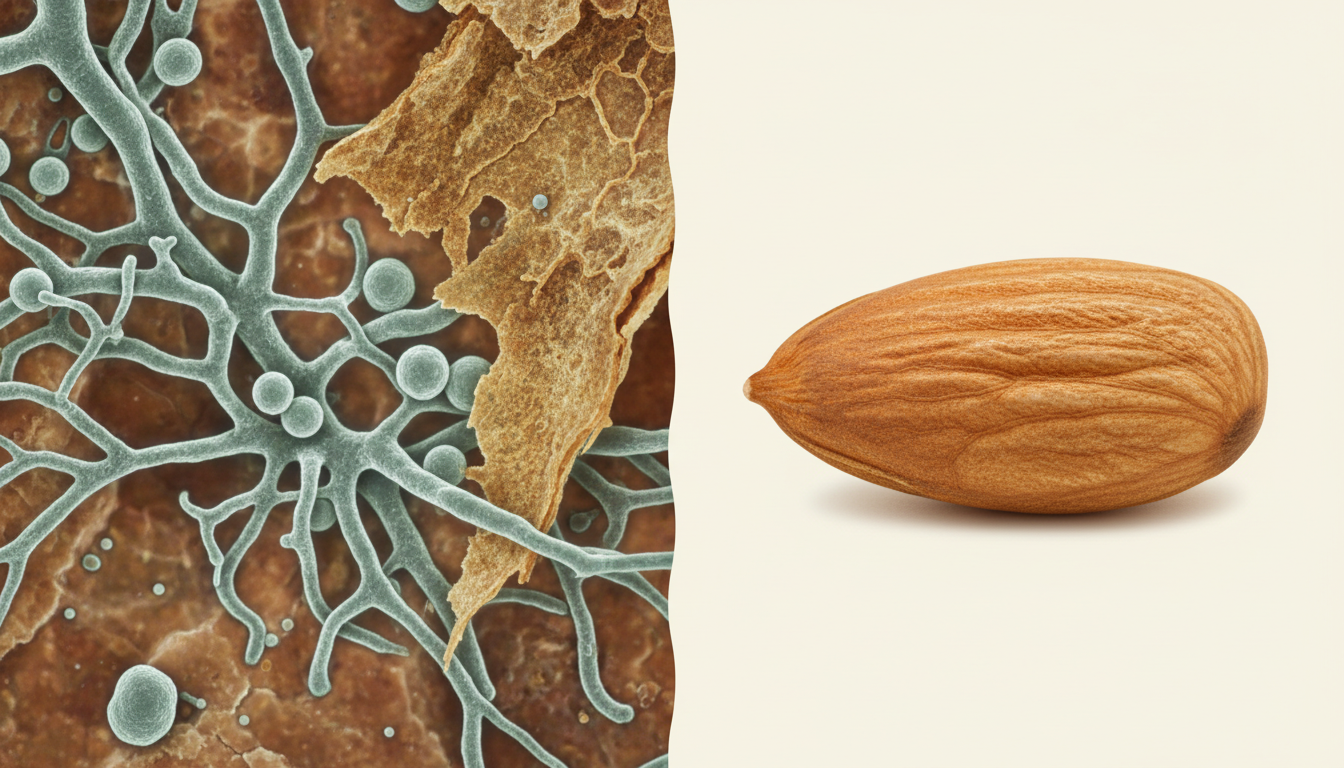
Aflatoxins, the secondary metabolites produced by Aspergillus flavus and Aspergillus parasiticus, represent a forensic challenge in food safety. These toxins are not only carcinogenic but are remarkably heat-stable, meaning that once they are present in a batch of almonds, pistachios, or walnuts, they cannot be “cooked out” or removed through standard processing Mastering the Produce Cold Chain: From Harvest to ….. Consequently, the only viable strategy is the total prevention of fungal colonization through rigorous environmental control. This article examines the forensic parameters required to maintain thermal stasis and the catastrophic failures that occur when these parameters fluctuate.
The Biology of Aspergillus
To implement an effective aflatoxin prevention strategy, one must understand the opportunistic nature of Aspergillus fungi. These molds are ubiquitous in the soil and atmosphere of nut-growing regions. They often enter the nut through shell splits or insect damage while still in the orchard. However, the transition from “presence” to “colonization and toxin production” is entirely dependent on the storage environment.
The biological trigger for aflatoxin synthesis is a combination of water activity (aw) and temperature. Aspergillus species thrive in warm, humid conditions. When the internal moisture content of a nut rises above 7%—or when the ambient relative humidity exceeds 65%—the fungus begins its metabolic cycle. At temperatures above 70°F (21°C), the rate of colonization increases exponentially. Forensic audits of rejected shipments frequently reveal that “hot spots” within a container or warehouse were the points of inception for fungal blooms.
Thermal stasis at 34°F (1.1°C) serves a dual purpose. First, it brings the metabolic activity of the fungus to a near-halt. While Aspergillus is not necessarily killed by these temperatures, its ability to synthesize aflatoxins is effectively deactivated. Second, cold air has a lower moisture-holding capacity, which assists in keeping the water activity of the nut below the threshold of 0.70 aw, the critical limit for mold growth.
Fungal Growth Rates vs. Environmental Variables
The following table illustrates the forensic relationship between temperature, humidity, and the risk of fungal colonization over a 30-day storage period.
| Temperature (°F) | Relative Humidity (%) | Fungal Growth Rate | Aflatoxin Risk Level |
|---|---|---|---|
| 34°F | 50% | Dormant | Negligible |
| 45°F | 55% | Stagnant | Low |
| 60°F | 65% | Slow/Visible after 21 days | Moderate |
| 75°F | 75% | Rapid (Colonization in 72 hrs) | High/Critical |
| 85°F | 85% | Explosive (Mycotoxin detected in 48 hrs) | Extreme |
Lipid Oxidation: The Root of Rancidity
While aflatoxin prevention is the primary safety concern, the preservation of organoleptic quality—specifically the prevention of rancidity—is the primary economic concern. Tree nuts are high-lipid commodities, containing significant concentrations of unsaturated fatty acids. These fats are highly susceptible to oxidation, a chemical chain reaction that produces the off-flavors and odors associated with rancidity.
Rancidity in nuts is typically categorized into two types: oxidative and hydrolytic. Oxidative rancidity is accelerated by exposure to light, oxygen, and, most critically, heat. Hydrolytic rancidity occurs when moisture reacts with the lipids in the presence of enzymes (lipases), breaking down triacylglycerols into free fatty acids. Both processes are temperature-dependent. For every 10°C increase in storage temperature, the rate of lipid oxidation approximately doubles.
Thermal stasis prevents this degradation by slowing down the nut respiration rates. Nuts are living organisms; even after harvest, they continue to respire, consuming oxygen and releasing carbon dioxide, water vapor, and heat. High respiration rates lead to “self-heating” within bulk storage piles, creating micro-climates that favor both rancidity and Aspergillus growth. By maintaining a constant 34°F, the nut’s metabolic rate is suppressed, extending the shelf life of the oils and preventing the breakdown of the nut’s cellular structure.
The Role of Constant Humidity
In the context of aflatoxin prevention, humidity is often the “silent” variable. Many facilities focus exclusively on temperature while allowing relative humidity (RH) to fluctuate. This is a critical error in FSMA compliance. When temperatures drop, the relative humidity of the air increases if the moisture content remains constant. If a storage unit reaches the “dew point,” moisture will condense on the surface of the nuts—a phenomenon known as “sweating.”
Surface moisture is an immediate catalyst for fungal spores. Therefore, maintaining a constant humidity of 50% is as vital as maintaining a temperature of 34°F. This specific RH level ensures that the Equilibrium Moisture Content (EMC) of the nuts remains stable. If the RH is too low (below 40%), the nuts may lose weight and become brittle, leading to physical damage during transport. If the RH is too high (above 65%), the risk of Aspergillus colonization enters the critical zone.
The forensic analysis of shipment rejections often points to “thermal cycling”—the repeated fluctuation of temperature and humidity. For example, if a cooling system fails for just six hours, the surface of the nut warms up, respiration increases, and moisture is released into the micro-environment. When the cooling system kicks back on, that moisture condenses, providing the perfect hydration for dormant spores to activate. True thermal stasis requires a system that eliminates these cycles entirely.
The Regulatory Gap: US vs. EU Standards
Exporting nut processors must be aware that “safe” by US standards may be “adulterated” by EU standards. The FDA generally enforces a limit of 20 parts per billion (ppb) for total aflatoxins in nuts intended for human consumption. In contrast, the European Union (under EC Regulation 1881/2006) often mandates limits as low as 2 ppb for Aflatoxin B1 and 4 ppb for total aflatoxins in certain tree nuts. This disparity means that a storage environment that is “good enough” for domestic transit could lead to a catastrophic rejection and destruction of cargo at a European port. Thermal stasis is the only non-chemical safeguard that provides the precision necessary to meet these global standards.
The Critical Need for Off-Grid Reliability
The greatest threat to thermal stasis is the vulnerability of the power grid. In many agricultural regions, peak harvest coincides with periods of grid instability or high energy costs. A standard refrigerated warehouse is only as reliable as the local utility provider. If the power fails, the environment inside the storage unit begins to equilibrate with the outside ambient temperature immediately.
CVCS (Cold Vault Control Systems) addresses this vulnerability through off-grid reliability. By utilizing integrated power generation and redundant cooling architectures, CVCS ensures that the 34°F/50% RH parameters are maintained regardless of external infrastructure failures. This “zero-failure” approach is essential for high-value nut exports where a single instance of thermal fluctuation can trigger a fungal bloom that renders a multi-million dollar shipment worthless. For the FSMA Compliance Officer, off-grid capability is not a luxury; it is a fundamental preventive control.
Frequently Asked Questions
- Q: Can cold storage kill aflatoxins that are already present?
- A: No. Cold storage is a preventative measure, not a remedial one. Cold temperatures prevent the development of aflatoxins by inhibiting fungal growth. Once aflatoxins have been synthesized by the fungi, they are chemically stable and permanent. Prevention through thermal stasis is the only viable strategy.
- Q: Why is 34°F the recommended temperature instead of freezing?
- A: While freezing would also stop fungal growth, it can damage the cellular structure of certain nuts and lead to “fat bloom” or texture degradation upon thawing. 34°F is the “sweet spot” that maintains the nut’s integrity while halting biological hazards.
- Q: How long can nuts be stored under thermal stasis?
- A: Under strict thermal stasis (34°F/50% RH), many tree nuts can be stored for 12 to 24 months with minimal loss in quality or increase in aflatoxin risk, compared to only 3-6 months at ambient temperatures.
Conclusion
Aflatoxin prevention in the nut industry is a forensic discipline that requires a deep understanding of fungal biology, lipid chemistry, and environmental engineering. The move toward stricter global safety standards leaves no room for the “average” storage conditions of the past. To protect both public health and the economic viability of the export, processors must commit to the protocol of thermal stasis. By utilizing reliable, off-grid systems like those provided by CVCS, exporters can ensure that their product remains in a suspended state of biological and chemical equilibrium from the moment it leaves the dryer until it reaches the consumer’s table.
Ensuring compliance with FSMA Section 103 (Preventive Controls) requires documented, verifiable evidence that environmental parameters remained within the safe zone for the duration of storage. Thermal stasis is not just a storage method; it is a comprehensive risk mitigation strategy.